
Shopofkorea guides
Wall-Hung Wind Bells to Sotdae Decorative Bells, All in One Place
Official product names are shown in Korean. Product pages are in Korean; prices are in South Korean won (KRW).
Wind bells and decorative bells are traditional accessories that add the pleasure of listening to sound as well as the pleasure of looking. Shop of Korea's 'Bell' keyword shop brings together wall-hung wind bells and space-decorating decorative bells in one place. If you're looking for Korean traditional interior accessories, it's worth stopping by.
Whether you need something to hang on a wall or you're curious about the patterns and symbols held within a bell, what catches your eye will differ. There are bells that capture the mountain scenery of Geumgangsan, and others that depict rice threshing or sotdae (a traditional village pole totem).
Traditional Scenery Captured in a Small Bell
Miniature traditional bells as decorative accessories take their form from the large bells of Buddhist temples and the wind bells (punggyeong) hanging from the eaves of hanok. They are, in a sense, a way to bring a large bell close for personal appreciation. With the addition of traditional patterns and ornamentation, the bell becomes a craft piece enjoyed with the eyes as well.
The clear sound of a bell also carries the symbolic meaning of purifying a space. It is more natural to understand this as a cultural meaning attributed to the sound rather than as a functional effect that actually changes the space.
These bells are used as decorations that add a Korean ambiance to a home or office. Even without recreating a hanok in full, a single small accessory can bring the image of tradition close at hand. In the Bell keyword shop, you find yourself looking not only at the sound but also at what scenery each bell holds within it. Landscapes, farming life, and village symbols each tell their own different story.
Mountains and Everyday Life Appear on Wall-Hung Bells
Because wall-hung wind bells are objects meant to be hung on a wall and gazed at, the patterns catch the eye alongside the form of the bell itself. Placing a decoration that holds a mountain scene next to one that holds a scene of human labor makes the difference in expression all the clearer.
벽걸이 풍경종小 - 금강산 (Wall-Hung Wind Bell Small – Geumgangsan) is a wall-hung bell accessory made of metal. It stands 19.5 cm tall, and the body of the bell features a pattern depicting the mountain scenery of Geumgangsan. It is a piece that lets you appreciate both the Geumgangsan landscape and the form of a traditional wind bell at once. It suits someone who wants to hang Korean landscape scenery on their wall.


If the story of everyday life appeals to you more than mountain scenery, there is also a bell that holds agricultural culture.
벽걸이 풍경종中 - 벼타작 (Wall-Hung Wind Bell Medium – Rice Threshing) features a scene of rice threshing rendered in relief on the wind catcher. It is made by metal casting and stands 22.5 cm tall. Rice threshing calls to mind the harvest of grain and abundance. The memory of a community working together is also held within it. It is a bell that offers the pleasure of reading people and their labor through its decoration.
One customer who purchased this item left the following review: "The sound of the bell is both weighty and clear, so I kept shaking it." The scene of someone directly shaking the bell and enjoying its resonance comes through just as it was written. It is one person's impression, but it is a review that concretely shows the experience of enjoying both the decoration and the sound together.
The Sotdae Decoration Carries the Meaning of a Village Guardian
In the Bell keyword shop, beyond the wall-hung wind bells, there are also bells where the decoration itself draws the eye. 장식종-솟대 (Decorative Bell – Sotdae) is a metal decorative bell combined with the form of a sotdae. The material includes brass.
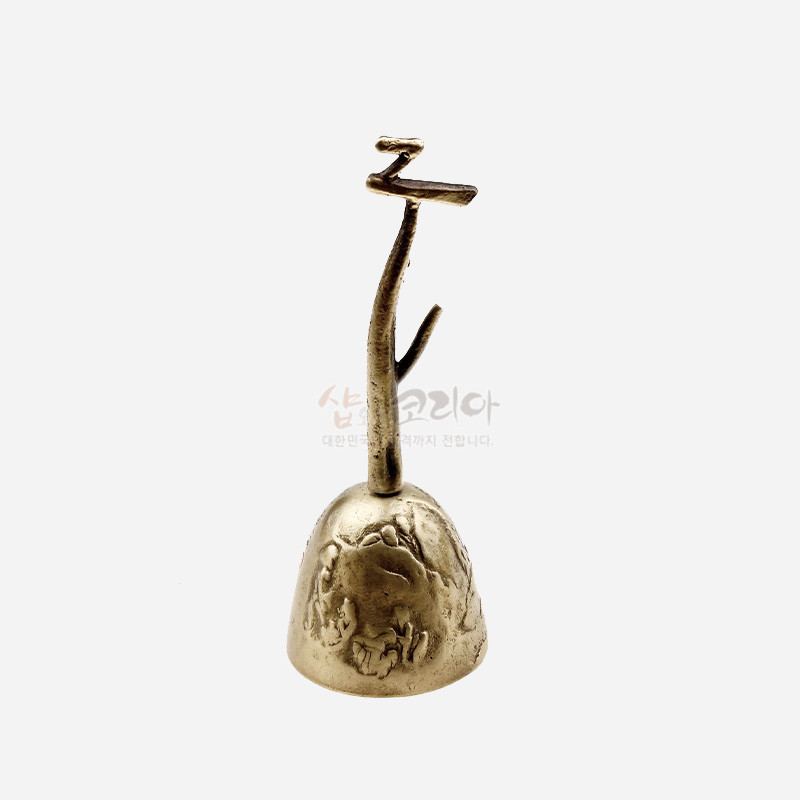
The sotdae is a traditional sculptural form originating from Korean folk belief. It symbolizes the boundary and protection of a village, and carries the meaning of praying for a good harvest and happiness. Even if it looks like a familiar traditional decoration, within it lies the wish that people might live well together. This decorative bell is an accessory that adds the sound of a bell to that sotdae motif.
Appreciating a landscape pattern and reading a folk symbol are slightly different experiences. Where Geumgangsan calls to mind the appearance of nature, the sotdae connects to the heart that guarded a village and prayed for happiness. It is a bell well suited to someone who places importance on the meaning of the traditional accessories they put in their space.
If You Want to See More Wind Bells and Door Bells
While browsing wall-hung wind bells, you may find yourself curious about bells hung at a doorway as well. In that case, you can continue browsing the related menu, the 'Punggyeong (Door Bell)' keyword shop. The natural order is to encounter the various forms in the 'Bell' menu and then go on to explore wind bells and door bells as well.
A related example is 문종-풍물 (Door Bell – Pungmul). It is a door-bell-style craft accessory that expresses traditional patterns through metal casting, engraving, and relief work. It connects to the culture of hanging a bell near a doorway or eaves to enjoy its resonance. It is something you naturally come across together when an interest that began with wall decorations expands to accessories for the area around a door.
The 'Bell' keyword shop is a collection that gathers in one place bells used for hanging on walls or decorating a space. In the wall-hung wind bells you can encounter landscape scenery and agricultural culture, and in the sotdae decorative bell you can encounter the symbols of a village. It is a menu suited to someone who seeks both the pleasure of listening to sound and the pleasure of gazing at traditional decoration.