Shopofkorea guides
A Guide to Selecting Korean Traditional Craft Collectibles for Foreign Collectors
Official product names are shown in Korean. Product pages are in Korean; prices are in South Korean won (KRW).
When choosing traditional craft pieces for a foreign collector, "Is it Korean?" alone is not enough. The appropriate size, symbolism, and storage method of an item will differ depending on whether the recipient already has a good understanding of Korean culture, whether they have display space, and whether the gift is being presented in a formal setting. For gifts that will travel overseas in particular, the risk of damage and ease of explanation must be considered alongside beauty.
- For researchers and those in the cultural arts: types for which the background of the patterns and craft methods is easy to explain
- For overseas buyers: types that give a clear Korean impression when displayed and carry a sense of formality
- For individual collectors: types that are small and easy to store, and can be enjoyed over a long period of time
- For long journeys: types for which humidity, impact, and volume must be checked first
For those who can read Korean symbolism, the depth of the pattern endures
For a recipient who understands Korean culture to some degree, what matters more than simply saying "it has a traditional pattern" is how a given material and pattern work together. Najeon-chilgi (mother-of-pearl lacquerware) and jagae (mother-of-pearl inlay) craft change their expression depending on the light, and traditional patterns are well suited to conveying meaning beyond mere decoration. For researchers and those in the cultural arts, the craft method itself becomes a topic of conversation, so preparing a brief explanation to accompany the gift at the moment of presentation will leave a more settled impression.
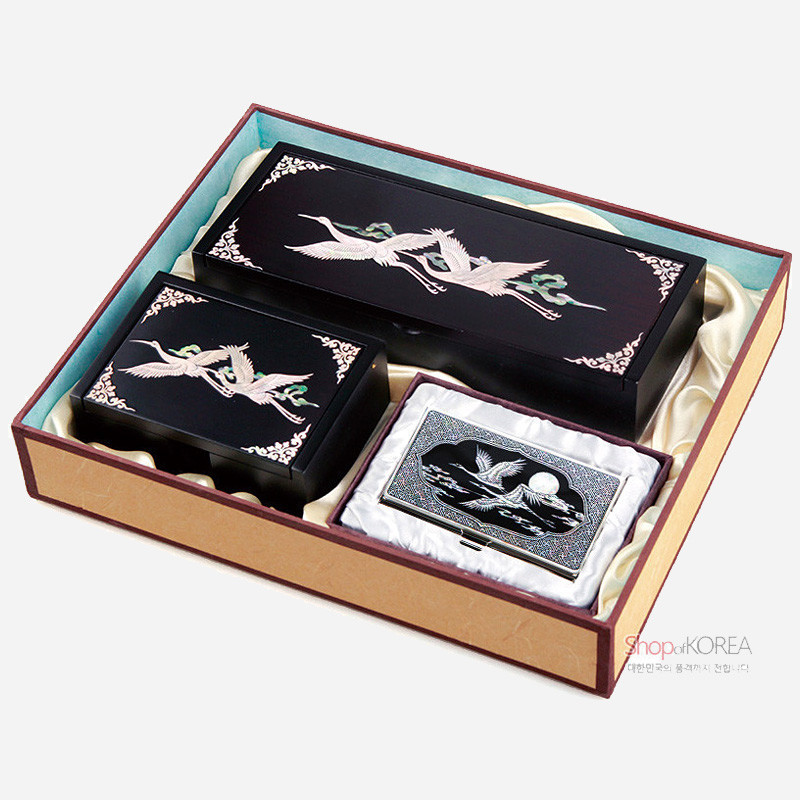
For example, a type such as the 박인호 작 나전 직굴림보석함 (a mother-of-pearl lacquer jewelry box by Park In-ho, featuring traditional patterns) — where the artist's name, najeon material, and traditional patterns are all evident together — is well suited to presenting as a collectible. It functions as a jewelry box, but the essence lies in its display quality and craftsmanship rather than in storage. When the recipient places it on a desk or in a display cabinet, the surface quality of Korean craft is clearly visible, and because it is less imposing than a very large work, it is easy to incorporate into a personal collection. However, since jagae and chilgi (lacquerware) pieces can be sensitive to humidity and direct sunlight, it is advisable to include a brief note about storage conditions when presenting the gift.

Rather than viewing a single specific product as the only correct answer for this type, the range of choices broadens if you use the criterion of "a small collectible with a clearly traditional material and a pattern that can be explained." If the recipient researches Korean art or craft, what matters is whether the production method and symbolism can be explained rather than the decorative quality; for a general collector, first impressions and ease of storage carry more weight. Just as reviews note that the packaging is neat and the Korean feel comes through well, the completeness of the moment of presentation also influences how seriously the recipient takes the object.
When presenting to a buyer, formality that is visible at a glance provides reassurance
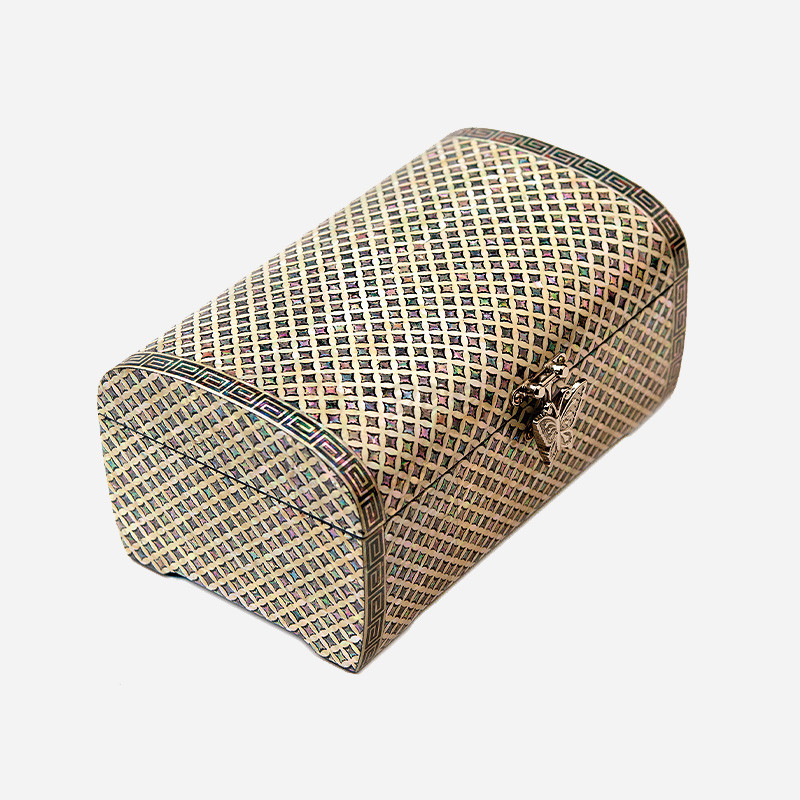
When giving a gift to an overseas buyer or official visitor, it is difficult to know the recipient's tastes precisely. In such cases, rather than something that caters too strongly to individual preference, a craft piece that gives a clear Korean impression when displayed and conveys a sense of formality is a safe choice. Jagae jewelry boxes and traditional-pattern decorative boxes are well suited to desks, reception rooms, and display cabinets, so the purpose of the gift is relatively clear. Items that are too large or complicated to use can become a burden to transport and store, so it is best to look first at storage-type craft pieces with familiar forms.
A type such as the 박인호 작품 자개굴림보석함 (a rolled mother-of-pearl lacquer jewelry box by Park In-ho) is a good example to explain in the context of a formal thank-you gift or VIP protocol gift. The distinctive luster of jagae conveys the impression of Korean craft even from a distance, and the jewelry-box form is easy to understand in terms of purpose regardless of cultural background. When presenting it, a brief description such as "a storage collectible making use of Korean jagae craft" is enough to convey the meaning without being excessive. However, if the other party prefers a minimal office environment or keeps almost no decorative objects, a smaller accessory or stationery-type souvenir may be more appropriate.
In a formal gift, the moment of presentation matters as much as the object itself. It is safest to choose a type where the meaning is immediately apparent when taken out of the box and no separate assembly or usage explanation is required. Just as reviews have noted reactions such as "the design was refined and the meaning was deep, being a traditional souvenir," in gifts for foreign recipients, a composition in which design and meaning are read together tends to lead to a favorable response. However, since certain symbols may be sensitive depending on the recipient's religious or cultural background, it is advisable to confirm that the meaning of the pattern is broad and likely to be received positively.
For individual collectors, the pleasure of looking over a long time matters more than size
An individual collector does not simply stop at receiving an object but thinks about how to arrange it in their own space. Therefore, a craft piece whose details come alive when kept close and viewed repeatedly may be a better fit than something large and showy. Patterns with symbolism — such as hwajo (flower-and-bird), girin (qilin), and unhak (cloud-and-crane) — carry both decorative quality and narrative, making them well suited to being remembered as collectibles. However, for someone who already owns many traditional craft pieces, it is better to choose something with a distinctive material or pattern rather than a too-generic souvenir.
A type such as the 화조기린 유광굴림보석함 (a glossy rolled jewelry box featuring hwajo flower-and-bird and girin qilin patterns) is an example in which the symbolism of the pattern and its decorative presence are both visible. The hwajo pattern evokes the vitality of nature, and the girin pattern calls to mind an auspicious image, gently conveying the message of the gift. Because it takes the form of a jewelry box, small collectibles can be stored inside, and when not in use it can be left out as a decorative object. However, since a glossy finish and jagae pieces can appear quite striking under lighting, if the recipient has a calm aesthetic preference it is advisable to also examine the color and pattern density together.

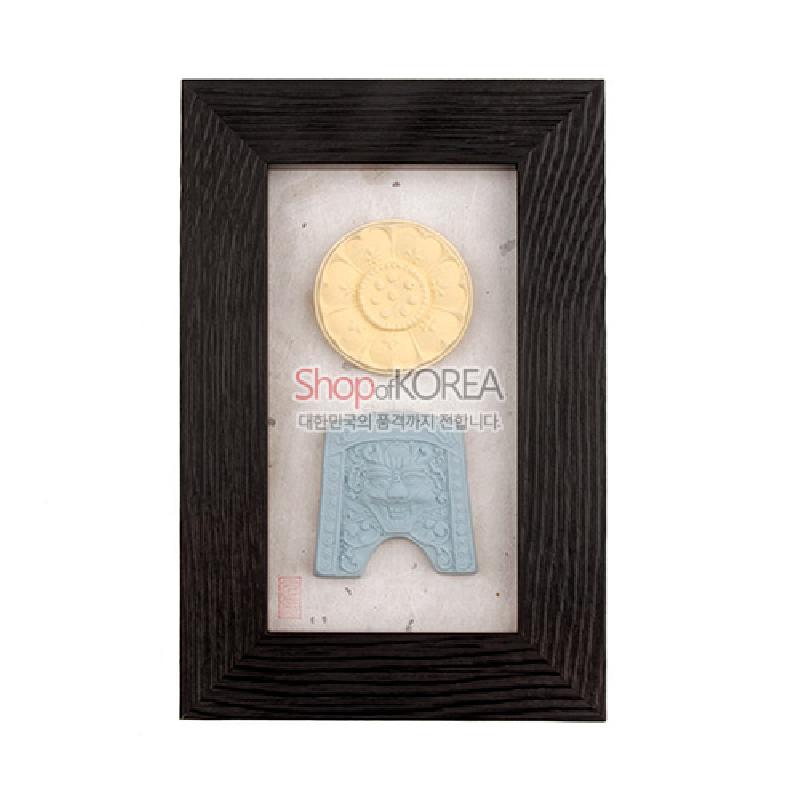
In this situation, the criterion is not "is it more elaborate?" but "can it be looked at for a long time within that person's collection?" For someone who already collects primarily ceramics or paintings, a small jagae accessory can provide balance; for someone who enjoys craft objects, a jewelry box with rich patterns or a frame-type accessory may also suit them. When the item is being taken overseas, packaging stability and volume must also be considered together. Rather than a lengthy explanation, a gift message that briefly conveys the meaning of the pattern and a storage tip is more natural.
If both practicality and collectibility are desired, craft with a visible function is easier
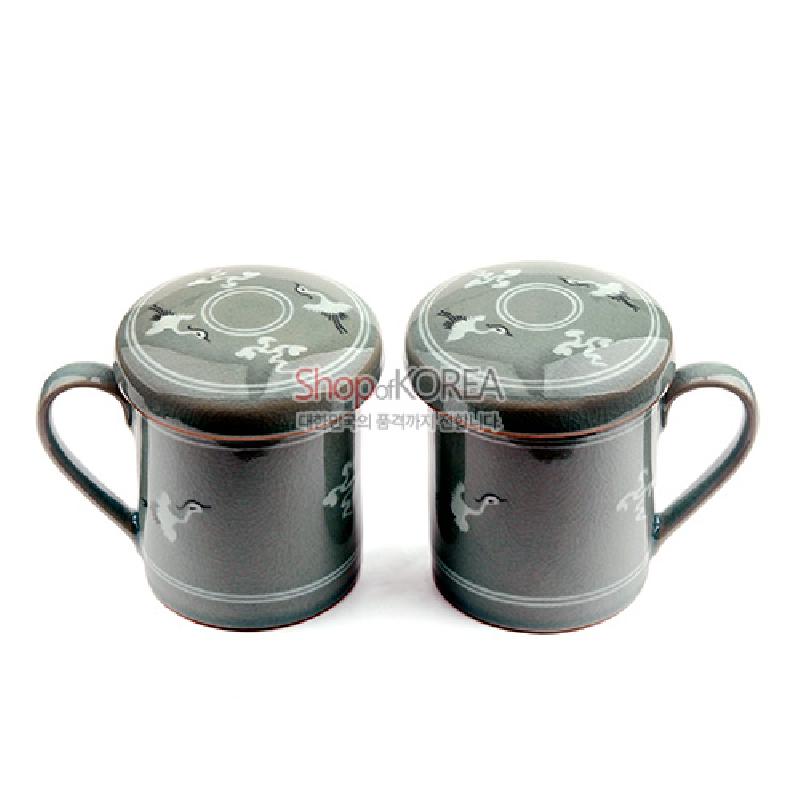
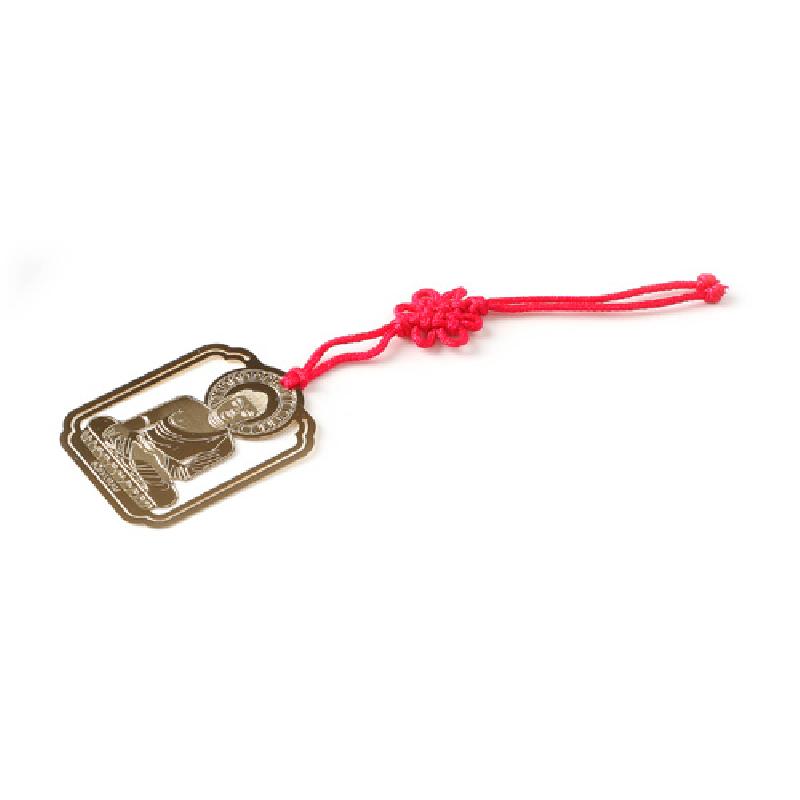
If the recipient might find keeping purely decorative objects burdensome, it is better to look at types that combine practicality with traditional beauty. Items with a clear function — such as a celadon unhak mug set, a sanggam (inlay) automatic box, or a bookmark — allow the recipient to immediately picture a scene of use when they first receive them. For researchers or recipients with a love of reading in particular, a small symbolic souvenir such as a Seokguram main Buddha motif bookmark carries little burden. However, since items intended for actual use must also be assessed against criteria such as washability, durability, and compatibility with the recipient's lifestyle, a different standard is needed compared to pure collectibles.
In such cases, the question is whether the piece has the formality of traditional craft while also being able to enter an everyday space. Ceramic pieces give a clear Korean impression but carry a risk of breakage, so if the journey is long it is advisable to check packaging and transport methods first. Hanji (Korean traditional paper) and frame-type accessories are light and easy to explain, but may require care regarding humidity and light. The related products at the end are not a list that simply repeats the items mentioned in the body text; they should be viewed as traditional craft candidates to compare alongside one another for the same collecting purpose.
For traditional craft gifts intended for foreign collectors, the choice becomes much clearer if you first discuss the recipient's collecting tendencies, display environment, and the formality of the occasion of presentation rather than starting from the product name. For someone who will understand the symbolism deeply, choose a type with a pattern and production background that can be explained; for a formal relationship, choose a storage-type craft piece whose formality is apparent at a glance; and for an individual collector, use size and material that can be kept and viewed over a long time as your criteria.