Shopofkorea guides
A Guide to Gifting Korean Traditional Liquor Cups and Table Accessories to Foreigners
Official product names are shown in Korean. Product pages are in Korean; prices are in South Korean won (KRW).
When giving a Korean traditional liquor cup or table accessory as a gift to a foreigner, it is better to first consider the scene in which the recipient will receive the item, rather than simply asking whether it is "Korean enough." For someone who enjoys drinking, cups and liquor bottles are a natural fit, but for someone whose drinking habits you do not know, accessories that convey a table setting atmosphere—such as cup coasters or spoon-and-chopstick sets (sujeo)—may be more comfortable.
- For a close acquaintance: an unimposing size and a design that is easy to talk about
- For a business contact or formal relationship: storability, presentation quality, and a restrained pattern
- For a home-party invitation: a set composition that multiple people can enjoy together
- If drinking habits are unclear: focus on coasters and table accessories rather than cups
- For a farewell or travel gift: check the risk of breakage and the bulk first
When You Want to Share a Korean Table Scene Rather Than Offer a Drink
Rather than viewing a traditional liquor cup as a gift that offers alcohol itself, thinking of it as a medium for conveying the Korean table scene—where cups are shared and food is placed together—reduces the sense of pressure. Especially for relatively close relationships, such as an acquaintance who has visited Korea or a homestay guest, a small set of cups allows you to naturally add the explanation that "in Korea, traditional liquor or soju is enjoyed in cups like these." However, if the recipient does not drink at all, or is cautious about alcohol for religious or cultural reasons, it is safer to consider coasters or other table accessories alongside the cups rather than giving cups alone.
For example, a small soju cup set featuring traditional patterns is not particularly bulky, and even if the recipient does not use it personally, it can be displayed as a decorative item. Patterns that are easy to explain—such as mountains or flowers—create a context for the gift without pushing a Korean impression too forcefully. This type of gift is not so much "the definitive cup choice" as it is a useful reference point for briefly introducing Korean drinking culture within a close relationship.
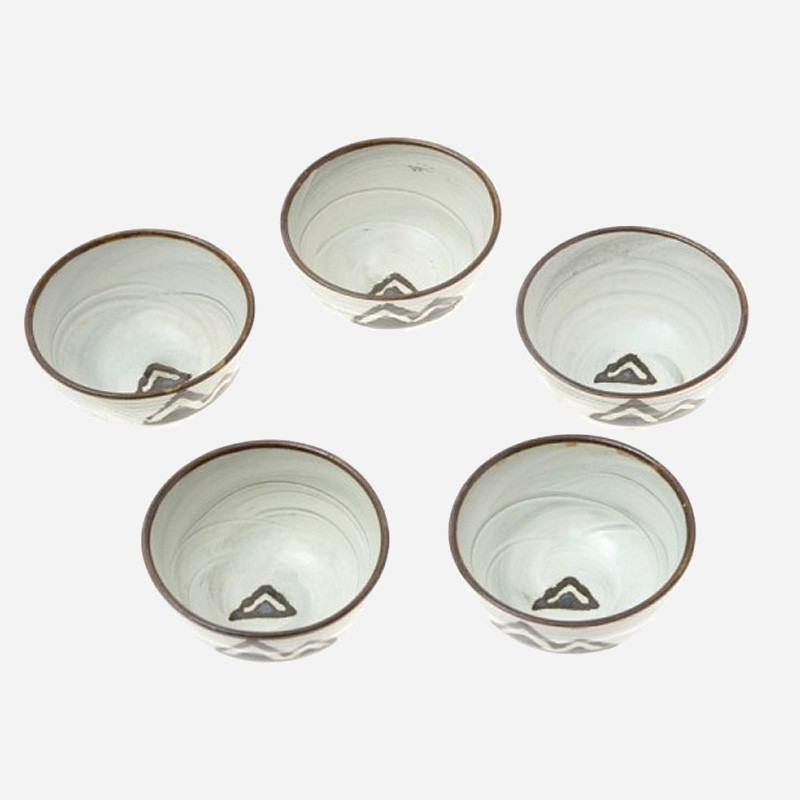
When choosing a cup gift, it is important to think about ease of washing and storage location alongside the design. If the decorative quality is too strong, the cup may be difficult to actually use at the table, and if it is too plain, it may leave a weak impression as a Korean souvenir. A small cup set is well suited to striking a balance between these two extremes, but if air travel is involved, it is a good idea to also check the packaging condition and the possibility of breakage.
In Formal Settings, the Overall Composition Is What Stands Out First
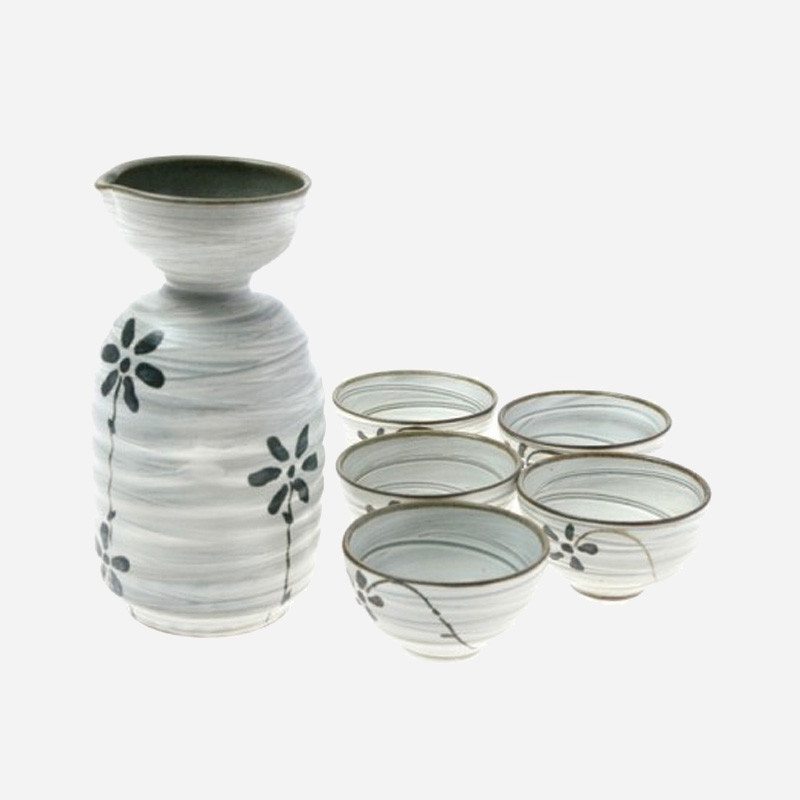
When there is a degree of distance in the relationship—such as with an overseas business contact, a professor, a superior, or a formal invitation—it is more important for the gift to appear "well-composed" rather than "cute as a souvenir." In such cases, a set that includes both a jubyeong (liquor bottle) and cups is better suited to conveying the structure of a traditional liquor setting than a product with cups alone. Even if the recipient does not actually drink, a jubyeong set evokes scenes of hospitality and formal reception, making it relatively easy to explain.
A jubyeong set featuring a restrained pattern such as chrysanthemums is one example that can lend a sense of weight to an official thank-you gift or a commemorative gift before someone returns home. Choosing a composed pattern over an overly vivid color scheme means the set does not look out of place as office or living-room décor, and the Korean atmosphere comes through without requiring lengthy explanation. However, since a jubyeong carries more bulk and a greater risk of breakage than a cup, it is worth deciding in advance whether the gift will be carried in person or delivered by shipping.
For this type of set gift, the packaging and the accompanying message also need to be considered together. Saying something like "This is an accessory that can bring to mind Korea's traditional table culture" rather than "Please be sure to try the liquor" reduces any pressure related to the recipient's drinking habits. The more formal the relationship, the more natural it is to briefly add a note about the meaning of the pattern or the composition, rather than giving a lengthy explanation of how the gift is used.
At Home Parties, Cups That Are Fun to Look at Together Work Well
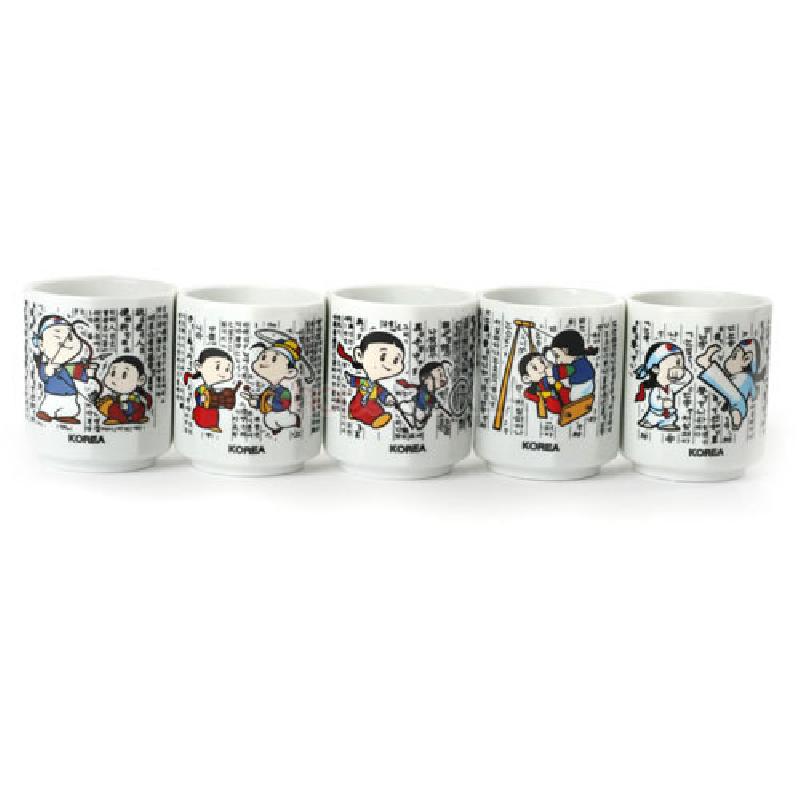
At a housewarming or home-party invitation, a gift that looks too formal can actually make it difficult to use. In this setting, a cup set that multiple people can take out and look at together, briefly chatting about the patterns, is a good fit. Designs with subjects that lend themselves to explanation—such as folk games (minsok nori), hangeul, or traditional clothing (hanbok)—allow Korean culture to be introduced without making the atmosphere of the gathering feel heavy.
That said, choosing only excessively playful designs just because the occasion is a home party may result in a mismatch with the recipient's taste or the atmosphere of their home. It is worth looking at the size of the cups, the color palette, and the density of the illustrations together, aiming for something that becomes a conversation piece on the table rather than something that stands out too sharply. In actual gifting experiences, responses have confirmed that packaging with a hangeul or traditional feel was effective at conveying a Korean impression to foreigners.
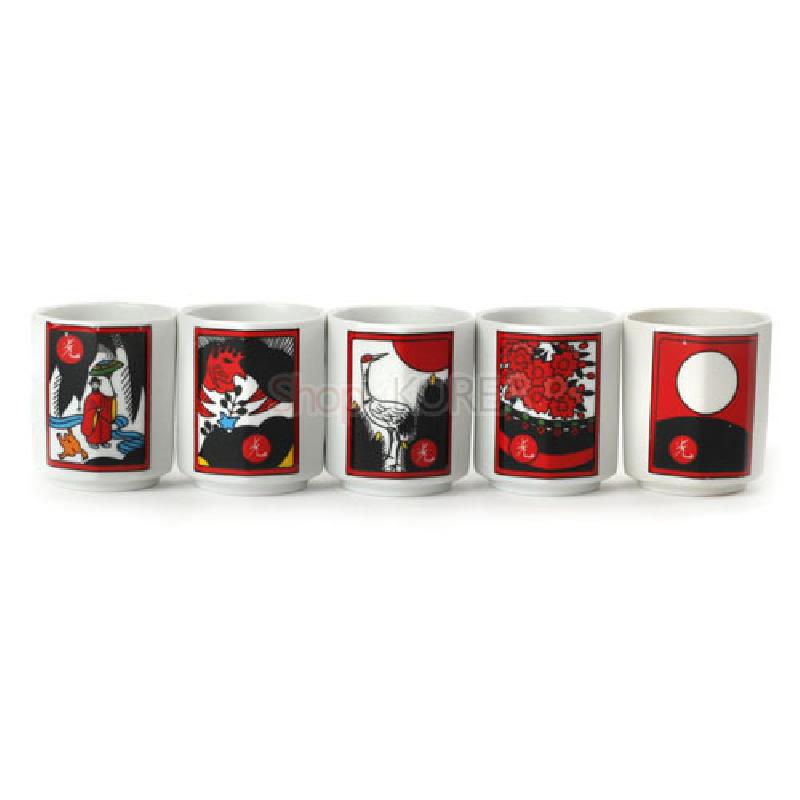
A cup set with multiple pieces is easy to bring out right away at a gathering of several people, but the cups do not necessarily have to be used only as liquor cups. Adding a note that they can also be used as small dessert cups or decorative cups makes it easier for the recipient to accept the gift comfortably. Especially if the recipient is not very familiar with Korean culture, starting by explaining the subject matter depicted in the illustrations rather than the intended use of the cups tends to keep the conversation flowing more smoothly.
For Someone Who Does Not Drink, Table Accessories Are the Safer Choice
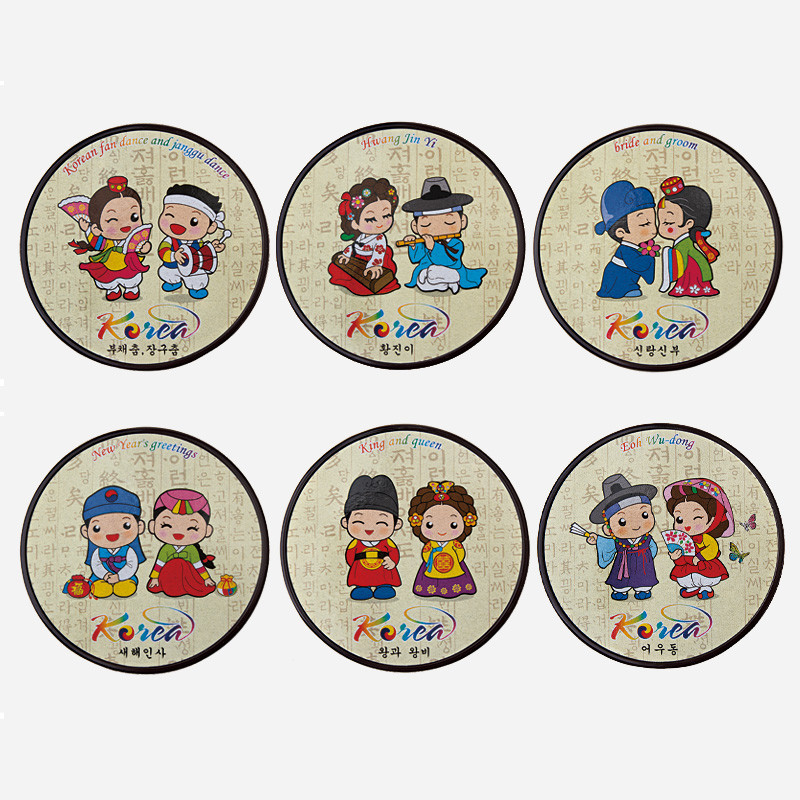
When you do not know whether the recipient drinks, coasters, sujeo (spoon-and-chopstick sets), or small decorative accessories are more versatile than traditional liquor cups. These gifts are not entirely removed from Korean drinking culture, but they can convey the whole of Korean table culture without giving the impression of offering alcohol. They are particularly low-pressure for recipients who are likely to prefer items they can use in daily life, such as international students, business travelers, or homestay families.
Coasters featuring hanbok characters or traditional patterns can be used alongside tea, coffee, or water glasses, giving them a wide range of applications. Even if the recipient does not drink, they can still experience the Korean color palette and table atmosphere, and the small size makes them relatively convenient as a travel gift as well. It is best to think of this type of gift not as an alternative to a cup gift, but as a safe candidate to consider first in situations where the recipient's drinking habits are uncertain.
The smaller an accessory gift is, the more important the packaging and explanation become. Handing over the item alone can make it look like a simple souvenir, so adding a brief description of how it is used—such as "a Korean-style table accessory for placing under a cup or glass"—makes the meaning clear. The related products at the end are candidates for cups, jubyeong, coasters, and table accessories that can be compared against one another using these criteria. Ultimately, when it comes to gifts for foreigners, working out the recipient's drinking habits, the level of formality in the relationship, and the logistical burden of delivery before settling on a product makes the choice considerably easier than starting from the product name.