Shopofkorea guides
Low-Key Korean Gifts for Friends from Abroad You Haven't Seen in a While
Official product names are shown in Korean. Product pages are in Korean; prices are in South Korean won (KRW).
When meeting up with friends from your time at a school abroad, what matters more than the size of the gift is the atmosphere in which you can hand it over. Being too formal can reduce the ease between friends, and if it looks too much like a generic souvenir, the meaning of having brought it from Korea can feel diminished. Sorting out the number of friends, the distance you'll be traveling, and the range of the recipients' tastes makes it easier to choose something that feels effortless.
- When dividing among several people: small, lightweight items that are easy to match in quantity
- When you want to leave a slightly stronger impression on a friend or two: commemorative accessories that feature traditional patterns or colors
- When there is little time for lengthy explanations: stationery or keychains whose use is immediately obvious
- When you will be moving around a lot: items with low breakage risk and compact packaging
When you need to share the same sentiment lightly among several friends
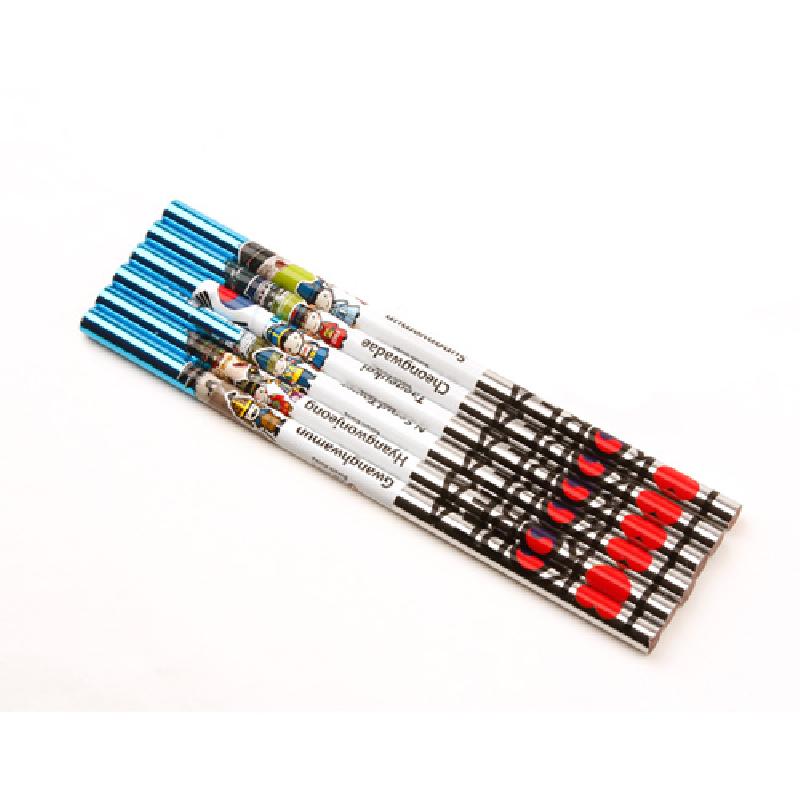
At a gathering like a class reunion, where the final headcount stays uncertain until the last moment, it is better to focus on whether each recipient can take the gift away without feeling burdened, rather than on the presence of each individual item. Small, lightweight stationery is easy to slip into a bag, and handing it out on the spot does not require a long explanation. Ballpoint pens featuring Korean-style illustrations or color palettes are practical, making them relatively safe choices even for friends who do not particularly like decorative items. That said, it is safer to choose a design that many people can comfortably receive rather than something with a very strong personal aesthetic.
A type like 예쁜 한국볼펜5종 (Pretty Korean Ballpoint Pens, 5 Designs) can be seen as a stationery gift well suited to handing out one to each of several friends. For people who attended school together, a ballpoint pen is a natural object in itself, and it is easy to hand over at a reunion with just a brief "I brought this from Korea." Reactions noting that a light, low-pressure set was good as a gift to share with friends abroad align with exactly this kind of selection criterion.

This type of item is less about any single product being the definitive answer and more about an example of an approach that reduces the chance of missteps when there are many people involved. If there are several colors or designs, friends may enjoy picking their own. Rather than matching the quantity exactly, preparing a couple of extras means things will not feel awkward if more people show up than expected.
For a friend you would like to stay in their memory, there needs to be a distinctly Korean mark

Among friends you are meeting after a long time, there may be someone with whom the time you spent studying together holds a special place. In that case, a very large gift is less fitting than a small keepsake that appears occasionally in everyday life — on a desk, a bag, or a set of keys. Accessories with a clearly Korean image, such as motifs evoking jeontong yebok (traditional formal dress), jogakbo (patchwork cloth), or jagae (mother-of-pearl inlay), connect the recipient's memory to your origins without requiring much explanation. However, items that are strongly decorative can be a matter of personal taste, so something portable is preferable to something too large or with limited practical use.
A type like 고운 열쇠고리 5p세트-코리아(전통예복) is an example that leaves a Korean impression while still being suitable for distributing among several people. Keychains are compact and easy to keep track of even while traveling, so handing them over is simple even when the reunion is brief — at a restaurant or café, for instance. The jeontong yebok motif immediately calls Korea to mind, but because the item is small, it also reduces any sense of burden on the recipient.
When choosing accessories like these, it is worth thinking about your friends' lifestyles as well. A friend who enjoys attaching things to their bag or keys will find it a good fit, while a friend with a strongly minimalist sensibility might be more comfortable with a storage-type item like a bookmark or postcard. Ultimately, the key question is: "Does it have a Korean feel, while not becoming a chore the recipient has to deal with?"
If you want to evoke the memory of being schoolmates, a stationery combination feels natural
For friends you graduated with from a school abroad, stationery fits well with the context of the relationship. Items like ballpoint pens, bookmarks, and pencils connect to the time you spent studying together without carrying too personal a meaning, making them easy to hand over. A set that includes both a bookmark and a ballpoint pen is particularly good for combining practicality with a commemorative quality, and it works well for relationships that fall somewhere between close friends and casual acquaintances. That said, if many of your friends rarely read books, a set that includes something with an obvious use — like a ballpoint pen — alongside the bookmark is better than one with only bookmarks.
A type like 한국문화4종 책갈피+볼펜세트 (Korean Culture 4-Design Bookmark + Ballpoint Pen Set) lends itself to a natural explanation in the context of a school reunion. A single line — "We used to study together, so I picked something like this" — conveys the reason for the gift, and if Korean-style illustrations are included, it also retains the feel of a souvenir. Just as reactions have noted that it seemed like a good gift to keep as a memento of a visit to Korea or a connection with Korea, even a small item can leave a lasting impression when the context is right.

A combination gift like this works well when you want to give something a little more thoughtful to a particular friend, and it is also convenient to prepare several sets to hand out. However, if the packaging looks too formal, it can feel burdensome between friends, so if the reunion atmosphere is casual, a simple and clean way of presenting it is recommended. Slipping in a short handwritten note adds a personal memory to the same item.
If you are meeting briefly and moving on right away, reduce breakage risk and bulk first
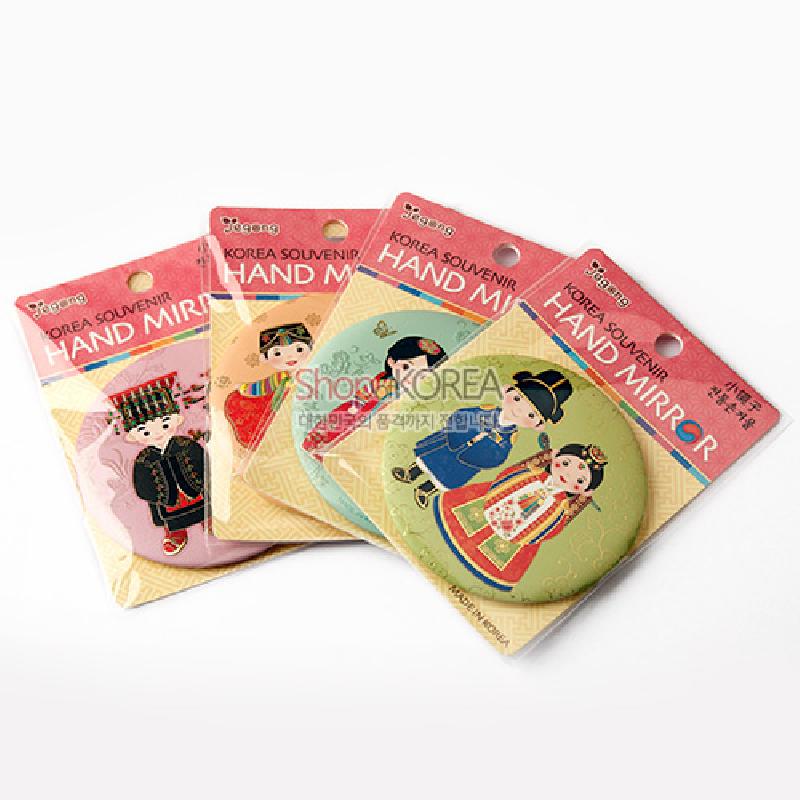
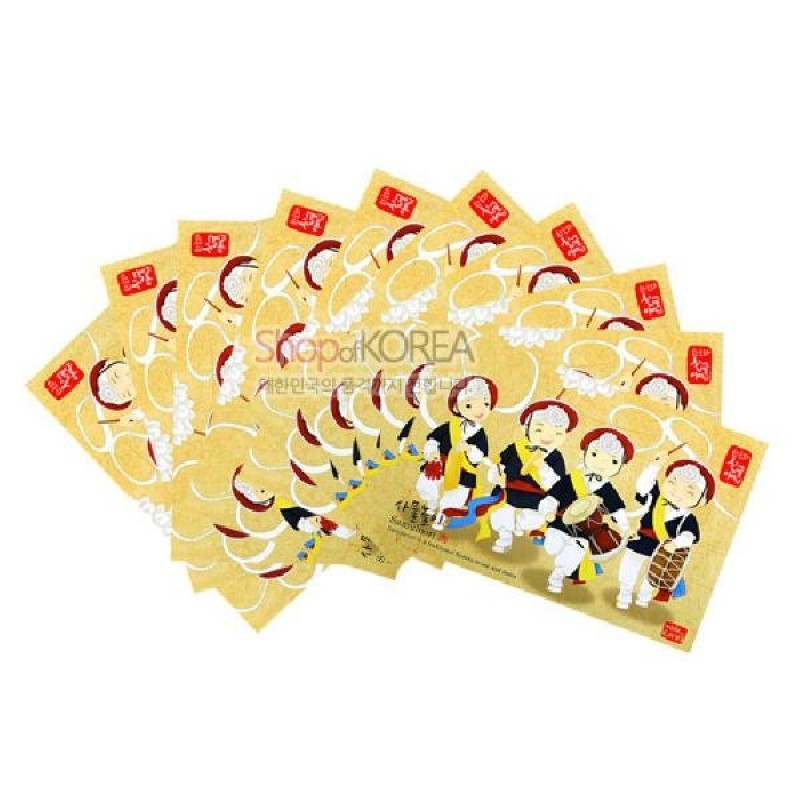
Reunions after graduation often happen in short windows, overlapping with travel itineraries, business trips, layovers, and multiple appointments. In those cases, before thinking about how pretty something is, you need to consider whether it will break, whether it can withstand being pressed inside a bag, and whether it will be a burden during airport transit. Hand mirrors, keychains, postcards, and thin stationery items are relatively easy to manage, but if the surface is prone to scratching, it is worth checking whether individual packaging is included. When distributing among several people, a simple set that does not require labeling names on the spot is more convenient.
For a closer friend, you might also consider an everyday-use accessory such as a tumbler featuring a hanbok (Korean traditional clothing) image. However, items of this type are bulkier than stationery or keychains, and breakage during transit and luggage weight need to be taken into account. They suit a situation where you are handing something to a couple of people separately, and smaller accessories are more reliable when distributing to a larger group all at once.
The related products at the end are not simply a list repeating items mentioned in the body; they are candidates for small Korean gifts to compare side by side for the same reunion situation. If there are many friends, use quantity and portability as your criteria; for a friend you would like to stay in their memory, look at Korean-style patterns and how well the item keeps; and for a setting where explanations need to be brief, check whether the use of the item is immediately apparent. If you decide on the scene of the meeting before thinking about product names, you can reduce the sense of burden while naturally leaving behind a Korean memory.