Shopofkorea guides
A Guide to Korean Stationery Gifts to Share with Exchange-Student Friends
Official product names are shown in Korean. Product pages are in Korean; prices are in South Korean won (KRW).
When you want to share Korean stationery gifts with friends during your exchange-student life, it is easier to start not from "what looks pretty" but from "in what situation and for how many people." The mood for receiving a gift differs slightly depending on whether the recipient is a friend you see often in class, a friend you have grown close to in the dormitory, or a friend you are briefly saying goodbye to at the end of the semester. A souvenir that is too large can feel like a burden, and something too decorative may be easy to explain yet difficult to actually use.
- When sharing with many people: bookmarks, pens, and pencils that are easy to prepare in identical sets
- When giving something separately to a close friend: postcards or small accessories to which you can add a personal message
- When handing something over in class or in the dormitory: lightweight stationery that can be used right away
- When giving a brief explanation of Korean meaning: elements that are immediately visible, such as Hangeul, traditional patterns, hanbok, and Seoul imagery
When sharing the same sentiment with many friends, a simple set is easier to manage
If you have a large number of friends to give to, what matters more than the individuality of each gift is whether the standard for distributing them is consistent. For friends who share the same class, stationery of similar size and purpose reduces awkwardness more than sets that look very different from one another. A combination with a clear use—such as a bookmark and a pen—is easy to explain as "a small souvenir from Korea," and the recipient immediately understands why they would keep or use it. At this point, if the wrapping feels overly formal, it can clash with the casual atmosphere of handing something to a friend, so a small and neat presentation works best.
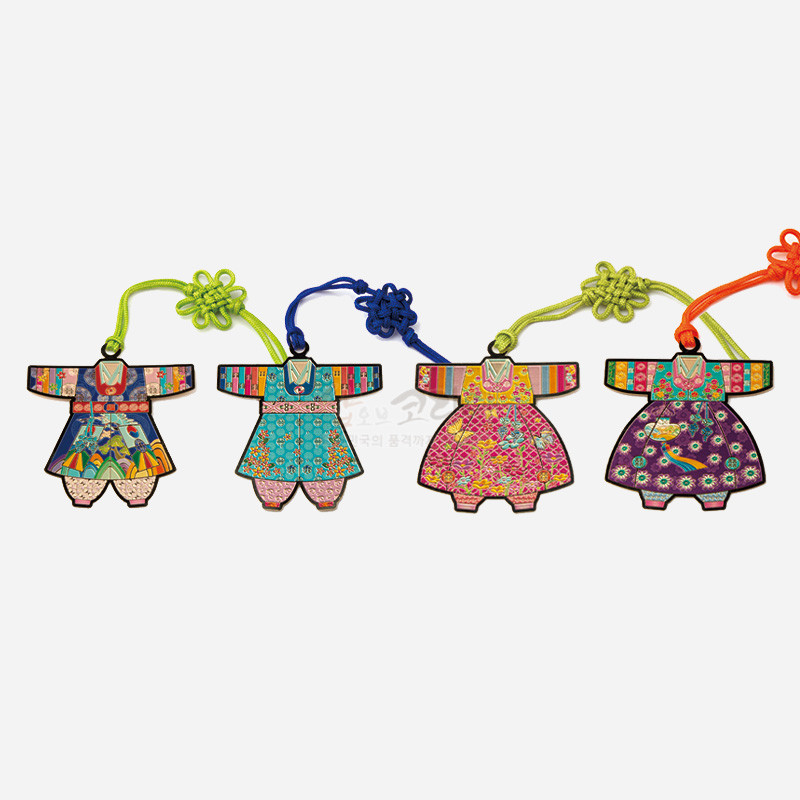
For example, a type like the 한국문화4종 책갈피+볼펜세트 (Korean Culture 4-piece Bookmark + Ballpoint Pen Set) connects naturally to friends who read books or take handwritten notes. A bookmark featuring traditional imagery gives the feel of a souvenir, while the ballpoint pen can actually be used in class or daily life, so it does not end up as purely decorative. When distributing the same set to multiple people, it is difficult to match each friend's individual taste precisely, so it is better to look for combinations whose cultural meaning is easy to explain and whose range of use is broad.

Rather than meaning that one specific product is the only right answer, this kind of set is better understood as a criterion for choosing "set-type stationery that combines commemorative value and practicality." In exchange-student gift reviews, the context of wanting to find a Korean souvenir that does not feel burdensome comes up frequently, and the core of that is ensuring the recipient immediately understands the meaning of the gift while not feeling burdened by having to store it. If your friend does not read books very often, you can compare options that lean more toward pens or pencils with a wider range of use, rather than sets with a heavy emphasis on bookmarks.
If it can be taken out and used right in class, a long explanation is not necessary

The most natural setting for exchanging gifts with exchange-student friends is often a brief moment—after class, at a study group, or in a dormitory common area. In situations like these, something that can be conveyed with just "it's a writing instrument with a Korean feel" is more convenient than an item that requires a lengthy explanation. A ballpoint pen is useful to anyone, and its small size means it is not a burden to carry in a bag. However, if the design is too strongly reminiscent of a tourist souvenir, people may hesitate to use it in everyday life, so it is good to look for a balance where Korean elements are visible yet the item does not feel out of place as everyday stationery.
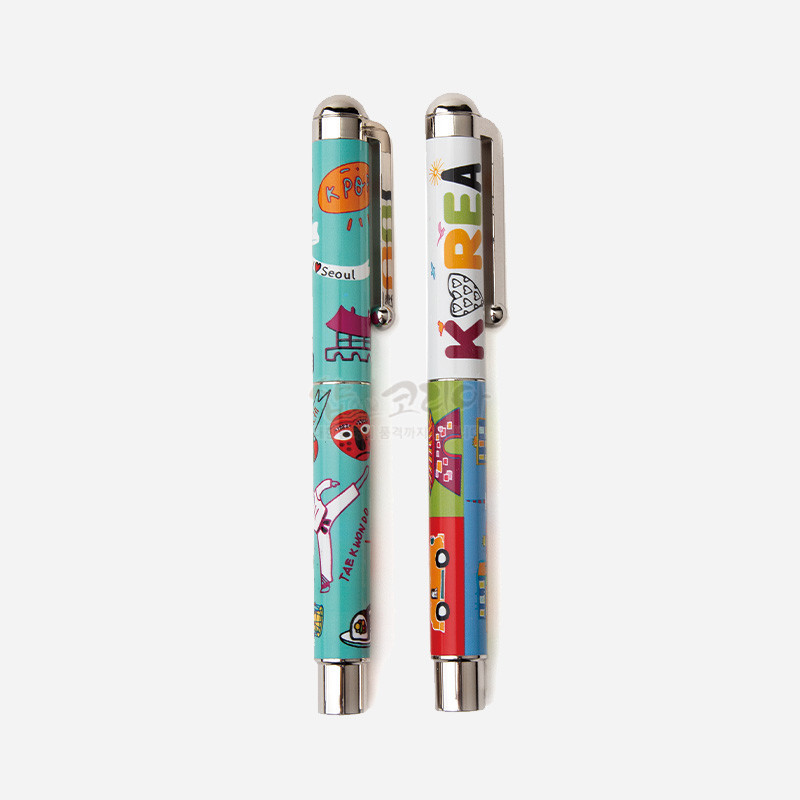
A type like the 예쁜 한국볼펜5종 (Pretty Korean Ballpoint Pen, 5 Designs) is well suited for giving one to each of several friends, or for letting a close friend choose one design from among several options. A pen is small as a gift, but its actual use is clear, so the recipient can immediately put it on their desk or in their pencil case. If there are elements that can be explained briefly—such as Hangeul, traditional patterns, or Korean color palettes—they also serve as a conversation starter.
When choosing writing instruments like these, it is good to consider both "does it look special" and "can it be used day to day" at the same time. A pen that is too decorative may stand out as a souvenir, but it can feel like too much to use frequently in class. Conversely, something too plain may not convey the feeling of a gift brought from Korea, so it is better if at least a small design accent remains. If friends from many different countries are present, elements that can be shown at a glance—such as Seoul, hanbok, or traditional patterns—are more convenient than symbols that require a complex explanation.
The more friends there are, the more reassuring it is to have stationery with a clear unit for sharing
During exchange-student life, the number of people you end up wanting to give something to can grow beyond what you initially expected. You may start by thinking of just a few close friends, then find yourself wanting to give a small token to a friend from the same group presentation or a friend you often ran into in the dormitory. In situations like these, a unit that is easy to give one per person becomes important. Stationery that is easy to distribute individually—such as pencil sets, small stickers, or bookmarks—makes it easy to adjust the quantity and does not create a noticeable difference between recipients.
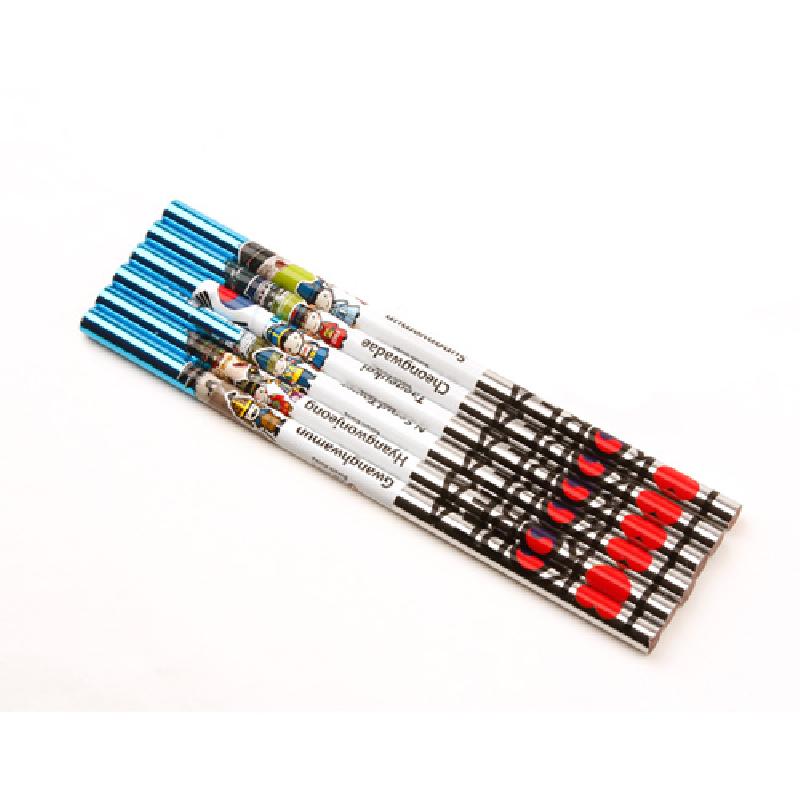
A type like the 전통문양 연필6종세트-문화유산 (Traditional Pattern Pencil Set of 6 – Cultural Heritage) is practical stationery that connects directly to academic life while also lightly conveying a Korean feel through its patterns. Pencils give a slightly more casual impression than ballpoint pens, making them easy to hand to close friends, club friends, or friends you worked on a project with, without any sense of burden. In particular, stationery organized as a multi-piece set makes it easy to decide how to distribute it according to the number of friends.
However, how often pencils are used will vary depending on each friend's habits. They are a good match for friends who enjoy taking handwritten notes or sketching, but if most of your friends follow class using digital devices, it is better to also consider items with a broader range of use, such as ballpoint pens, bookmarks, or stickers. What matters is not "stationery with Korean decoration" in itself, but whether that particular friend would actually keep it on their desk. The larger the quantity, the harder it is to match individual tastes precisely, so it is better to prioritize designs that do not lean too strongly toward any particular preference.
For farewells, a blank space where a message can be left stays in the memory
At the end of the semester or before returning home, a gift that allows you to briefly preserve the time you spent together suits the occasion better than the object itself. In this context, postcards or small cards serve the role of a stationery gift while also offering the advantage of being able to add a handwritten message. Even if you are not close enough to write a long letter, simply writing one line—the name of a class you shared or a place you visited together—makes it a personal gift. However, when giving to many people at once, writing messages can take longer than expected, so it is a good idea to decide in advance who will receive a handwritten addition.
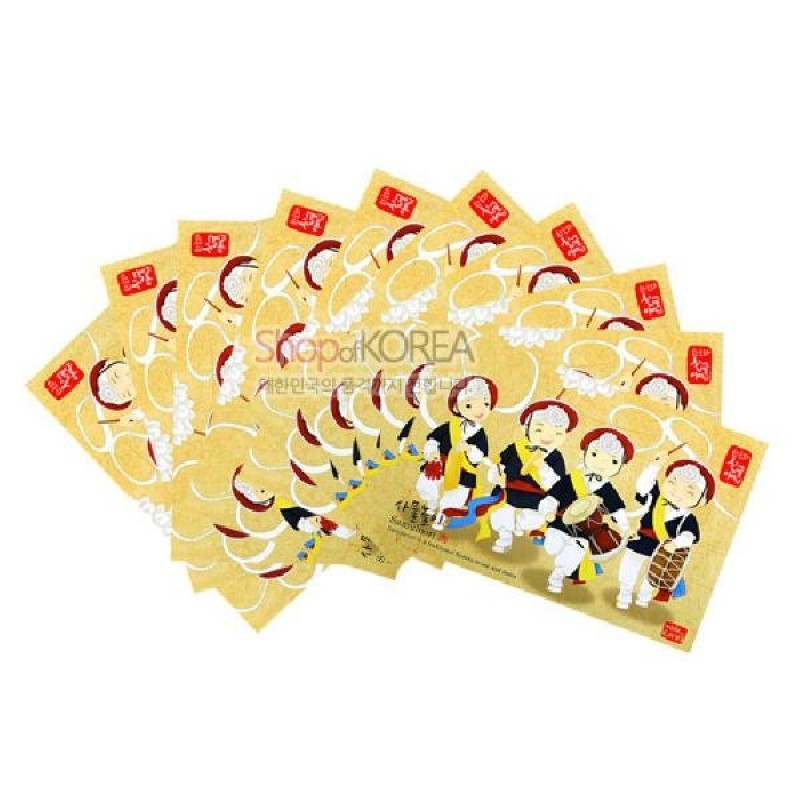
A type like the [10장 묶음] 한국의 아침 엽서 시리즈 - 사물놀이 ([Pack of 10] Korean Morning Postcard Series – Samulnori) shows a Korean scene while leaving room for the sender to add a brief greeting. Postcards are light and compact, making them easy to pack in a travel bag, and the receiving friend can easily put them up on a wall or around their desk. As reflected in the context of reviews expressing a desire for a small souvenir that is more memorable than a common tourist image, postcards have the strength of preserving a message and a moment together, beyond the size of the object itself.
This kind of gift is fine on its own, but it feels even more natural when lightly paired with a pen or a bookmark. However, if you write the same message to every friend repeatedly, the personal feel diminishes, so it is also fine to add a short handwritten note only for close friends and distribute stationery-centered gifts to the rest. If the postcard image depicts a particular traditional scene, a brief explanation along the lines of "one part of Korean performance culture" is about the right amount. An image that can spark a conversation just by looking at it is more convenient than subject matter that requires a long explanation to be understood.
The Korean feel should be clear, yet it must fit into your friend's everyday life
Korean elements are important in gifts for exchange-student friends, but the stronger the traditional imagery, the more you also need to consider whether it suits the recipient's taste and living space. Hanbok, traditional patterns, the Taeguk, Seoul imagery, and minhwa (Korean folk painting)-style decoration are easy to explain, but not every friend will receive them in the same way. So when distributing to many people, types where cultural elements are incorporated into everyday objects—such as bookmarks, pens, pencils, and stickers—are more universally appropriate than accessories that are too large or too heavily decorative. Adding a keychain or decorative accessory separately only for close friends is another way to reduce any sense of burden.
The related products at the end are not a list that simply repeats the products covered in the main text; they are candidates to compare alongside one another in the same exchange-student gift situation. If you have many friends, look at set-type stationery; for close friends, consider postcards or small accessories to which you can add a message; and when handing something over directly in class, focus on writing instruments. Ultimately, the standard is the moment of giving, not the product name. Deciding first how many people you are giving to, how close you are to them, and whether the receiving friend can briefly understand the Korean meaning and actually use the item will make the choice much easier.