Shopofkorea guides
Korean Thank-You Gift Guide for Foreign Guests at Doljanchi and Baegil Celebrations
Official product names are shown in Korean. Product pages are in Korean; prices are in South Korean won (KRW).
Inviting foreign guests to a doljanchi (first-birthday celebration) or baegil (hundredth-day celebration) can make choosing a thank-you gift feel a little uncertain. In Korea it is natural to express gratitude for attendance, but the doljanchi and baegil traditions themselves may be unfamiliar to the recipients. For that reason, it is better to first consider the closeness of the relationship, the burden of luggage for guests who are traveling home or moving on, and how easily the item can be stored at home or in the office, rather than choosing a product first.
- For close family and friends: a decorative or traditional keepsake that conveys the meaning of the child's first milestone
- For colleagues or when giving to many people at once: a practical small item of an unobtrusive size
- For guests who are departing soon: something light, flat, and unlikely to break
- When you want to offer a brief introduction to Korean culture: an item with a clear traditional image that is easy to use
For first-time guests, a gift that needs little explanation is easier for everyone
Doljanchi and baegil carry great significance as Korean family celebrations, but for foreign guests the background can require a lengthy explanation. In such cases it is good to convey both congratulations on the child's growth and a word of thanks, while making sure the gift itself does not come across as overly ceremonial. Small items with a distinctly Korean impression—traditional dress, Seoul, hangeul, folk imagery—can carry the atmosphere of the occasion with only a brief explanation. However, religious symbols or very strong decorative elements may not suit every recipient's taste, so for guests you are meeting for the first time or with whom the relationship is still tentative, something that can actually be used tends to be the safer choice.
When you need to prepare the same thank-you gift for many people, you might look at small items that are easy to carry and have a clear purpose, such as a compact hand mirror. For example, the 원형손거울 4p세트-전통예복 (Round Hand Mirror 4-Piece Set – Traditional Formal Dress) is a type that features traditional Korean dress imagery, making it easy to add a note saying "Thank you for coming to our child's first birthday celebration in Korea." The fact that it sits comfortably in the hand and can easily be slipped into a bag is also an important consideration when giving thank-you gifts to a group of guests.
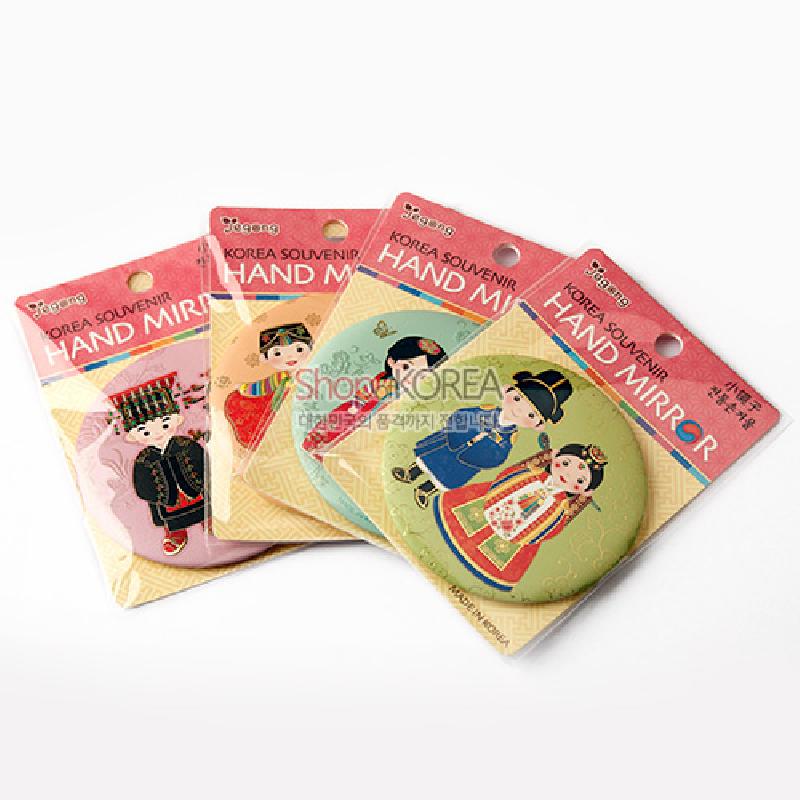
This kind of item is not so much a single definitive answer as it is an example of the direction to take with thank-you gifts that are easy to hand out at the venue. On the packaging or message card, rather than placing heavy emphasis on the child's name and the date of the event, it feels more natural to include a brief thank-you for attending alongside a short note explaining that this is a Korean milestone celebration. If the wording is too personal, colleagues or acquaintances may find it awkward to keep, so the broader the relationship, the more understated the message should be.
For colleagues, practical items that look at home on a desk are what matter

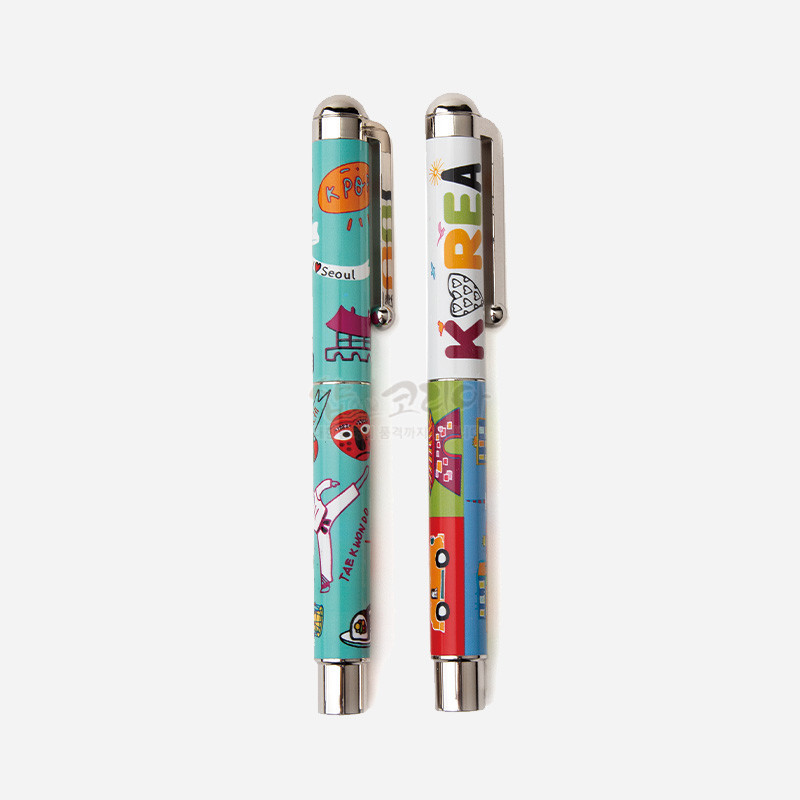
For office colleagues, business acquaintances, and foreign guests you have met through a research group or social circle, something that can actually be used is more comfortable than a decorative piece. Because doljanchi and baegil are family-centered events, a gift that feels excessively personal can put the recipient under pressure. Items with an obvious everyday use—writing instruments, bookmarks, small stationery—convey gratitude while maintaining an appropriate distance in the relationship. Items that can be used back at the office or school are especially good because they do not take up much storage space.
Stationery such as the 아름다운 한복과 서울 볼펜세트 (Beautiful Hanbok and Seoul Ballpoint Pen Set) is an easy example to hand to a colleague. The hanbok and Seoul imagery leave a Korean impression, while the clear function of a ballpoint pen means it is more likely to be received as "a small, usable thank-you gift" than as "a souvenir I now have to find a place for." When preparing gifts for multiple people, the relatively consistent size and shape also makes distribution straightforward.
That said, when choosing stationery, designs with overly childlike characters or heavy decoration may feel out of place depending on the recipient's age and work environment. The fact that the child is at the center of the event can be communicated fully through the message card; the item itself is more reliable when chosen in a tone that an adult guest can comfortably use day to day. Since foreign guests may not read Korean, including a short thank-you message in English can also make the moment of giving feel smoother.
For guests who are departing soon, a light and flat gift is reassuring
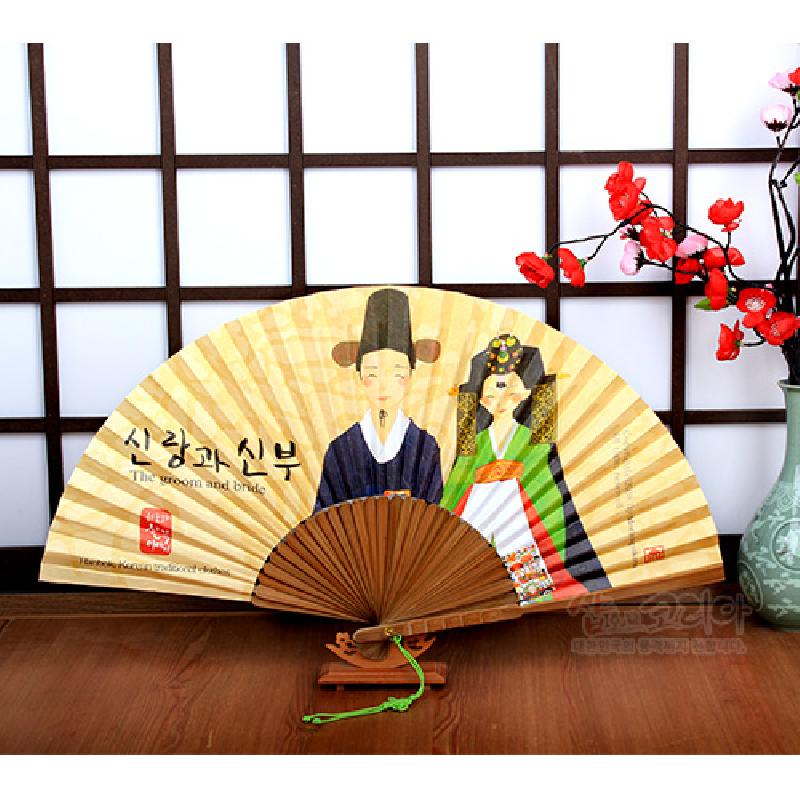
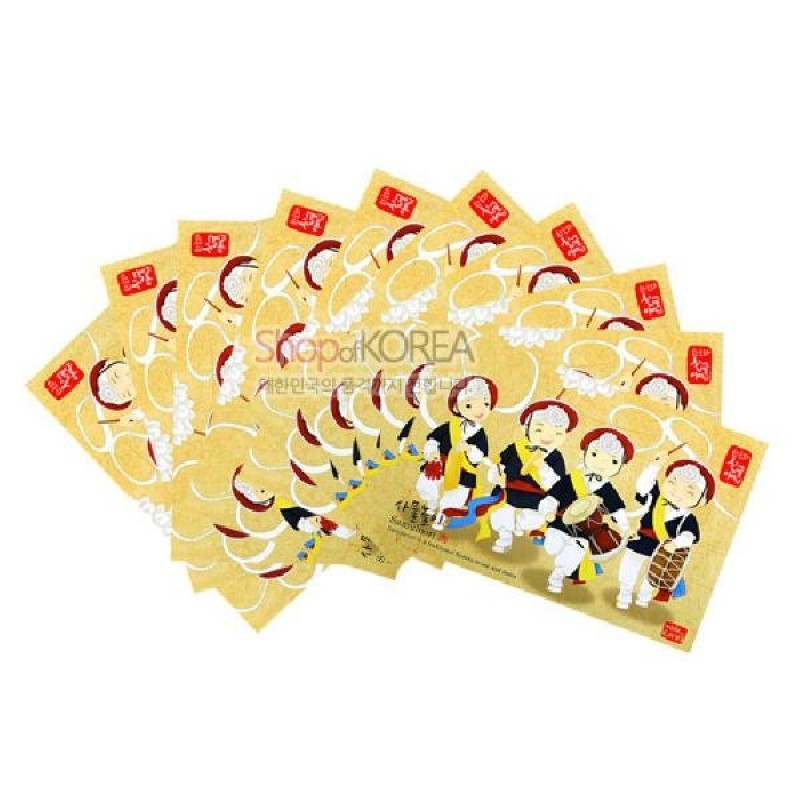
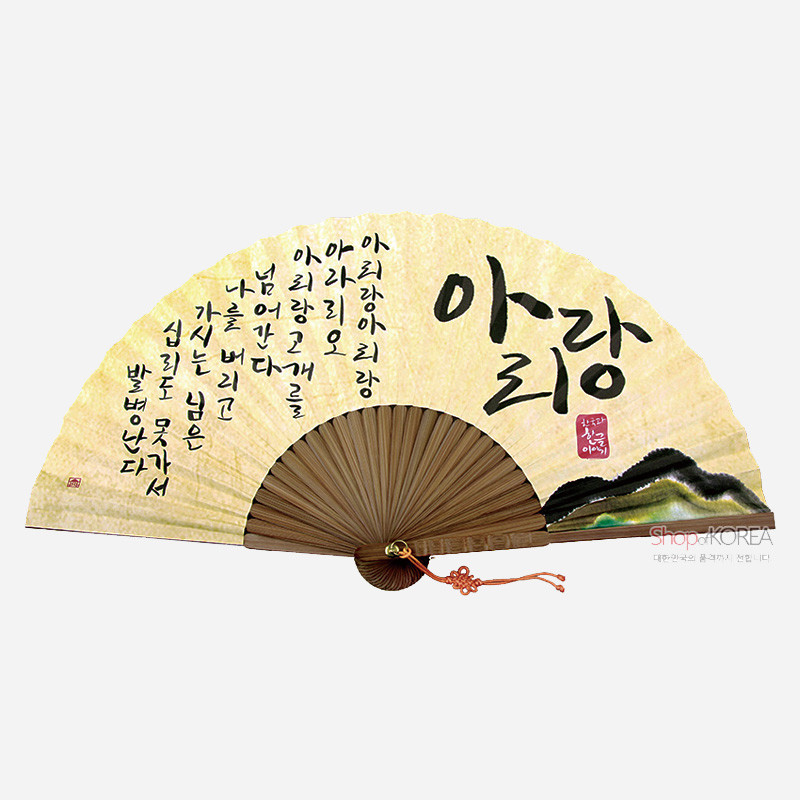
If family or friends who have come from abroad are moving on or heading home right after the event, the weight of their luggage matters as much as the meaning of the gift. Fragile decorative items, bulky boxes, and heavy household goods may be well-intentioned but can leave the recipient having to reorganize their bags. In this situation, thin and lightweight options such as bookmarks, ballpoint pens, postcards, and fans are a good fit. For a gift to be given just before departure in particular, the more practical criteria are low risk of damage and whether it fits easily inside a bag, rather than elaborate packaging.
A set such as the 한국문화4종 책갈피+볼펜세트 (Korean Culture 4-Piece Bookmark and Ballpoint Pen Set) conveys a Korean image while being relatively easy to carry. Bookmarks and writing instruments have a clear purpose, and even recipients who are not especially interested in Korean culture can keep or use them without feeling burdened. Reviews noting that the size was not too much to handle as a Korean gift to give before departure align well with these criteria.

A small set like this is less suited to conveying deep meaning to a close family member and more suited to lightly leaving behind a memory of the event and of visiting Korea, along with a thank-you for attending. For guests with a lot of luggage, slim packaging may be more welcome than a rigid case, and a form that fits inside a bag may be more convenient than one with a large shopping-bag handle. Flat traditional items such as fans and postcards are worth comparing alongside these sets using the same criteria.
For close family and friends, look for a commemorative quality that is comfortable to keep for a long time
For the family of a foreign spouse, long-time friends, or acquaintances who have watched the child grow, a gift with a slightly more commemorative quality is perfectly appropriate. In this case, rather than making a strong show of "Korean-ness," what matters is a size and atmosphere that does not feel out of place when kept in the home. Items with a clear meaning—hanbok dolls, traditional fans, chopstick-and-spoon sets—can be received more warmly within a close relationship. However, if you do not know the recipient's home décor, religious background, or food culture, it is better to avoid very large decorative pieces or materials that require special care.
A hanbok doll, for example, pairs well with the symbolism of the child's first milestone, but it is closer to a gift given separately to someone particularly close than to a thank-you item distributed to all guests. A chopstick-and-spoon set is also a good way to show Korean everyday culture, but actual eating habits and storage situations need to be taken into account. The closer the relationship, the more lasting the impression made by 1 or 2 sentences explaining why you chose that particular gift, rather than simply increasing its size.
The related products at the end are not a definitive list of answers drawn from the main text, but rather candidates to compare alongside one another in the same thank-you gift situation. When it comes to thank-you gifts for foreign guests, the situation comes before the product name. If the relationship is broad, choose something small and practical; if the guest is traveling a great deal, choose something light and flat; for someone close, focus on a commemorative quality that is comfortable to keep. With these criteria, the gratitude expressed at a doljanchi or baegil will come across more naturally.