
Shopofkorea guides
An Educational Gift Guide for Helping Children with Foreign Backgrounds Enjoy Korean Culture
Official product names are shown in Korean. Product pages are in Korean; prices are in South Korean won (KRW).
When choosing Korean culture gifts for a household with foreign children, it is better to ask "how can the child encounter this?" before asking "is it Korean enough?" If a child is encountering Korea for the first time, hands-on items for coloring, writing, and sharing reduce the burden more than decorative objects that require lengthy explanation. If the child already has some curiosity about the Korean language, K-content, or travel destinations, gifts that feature more specific places or patterns also feel natural.
- For a child encountering Korea for the first time: types they can touch right away, such as drawing, coloring, and stationery
- For a child who is already curious: types that have something to talk about, such as Seoul, Hangeul, and traditional patterns
- For the whole family to use together: types that keep conversation going, such as postcards, cups, and bookmarks
- For sharing with siblings or friends: types that are light and easy to adjust in quantity, such as pencils, ballpoint pens, and keychains
When play comes before explanation, children find things less unfamiliar
For a child encountering Korean culture for the first time, a gift they can try with their hands is better than one that leads with meaning. When familiar activities such as coloring, drawing, and writing incorporate images of Korean travel destinations or traditional scenes, the child is more likely to explore them naturally rather than feeling they are something that must be studied. In this case, a composition in which the child completes something themselves is more comfortable than a highly finished decorative object. If a parent adds a short remark from the side—something like "this is a scene from Seoul"—conversation can continue without pressure.
For example, a type such as the 컬러링페이퍼-한국여행 (Korea Travel Coloring Paper) lets a child slowly encounter Korean scenery by choosing colors and filling in scenes. Even for a child who knows little about Korea, pictures carry a low language barrier, and because the finished result can be put up in a room or shown to family, the context in which the gift is used is clear. That said, for very young children a composition with many detailed illustrations may be less comfortable than one with broad areas to color in, while for children in the upper years of elementary school and above, a composition featuring a wide variety of locations may hold their interest longer.
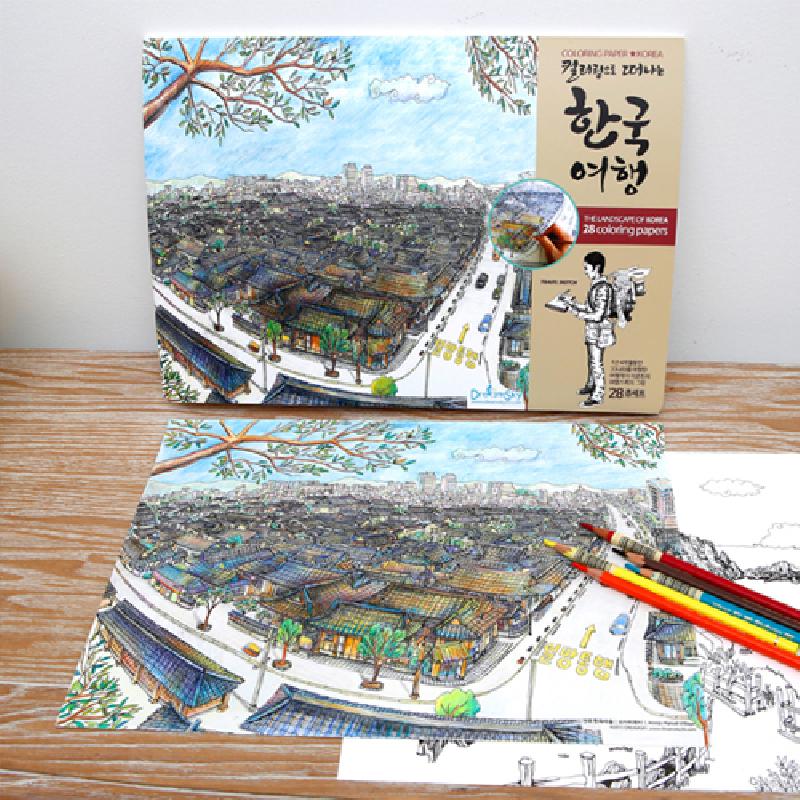
The value of this kind of hands-on gift lies less in having the child memorize specific facts accurately and more in giving them an enjoyable first encounter with the subject of Korea. When handing over the gift, it is better to open with something like "let's color together and pick out a scene you like" than to say "learn about Korea." If you then talk around the color or scene the child chose first, the cultural explanation does not become one-sided.
For a child who is already interested, places and talking points stay with them longer
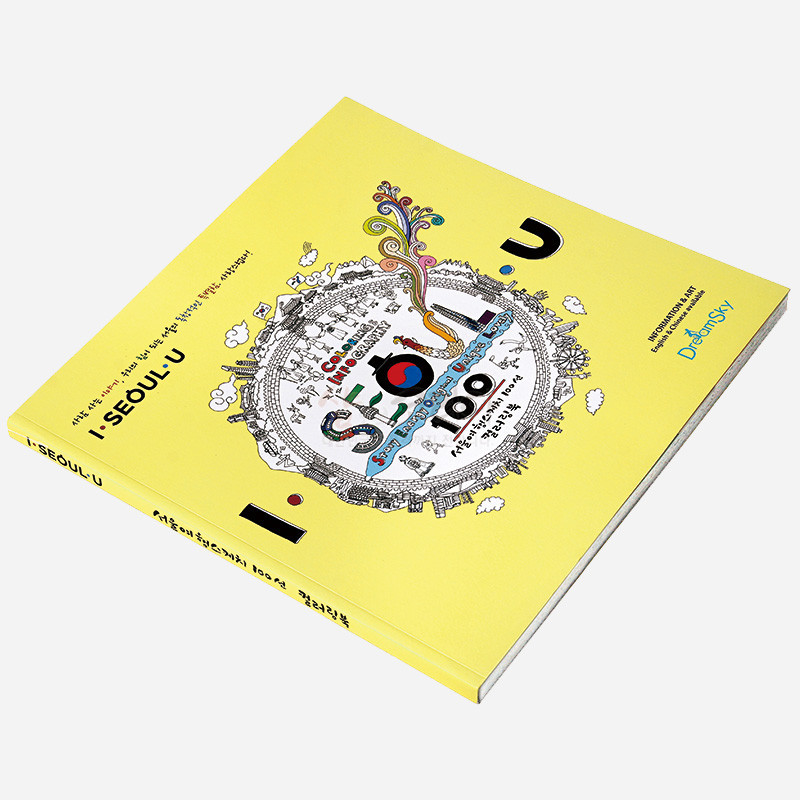
If a child has shown even a little interest in Korean travel, Seoul, Hangeul, food, or K-content, it is fine to make the gift criteria one step more specific. In this case, a composition that gives the child reason to ask "where is this?" or "what does this letter say?" fits better than something that simply displays the Korean flag or a traditional image. Illustrations featuring specific places, Hangeul motifs, and traditional patterns (jeontongnuyang) are easy to attach a short story to without the parent needing to give a long explanation. However, a gift that contains too much information may feel overwhelming to a child, so it is better to bring things out one at a time rather than explaining everything at once.
A type such as the 컬러링페이퍼-서울여행스케치100선 (Seoul Travel Sketch 100 Coloring Paper), which presents Seoul scenery across many different scenes, is especially easy to use as a conversation starter in households living abroad. If someone in the family has visited Korea, they can make connections like "this looks similar to a place I went," and if the family has not yet been to Korea, it becomes a game of choosing places they would like to visit someday. The fact that some finished pages can be kept or put up on a wall after coloring is also an advantage, meaning the gift does not end after a single use.
This kind of place-centered gift suits a style where the family looks at it together a little at a time, rather than leaving it as a task the child must complete alone. Choosing one page a day, or letting the child first pick a scene they like to color, keeps the barrier to entry low. From the perspective of an adult explaining Korea, there is no need to prepare all the history or facts in advance. Starting a short conversation from whichever scene the child shows interest in is enough.
Objects used every day let culture seep in naturally
If you want the gift to be remembered for a long time, it is also worth looking at objects that fit into recurring daily scenes such as a desk, a pencil case, or reading time. For foreign children, items used right away—such as pencils, ballpoint pens, bookmarks, and postcards—feel less unfamiliar than decorative objects with strong symbolic weight. Stationery in particular is picked up naturally without any explanation that it is "a Korean-style gift," making it easy for a child to accept without pressure. However, if the pattern is too adult in taste or the form is one that can only be kept on display, it may be difficult for the item to lead to actual use.
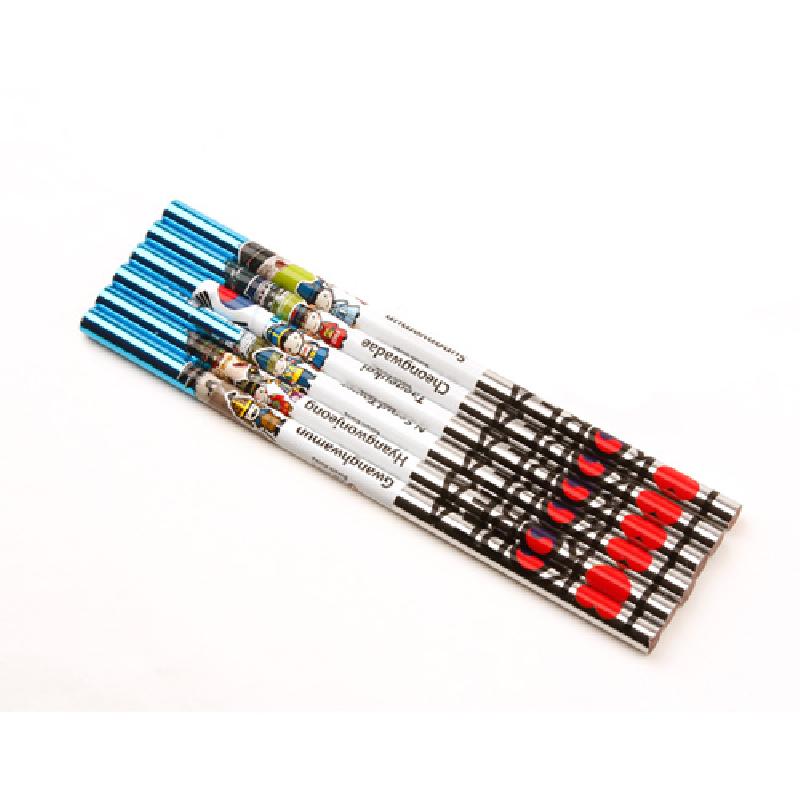
A type such as the 전통문양 연필6종세트-문화유산 (Traditional Pattern Pencil Set of 6 – Cultural Heritage) lets a child lightly encounter traditional patterns (jeontongnuyang) right in the middle of studying or drawing. Because pencils are something a child uses every day, the significance of the gift does not overshadow the object itself, and the patterns become material a parent can explain briefly whenever they wish. The set also suits situations where it is shared among siblings or friends, though for very young children it is better to consider the appropriate age for using writing instruments and how they will be stored.
Compositions that pair a bookmark with a ballpoint pen, small bookmarks featuring hanbok motifs, and Seoul-themed stationery with added characters can all be viewed by the same criteria. The key is not to display Korean cultural symbols prominently, but to fit them unobtrusively into objects a child uses often. Just as one account describes choosing a bookmark-and-ballpoint-pen combination while thinking about what to give children, small gifts with practical use are easy to adapt for both visit gifts and family gifts.
For gifts the family will talk about together, Hangeul and messages are a good starting point
If a parent wants to gradually introduce the Korean language and culture to a child, gifts featuring Hangeul or Hunminjeongeum (훈민정음) motifs are also a good choice. Even so, it is more natural to use them as a light occasion to talk about the shapes of the characters, their sounds, and their names, rather than creating a feeling of compulsory learning. Objects that are seen repeatedly inside the home—such as mugs, postcards, and bookmarks—may prompt the child to ask questions first. If you are concerned about breakage during travel, you may want to prioritize light, easy-to-store compositions such as postcards or bookmarks over cups.
For example, a mug with a Hunminjeongeum motif is a household item that appears naturally at breakfast or snack time, making it easy for a parent to add a short explanation such as "this is connected to an old form of Korean writing." In postcard form, the activity can be extended so that a child writes a short sentence or adds a drawing to send to family. Even for a child who does not know Korean well, the shapes of the characters themselves can be a source of visual interest, so it is best to keep explanations short and repeatable.
When sharing with several people, small and light gifts are more convenient
If you are visiting a family living abroad, or if you need to share gifts among a child's friends or siblings, volume and quantity should be considered first. Small, light gifts are less of a burden during travel, and among the children receiving them there is less of a sense of disparity, which makes things easier. Compositions that are easy to distribute—such as keychains, ballpoint pens, bookmarks, and postcards—convey a simple Korean image without creating an overly formal atmosphere. However, very small accessories can pose risks of loss or safety concerns depending on age, so it is a good idea to confirm the ages of the children who will receive them.
Just as one account notes a positive response to small, unassuming gifts with a Korean image, for children the form that is immediately understood often matters more than the size of the gift. A keychain that can be attached to a bag, writing instruments to share with a friend, and a postcard for writing a short message all have a visible use without any explanation. The deciding criterion is whether the gift conveys a Korean feel while also being something the child can take as their own.
The related products at the end are best viewed not as a list that simply repeats the examples covered in the body, but as candidates to compare alongside one another in the same situation. The most suitable type will differ depending on the child's age, how familiar they are with Korean culture, and whether the gift is for shared family use or for distributing among several people. It is most natural to start by looking at low-pressure gifts such as play-based items and stationery, and then, once interest has been confirmed, to broaden toward compositions with more to talk about, such as places, Hangeul, and traditional patterns.
More related products
 한국의 아침 머그컵 시리즈 - 훈민정음
View product — product page in Korean
 [10장 묶음] 한국의 아침 엽서 시리즈 - 훈민정음
View product — product page in Korean
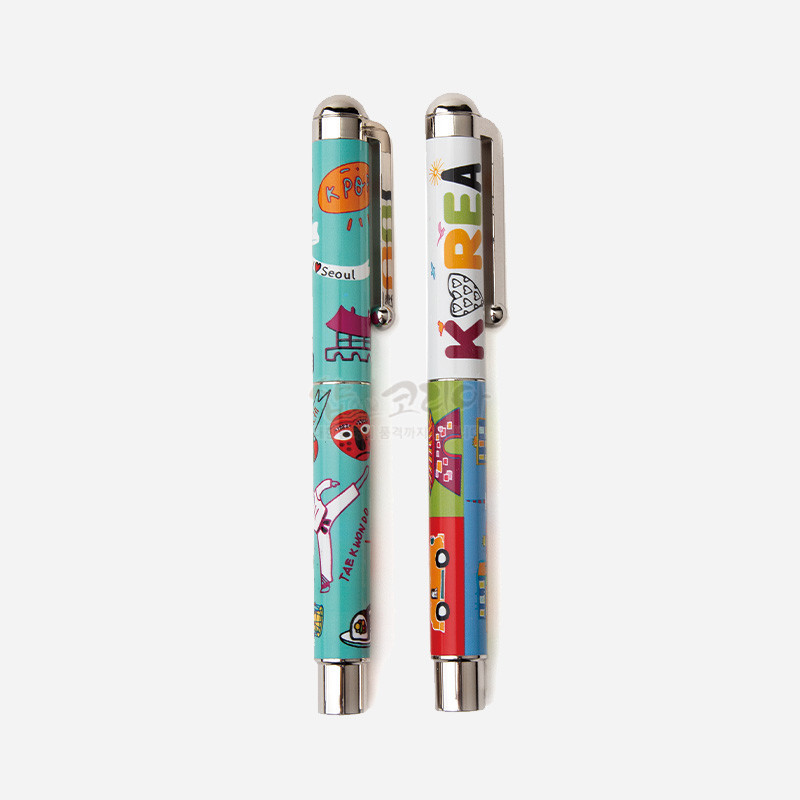 캐릭터 서울과 문화 볼펜세트
View product — product page in Korean
 고운 열쇠고리 5p세트- 코리아(전통예복)
View product — product page in Korean
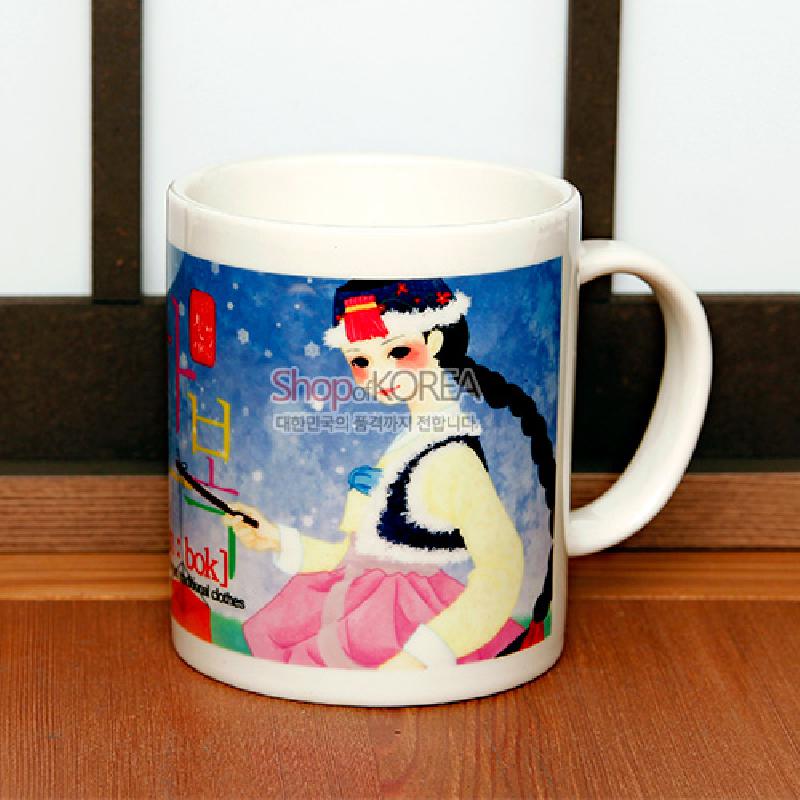 한국의 아침 머그컵 시리즈 - 청사초롱
View product — product page in Korean