Shopofkorea guides
Common Gifts Are Forgotten: Gifts That Look Genuinely Korean to Foreigners
Official product names are shown in Korean. Product pages are in Korean; prices are in South Korean won (KRW).
Choosing a Korean gift for a foreigner based solely on "how strongly Korean it feels" can actually make the decision harder. The right choice changes depending on whether the recipient prefers things to display at home, whether they are comfortable with items they can use right away in daily life, and whether the occasion calls for formality. Even when Korean patterns or materials are clearly present, a mismatch in size or purpose can make the gift feel burdensome; conversely, something too ordinary may leave little impression worth remembering.
- For overseas business contacts or buyers: prioritize storability, packaging quality, and the formality of the presentation moment
- For international students or homestay families: prioritize practicality — items that are easy to use right away in daily life
- For visitors or event attendees: prioritize portability and a configuration that is easy to share
- When you don't know the recipient's taste: prioritize types with a clear traditional image but low size and usage burden
In formal settings, the impression of lasting preservation comes first
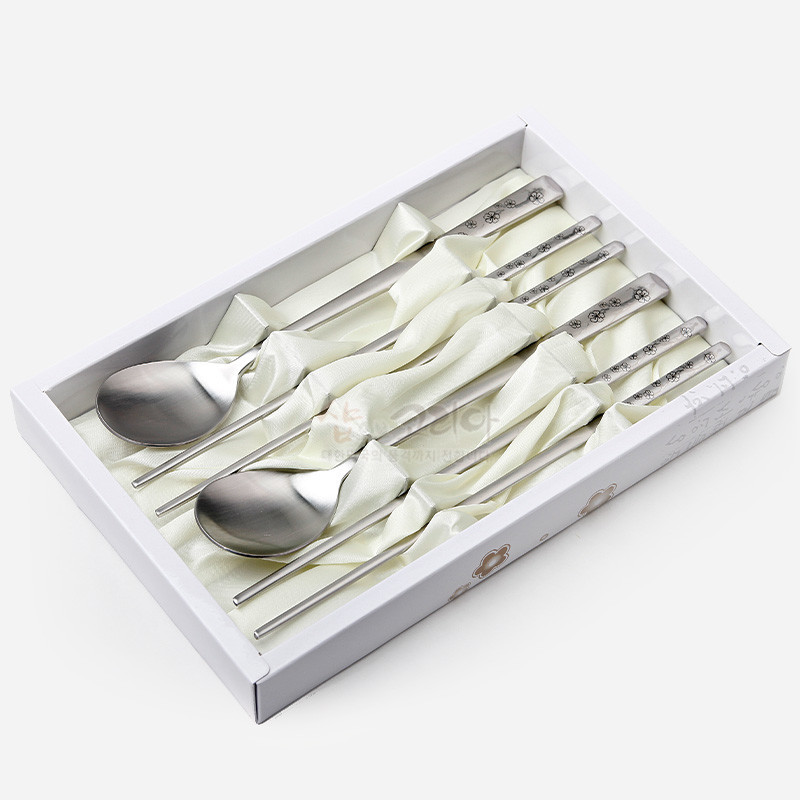
When the relationship is official — such as with overseas business contacts, buyers, or institutional visitors — the sense of stability in the presentation moment matters more than the gift's function. In these cases, a box (ham), a chopstick-and-spoon set, or a traditional accessory with well-composed patterns fits better than something too casual. These are types that leave the impression of "a respectful gift from Korea" even if the recipient does not use them immediately. However, if the size is excessively large or the decorative quality is too strong, it may not suit an office environment, so it is worth also checking whether the configuration is easy to store.
For example, a type like [선물세트]상감 자동함 3종-운학 ([Gift Set] Sanggam Automatic Ham 3-Piece Set — Crane Design; sanggam refers to the traditional Korean inlay technique) has sanggam patterns and a set configuration that suits formal presentations. With this kind of gift, rather than emphasizing a single function, what matters is the sense of completeness visible when the packaging is opened and the sense of stability when it is stored. For foreigners in particular, the crane motif (unhak) and traditional patterns can create a distinctly Korean first impression, conveying the background of the gift fairly well without lengthy explanation. However, if the recipient is traveling or has a schedule with a lot of luggage, the volume and risk of damage should also be considered.
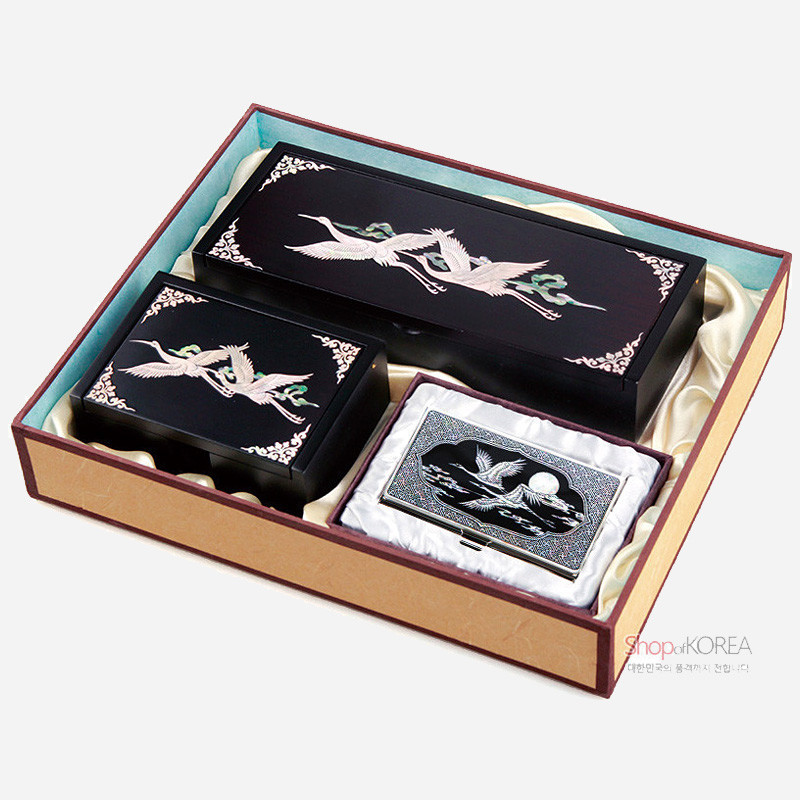
Formal gifts of this kind are not an area where a single specific product is the definitive answer. The key questions are: "Is it substantial enough to present in an official relationship?", "Does it suggest a place to store it after receiving?", and "Is the Korean decorative quality organized without being excessive?" Within the same criteria, options that lean slightly more toward the practical — such as a mother-of-pearl box (jagae-ham), a traditional-pattern case, or a chopstick-and-spoon set that carries food culture — can also be compared alongside one another.
When used in daily life, the Korean feeling remains more naturally
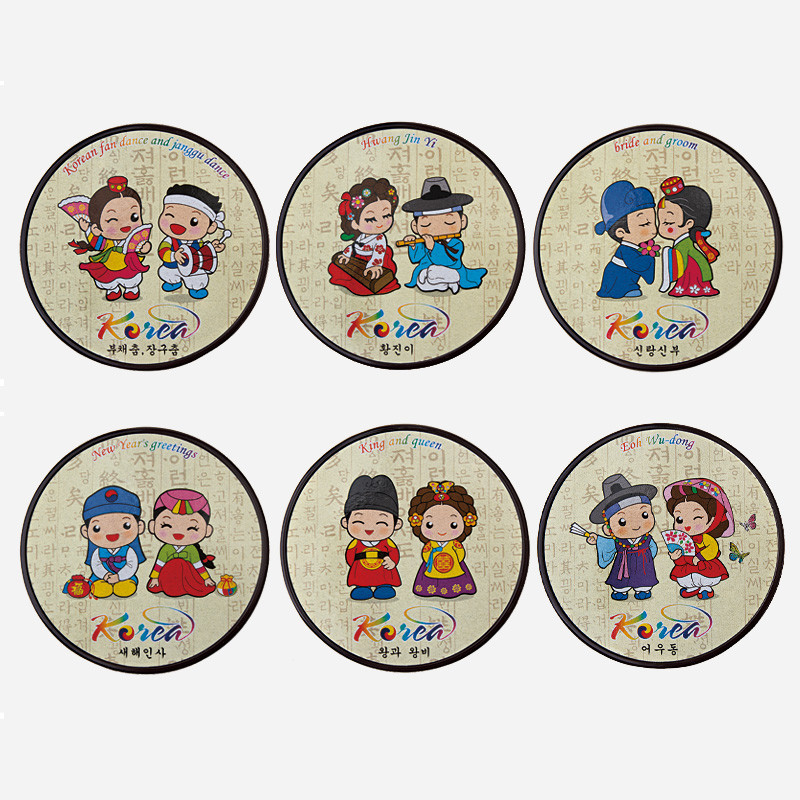
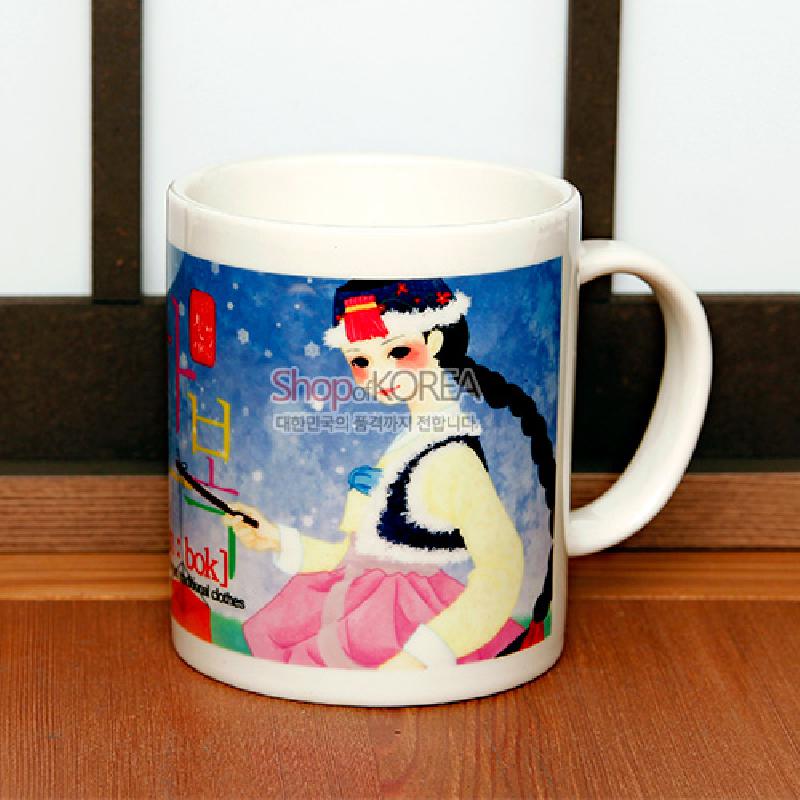
In close relationships — such as with a homestay family, local friends, or fellow international students — everyday items that can be used right away are often more comfortable than overly formal decorative pieces. Accessories with a clear purpose, such as cup coasters, mugs, tumblers, and hand mirrors, make it easy for the recipient to picture themselves using the item. What matters here is whether the item can blend naturally into a home or office rather than looking only like a souvenir with a strong Korean image. Items with excessively vivid colors or patterns that require explanation can be a matter of personal taste, so those with a clear purpose reduce the sense of burden.
For example, a coaster type like 전통컵받침-한복캐릭터 (Traditional Cup Coaster — Hanbok Character; hanbok is the traditional Korean garment) is an everyday accessory that is easy to use right on a dining table or desk. It features Korean elements such as hanbok characters while having a clear purpose — holding a cup — which makes it less burdensome than a purely decorative item. For situations where you want to give "something Korean to a foreign acquaintance without seeming too heavy-handed," this type strikes a good balance. Especially in a home or office shared by multiple people, a small accessory can actually catch the eye more frequently.
However, when choosing everyday accessories, it is best not to make too firm assumptions about the recipient's taste. For items with strong personal use such as mugs or tumblers, check whether the colors and designs are not overwhelming; for items easy to use communally such as cup coasters, check whether they would look natural placed in various spaces. The closer the relationship, the more important the criterion "where can this be used right away upon receiving it?" becomes, over the size or formality of the gift.
When sharing among many people, small and easy-to-explain configurations are convenient
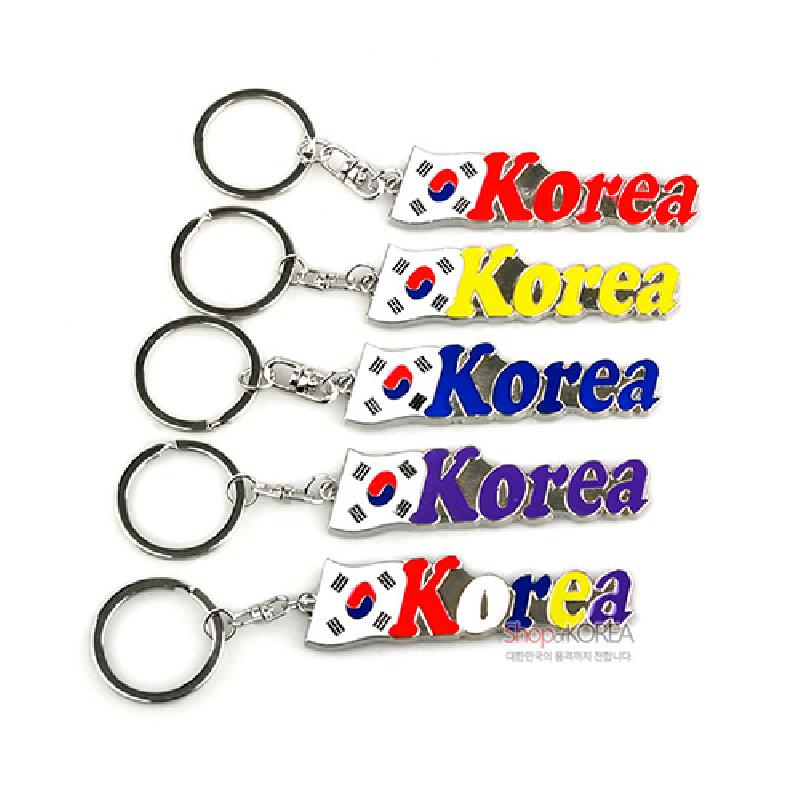
When welcoming visitors or distributing gifts to multiple people at an overseas event, gifts need to be light and easy to carry. Types with a small footprint — such as bookmarks, ballpoint pens, keychains, and small hand mirrors — add less burden to luggage on the return trip, and recipients can take them without feeling pressured. In this case, what matters more than the visual impact of a single item is whether the overall impression is clean when a quantity is prepared. Materials that break too easily or decorative pieces that require lengthy explanation to understand can actually be difficult to manage as group gifts.
For example, a configuration like 한국문화4종 책갈피+볼펜세트 (Korean Culture 4-Type Bookmark + Ballpoint Pen Set) is well suited to conveying both a Korean image and practicality together. Bookmarks and writing instruments have a clear use scenario, and the burden of size and weight is relatively low when distributing to multiple people. They can also be handed over without difficulty to recipients with varying degrees of closeness — visitors, host families, and local friends alike. When Korean patterns or cultural elements are incorporated into a small object, the meaning of the gift is preserved while reducing the burden of appearing like an excessive decorative piece.

For group gifts, it is best not to assume that all recipients share the same taste. For that reason, accessories with a wide range of uses and easy-to-explain purposes are more reliable than decorative pieces that strongly reflect a specific taste. Candidates that are small and easy to share — such as ballpoint pen sets featuring Hangeul and Seoul imagery, traditional keychains, and hand mirror sets — can also be compared using the same criteria.
With Korean imagery, calibrating the intensity is important
It is easy to think that a stronger Korean feel is always better for gifts to foreigners, but in practice it is important to calibrate the intensity to suit the recipient's living environment and relationship. For a formal occasion, a gift with distinct patterns and packaging fits well; for a close relationship, having Korean elements incorporated into an everyday item may feel more comfortable. For someone who already knows Korea well, specific images such as Hangeul, Seoul, hanbok, and traditional food culture can feel like a welcome touch. Conversely, for someone receiving a Korean gift for the first time, an item with a single, immediately understandable motif is more comfortable than one packed with too many symbols at once.
When you don't know the recipient's taste, it is a good idea to first lower the size and purpose threshold. Small items with a low burden — such as a small bookmark, ballpoint pen, cup coaster, or keychain — convey a Korean image without taking up much space in the recipient's environment. If you want to add a bit more formality, look at set-type items with polished packaging; if you want to convey something a bit more warmly, look at types with an everyday feel such as mugs or tumblers. Ultimately, what matters is both "does it look Korean?" and "can the recipient find a place for it in their own life?"
The related products at the end are not simply a list repeating the items mentioned in the body, but candidates to compare alongside one another in the same situation. Breaking down the candidates according to whether formality is needed (as with a business contact), practicality is important (as with a close acquaintance), or items need to be distributed to multiple people makes the choice considerably simpler. If you determine the presentation scenario and the recipient's daily context before focusing on product names, it becomes much easier to choose a gift that leaves a Korean impression while reducing the sense of burden.