Shopofkorea guides
Mother-of-Pearl Korean Luxury Gifts: Which Occasion Does Each One Suit?
Official product names are shown in Korean. Product pages are in Korean; prices are in South Korean won (KRW).
Jagae (mother-of-pearl inlay) and najeonchilgi (lacquerware inlaid with mother-of-pearl) gifts may all be grouped together as "premium Korean gifts," but the right choice depends on the recipient and the setting. For foreign visitors, ease of transport and a self-explanatory design matter most. For overseas business contacts or formal visits, formality and durability come first. For someone like a mentor or a parent—where the gratitude is personal—it is better to consider both long-term usability and a relaxed, unpressured atmosphere.
- Giving to a foreign visitor: prioritize size, portability, and the legibility of Korean motifs
- Giving to an overseas business contact or on a formal visit: prioritize formality, presentation, and practical desk use
- Giving to a mentor or parent: prioritize durability, decorative quality, and a lasting impression
- Preparing gifts for multiple people: prioritize set formats and small accessories that are easy to select by a consistent standard
When Formality Must Be Felt the Moment the Gift Is Presented
At occasions where first impressions matter—such as gifts for overseas business contacts, foreign clients, or official visits—a gift should feel less personal and more at home in a professional workspace. In these situations, jagae accessories with a clear purpose, such as a pilham (pen holder), myeonghamham (business-card box), or a business-card case, are a reliable choice. Even if the recipient is unfamiliar with Korean culture, they can immediately understand it as "a craft gift for the desk," and the giver does not need a lengthy explanation. That said, if the recipient is traveling or has a heavy schedule, it is better to look first for something easy to carry after wrapping, rather than a large or heavy arrangement.
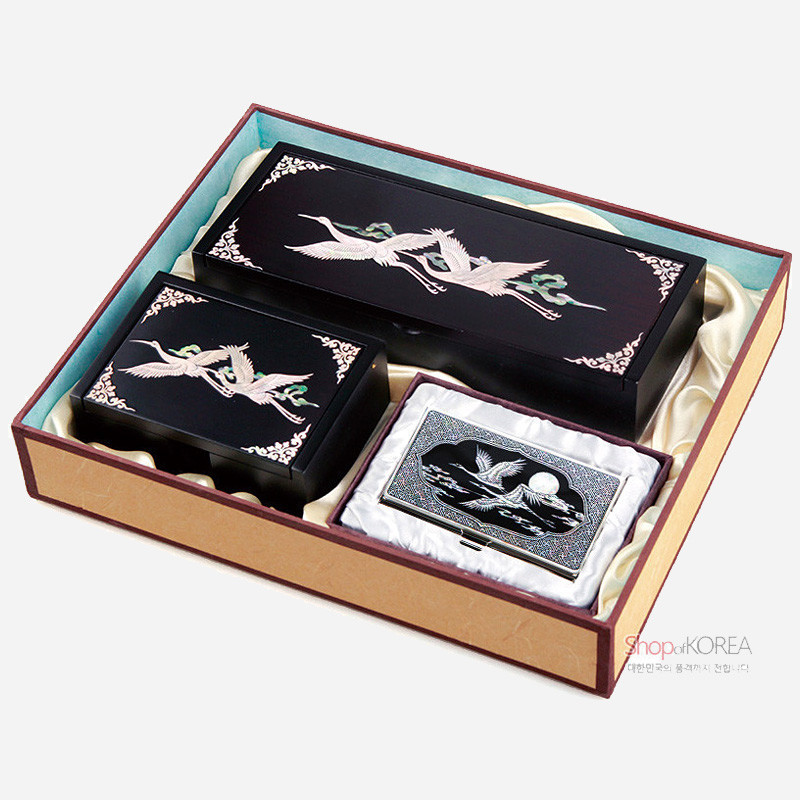
For example, a chaehwa (decorative lacquerwork) set that includes a pilham, a myeonghamham, and a business-card case is well suited to formal thank-you gifts, as it demonstrates both practicality and formality together. Because the uses are distributed across several pieces rather than concentrated in one large decorative object, the recipient can place each item wherever it fits—an office or a reception area—and a traditional motif such as unhak (crane-and-cloud) conveys a distinctly Korean impression with relative clarity. Reactions noting that a gift of this type suited even formal occasions—rather than feeling like a souvenir—show how this category reads as "a respectful business gift" rather than a keepsake.
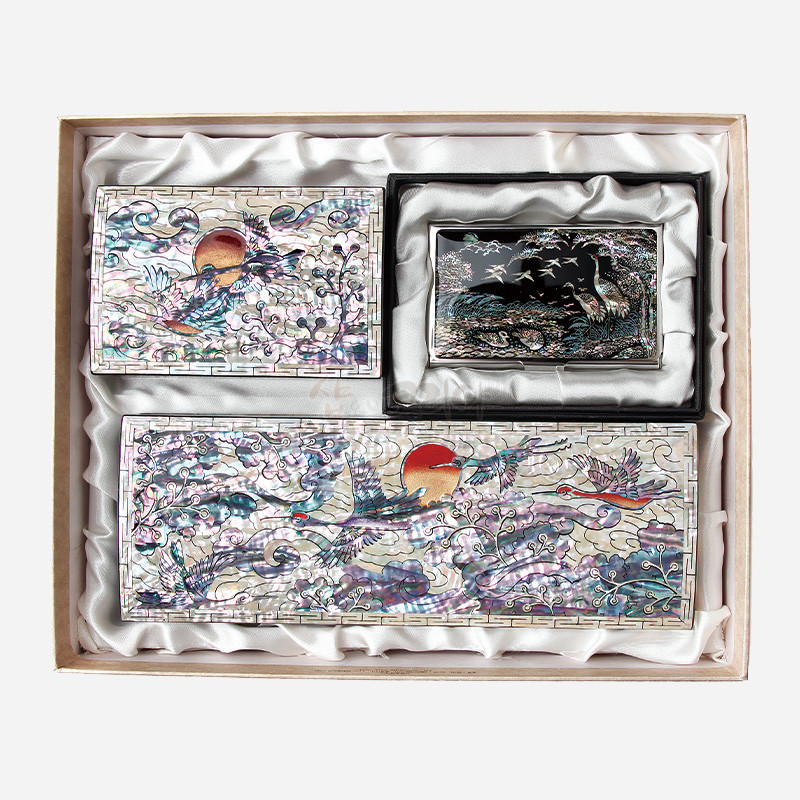
Rather than treating any single product in a set as the definitive answer, it is more useful to think of these sets as a gauge of how much weight the occasion carries. If the recipient is at an executive level or the setting is highly official—such as an institutional visit—a well-composed set is appropriate; if the gift is being handed over after a relatively brief meeting, a smaller myeonghamham or business-card case from the same jagae family reduces the sense of imposition. What matters most is not the elaborateness of the gift itself, but thinking ahead to where the recipient will be able to place it after receiving it.
When the Gift Must Travel Far, a Smaller Size Is More Considerate

When giving a gift to a foreign visitor or to someone returning abroad, the burden of transport matters as much as the impression of quality. No matter how striking a craft piece may be, if it is bulky or fragile it can become a burden for the recipient. For inbound visitors, overseas buyers, or partners met during a business trip, a small and sturdy accessory such as a myeonghamham is therefore a good starting point. In particular, for relationships where business cards are exchanged, the purpose is natural and the Korean motifs are easy to explain.
A type such as the 나전칠기 한지명함함-적학 (najeonchilgi hanji myeonghamham — red crane; a mother-of-pearl lacquerware business-card box in hanji paper style) is suited to situations where one is looking for "a Korean gift that is also practical." The motif is distinct and the use case is clear, so the recipient can keep it on a desk or in a drawer. Reactions describing a Korean-motif business-card holder as small but neat and suitable as a gift align with exactly this standard. However, if the recipient belongs to a profession where business cards are rarely used, it is more natural to shift toward a storage box or decorative accessory of a similar size.
The advantage of a small jagae gift is that it is light, but the material quality and presentation must also be considered so that it does not look too casual. Especially when giving to someone in a formal context, a calm traditional motif and a restrained finish are more reliable than something with a playful pattern or very strong colors. When the same standard must be applied to gifts for multiple people, small practical accessories are also easier to source in the required quantity and keep the handover uncomplicated.
For Gratitude Meant to Last, a Storage Gift Is the Right Fit
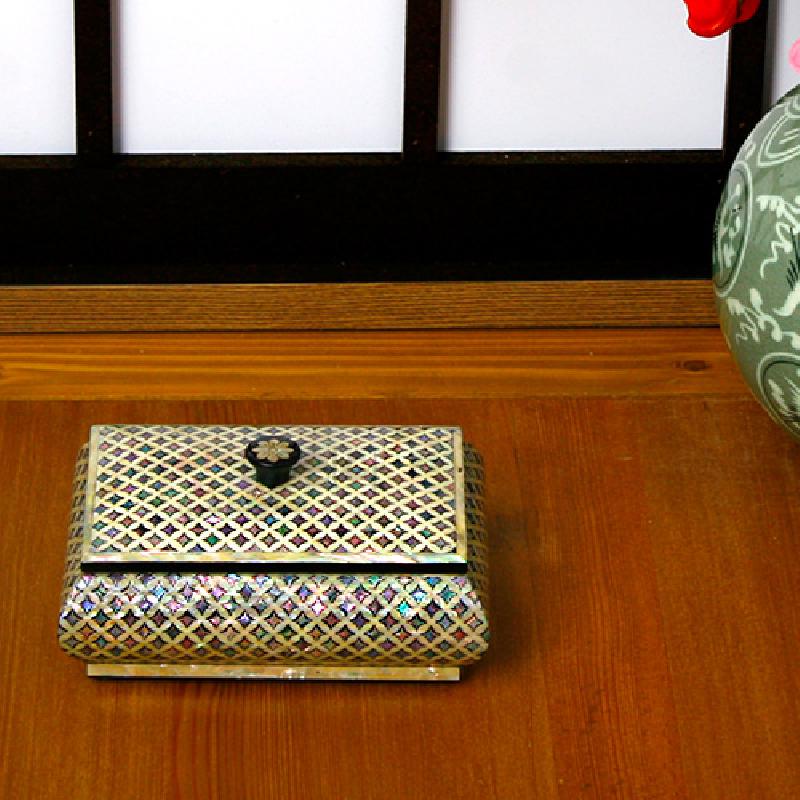
For recipients with whom one shares a deep relationship—a mentor, a parent, or a longtime benefactor—a gift that can be opened and treasured over many years suits the occasion better than something for immediate use. A jagae jewelry box combines decorative quality with storage function, making it well suited to personal expressions of gratitude or anniversary gifts where a sense of weight is needed. If the recipient has occasion to store accessories or small personal items, the purpose becomes clear, and even when not in use the box remains as a decorative object. However, if one has no way of knowing the interior style or available space in the recipient's home, it is better to consider a less imposing form—such as a medium-sized jikboseokham (upright jewelry box)—rather than a large jewelry box.
A type such as a jagae jikboseokham with a butterfly motif is well suited to personal gifts where one wishes to convey both Korean beauty and a storage function together. Red tones or elaborate motifs can create a strong impression of celebration and gratitude, lending warmth when giving to a parent or a respected elder. Reactions noting that a gift of this type looked luxurious and conveyed a distinctly Korean feeling when chosen for a foreign recipient show how storage-type jagae gifts make it easy to explain both their cultural impression and their practical use in the same breath.

When choosing from the jewelry-box category, the decision becomes easier if one first thinks about what the recipient will actually put inside. For someone who frequently uses small items such as rings or earrings, a storage type with interior compartments is a good fit; for someone who values the decorative effect more, what matters is whether the motif and color suit the space. If an overly elaborate design would feel like too much for the recipient, it is worth comparing a jagae box in a quieter color palette or one with a softer motif such as maehwa (plum blossom) or hwajo (flowers and birds).
A Gift That Stays on the Desk Needs a Clear Purpose
For a mentor, a recently promoted acquaintance, or a parent or superior who uses an office, a stationery-type jagae accessory that remains visible on the desk for a long time is also a good option. A pilham has a clearer purpose than a purely decorative object—it organizes pens and small stationery items—so the intent of the gift does not feel excessively personal. In particular, when one wants to express thanks while keeping the sense of imposition low, a stationery accessory maintains an appropriate distance in the relationship. That said, if the recipient rarely uses a desk or works primarily in a digital environment, a myeonghamham, a small storage box, or a decorative pae (plaque) may feel more natural than a pilham.
For example, a hanji pilham (hanji-paper pen holder) or a jagae pilham type demonstrates both the impression of traditional materials and practical desk use. When giving to a teacher or an elder from whom one has received much guidance, the description "a small craft piece you can keep and use for a long time" fits well. In this context, the more important criteria are not the product name but the meaning of the motif, the size, and a color that does not clash on a desk. Because jagae catches the light and asserts its presence, it is better to avoid an overly large form if the recipient's desk is already crowded.
The related products at the end are not simply a list repeating items mentioned in the body; they are candidates to compare alongside those items in the same situation. Jagae and najeonchilgi gifts become much easier to choose when one considers the relationship with the recipient, the formality of the handover setting, the burden of transport, and the space where the gift will eventually be placed. For formal occasions, look at practical items and set compositions; for recipients who have a long journey ahead, look at a small myeonghamham or case; for gratitude that is meant to endure, use a storage-type jagae box as your benchmark for comparison.