Shopofkorea guides
A Low-Pressure Korean Gift Guide for Foreign Supervisors
Official product names are shown in Korean. Product pages are in Korean; prices are in South Korean won (KRW).
When giving a Korean gift to a foreign supervisor, the first question to ask is not "Is it Korean enough?" but "Is it appropriate for a workplace relationship?" A gift that is too personal can make the recipient uncomfortable about how to respond, while one that is too decorative may leave its occasion of use unclear. Breaking choices down by formality, practicality, and portability makes the decision considerably easier.
- After an executive visit or a formal meeting: prioritize decorum and the quality of the packaging. - For a direct supervisor or an overseas headquarters contact: a practical desk item that can be understood immediately in a work context is a safe choice.
- If the gift will be handed over just before departure or the recipient travels frequently: look for something small, light, and unlikely to break.
- If the gift needs to be distributed among several people: stationery or bookmarks that are less dependent on personal taste are convenient.
When the work context should linger naturally even after the meeting ends
With a gift in a workplace relationship, the burden on the recipient decreases when they can immediately understand "why they received this." Items that connect to a work setting—such as a business card case, a ballpoint pen, or a desk accessory—feel natural without requiring a lengthy explanation. For a foreign supervisor in particular, objects with a clear purpose are preferable even if they incorporate Korean patterns. That said, it is wise to be cautious about decorative pieces with very bold patterns or large sizes, as they may not suit the atmosphere of an office.
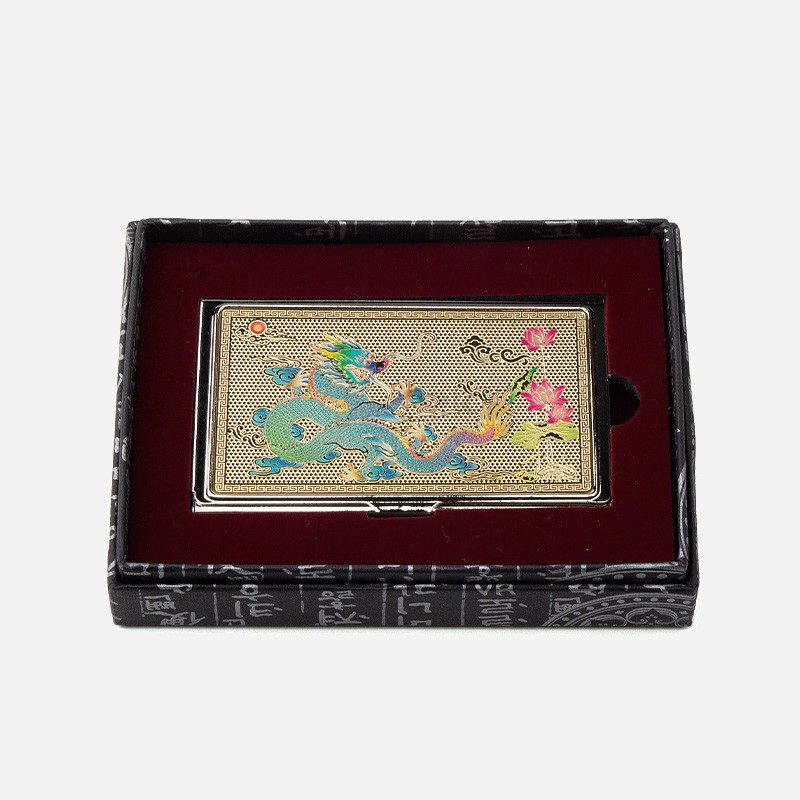
For example, a set pairing a business card case with a ballpoint pen is easy to present after a meeting, a visit, or an expression of thanks. Even if a traditional element such as a heungbae (흉배, a rank badge motif from traditional Korean court dress) is incorporated, the functional nature of the writing instrument and card accessory is what registers first, so the gift does not drift into feeling overly personal. Even if you are unsure whether the supervisor will actually use it, the compact configuration is easy to store on a desk or in a bag, satisfying the basic conditions of a workplace gift. This type of gift is a good option when you want to strike a balance between "a Korean memento" and "a practical work accessory."
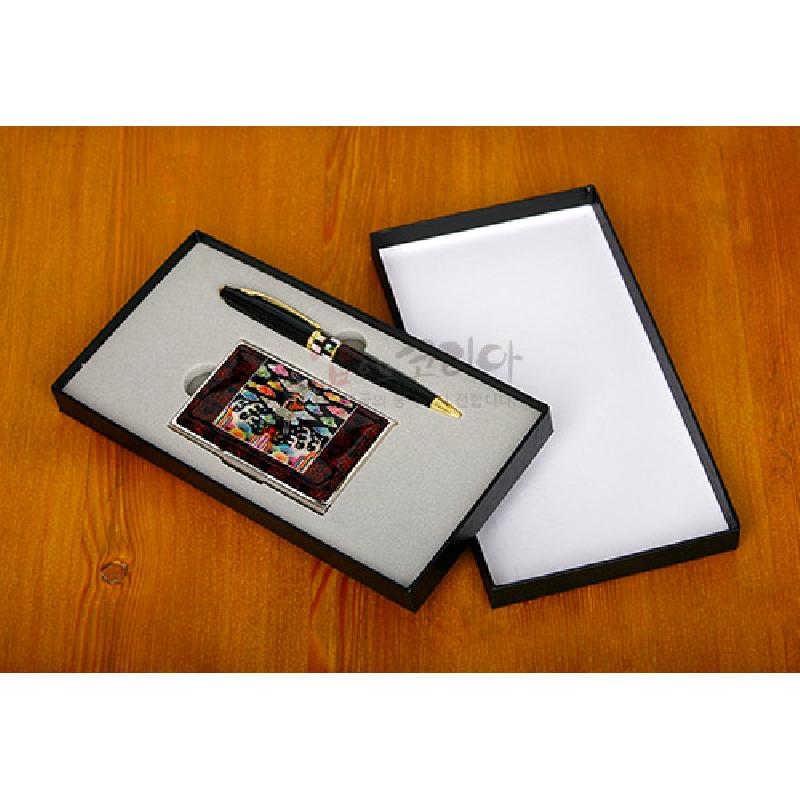
A set gift of this kind is less a single definitive answer than an example of how to lead with practicality in a formal relationship. If the recipient is in a role where business cards are rarely used, a standalone business card case may be less comfortable than a writing instrument or a bookmark. Conversely, for an executive who has many external meetings, a card accessory is easy to explain by purpose. When handing it over, a brief phrase such as "a small Korean-patterned item you can use lightly at work" is sufficient—no long explanation is needed.
When the formality of the moment of presentation matters, as in an executive visit

When an overseas executive or a representative from a foreign headquarters is visiting, the quality of the packaging and the overall composition is just as important as the item itself. This is because colleagues or attendants are often present when the gift is received. In such cases, a neatly composed case or set is more reliable than an overly casual souvenir. However, items that appear expensive or that probe very personal tastes can place a burden on the supervisor, so it is best to choose within a range that can be interpreted as work-appropriate.
A set such as a jogakbo (조각보, traditional Korean patchwork textile) patterned set containing a business card case, a key ring, and a ballpoint pen conveys a sense of compositional completeness that suits a formal presentation. The jogakbo pattern communicates a Korean image, yet each individual item is small and practical, so the gift does not feel excessive in weight. Even in situations where the handover time is brief—such as a post-meeting expression of thanks, the conclusion of an institutional visit, or a farewell for an overseas partner—the explanation required is not complicated. However, if the recipient has a lot of luggage or must depart immediately, it is a good idea to check the volume and packaging size in advance.
When choosing this type of gift, what matters more than "how much is included" is "whether each item can be received without feeling unfamiliar." A key ring or a ballpoint pen has an obvious use for anyone, but the utility of a business card case can vary depending on the recipient's role. It therefore suits an executive or a supervisor with many external responsibilities well, while a supervisor in research or internal administration may find a writing-instrument-focused set more comfortable. The more formal the gift, the more important it is to think first about the recipient's role and travel situation.
Gifts to be taken overseas must be small and easy to explain
If a foreign supervisor is wrapping up a visit to Korea and heading home, portability moves to the front of the selection criteria. Items that are difficult to fit in luggage or that carry a risk of breakage can become a small burden for the recipient. In such cases, flat and lightweight options such as bookmarks, ballpoint pens, or compact card accessories are convenient. If you are considering food items, you need to verify taste preferences, allergies, and import conditions, so when in doubt, non-food accessories are the safer choice.
A small Korean-patterned accessory such as a gold-accented bookmark can be small in size yet leave the intent of the gift clearly conveyed. Without limiting it to people who read frequently, it can be slipped into documents or a notebook, connecting it to an office environment as well. When there is a Korean element that is easy to explain—such as a geumgwan (금관, gold crown) motif—it becomes easier to convey the meaning of the gift even in a brief exchange. That said, because it can appear purely decorative, it is more natural to regard it as a light expression of thanks or a supplementary gift rather than a main gift.

Small mementos also have an advantage in situations where gifts must be distributed to several people. It is easy to match quantities, and differences in individual taste are less likely to stand out. However, if the gift is being given separately to just one supervisor, it is a good idea to also attend to the packaging condition and a message card so that it does not appear too informal. The smaller the gift, the more important it is that the accompanying words be neat and proper, so that courtesy comes through clearly.
When the gift needs to feel unobtrusive even sitting on a personal desk
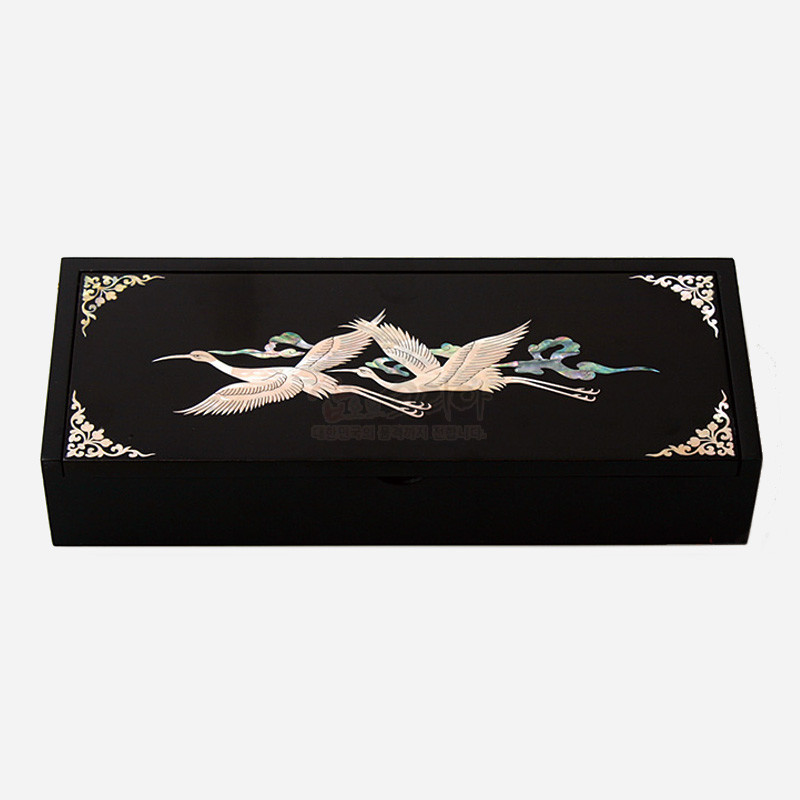
If you are looking for a Korean accessory that a supervisor can use in the office, you need to consider the balance between decorativeness and practicality. Decorative items convey a strong Korean impression but are highly dependent on personal taste, while items that are too purely practical can diminish the sense of the gift being special. A pen holder or desk accessory sits in between these two options. However, because larger items can affect the layout of an office desk or the weight of travel luggage, you need to judge differently depending on whether the handover location is a domestic office or just before the recipient departs overseas.
A type that can sit on a desk—such as a sanggam jadong pilham (상감자동필함, an inlaid automatic pen holder in the traditional Korean sanggam inlay style)—displays Korean patterns while also serving the purpose of organizing pens or small items. A pen holder with a traditional pattern has a clearer occasion of use than a purely decorative piece, and when placed inside an office it can easily become a topic of conversation. However, if the recipient prefers a minimalist work environment or is an executive who travels frequently, smaller stationery items may be better. This type is a better fit for a supervisor who spends a long time in the office and has a relatively well-defined personal workspace.
Ultimately, when choosing a Korean gift for a foreign supervisor, you should define the moment of presentation before thinking about the product name. For a formal occasion, a neat set composition works well; for naturally maintaining a work relationship, business card or writing accessories are appropriate; and for someone who travels frequently, a light accessory such as a bookmark is comfortable. The related products at the end are not a list limited to the items mentioned in the body of this guide—they are candidates to compare alongside those items in the same situation. If you first clarify the recipient's role, the location of handover, and whether they will be traveling, the burden decreases and the courtesy becomes all the more evident.