Shopofkorea guides
Heartfelt Korean Gifts for Overseas Relatives Visiting During Summer Vacation
Official product names are shown in Korean. Product pages are in Korean; prices are in South Korean won (KRW).
Choosing a gift for overseas relatives visiting Korea during summer vacation is harder to get right than it might seem. You want to convey sincerity to family you haven't seen in a long time, but a gift that adds to the luggage on the way home can feel like a burden, and how familiar the recipient feels with Korean culture also varies. Breaking things down first by closeness of the relationship, the recipient's age group, and how easy the item is to carry home makes the choice considerably easier.
- For close family: practical gifts that carry a Korean atmosphere and leave a lasting impression
- For older relatives: craft or symbolic gifts that feel appropriately respectful without being excessive
- For children or younger relatives: design items that are easy to use and have a story to tell
- When dividing gifts among several people: small, lightweight souvenirs that are easy to match in quantity
For family you haven't seen in a long time, a gift with lasting practical use reduces the burden
For close relatives, rather than offering only a very small souvenir, items that have a Korean feel while being usable in everyday life tend to work well. For the parent generation or a relative couple in particular, gifts that can be naturally brought out and used in daily life—such as cups, cutlery, or writing instruments—are more reliable than purely decorative objects. However, since summer vacation visits often involve multiple moves and changes of accommodation, it is better to be cautious about fragile materials or bulky configurations.
For example, a tumbler featuring hanbok (traditional Korean dress) or traditional performance imagery makes it easy to convey a Korean atmosphere right away, and the recipient can continue using it on a desk or in the kitchen after returning home. A product like [한국의아침]한복 카페텀블러 - 사물놀이 ([Korean Morning] Hanbok Café Tumbler – Samulnori; samulnori is a traditional Korean percussion ensemble genre) is best understood not as something that demands a specific taste, but as a practical gift that calls to mind "the time we spent together in Korea." This type of gift conveys sincerity when given on its own, yet feels more natural as an expression of gratitude between family members than as a formal gift requiring ceremony.
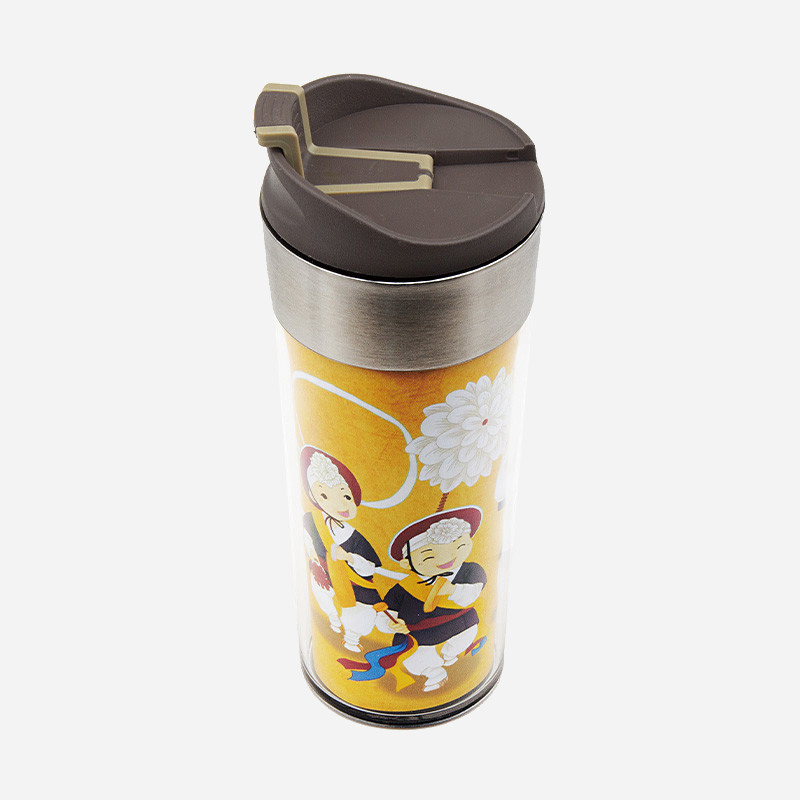
When choosing a practical gift like this, it is more important to picture the moment the recipient will actually use it than to focus on how striking the design is. Whether the recipient is an older person who spends a lot of time drinking tea at home, or someone who prefers something they can carry to work or school, the impression made by the same Korean-design item can differ. When presenting the gift, saying something like "I thought you'd be able to use it comfortably once you're back home" rather than "I chose it because it has a Korean feel" makes it feel less like an obligation.
For children and younger relatives, memories of doing something firsthand last longer than explanations
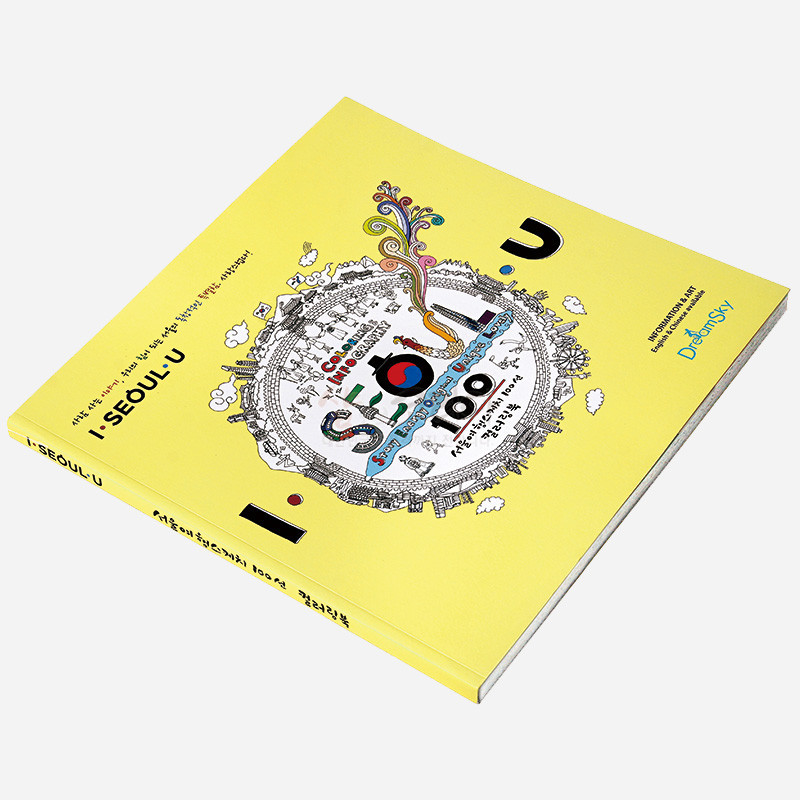
For student or younger relatives, items they can use or decorate themselves while recalling their trip to Korea tend to work better than gifts that require lengthy explanations of traditional patterns and their meanings. Summer vacation visits are a time when travel, experiences, and family gatherings all overlap, so it is good if the gift also helps the recipient personally organize those memories. However, products requiring detailed handiwork may not suit very young children, and conversely, configurations that look too toy-like may feel lightweight to adults.
For example, 컬러링페이퍼-서울여행스케치100선 (Coloring Paper – Seoul Travel Sketch 100 Selections) is an experiential souvenir through which recipients can color scenes of Seoul and their Korean travels and relive them. As one review noted—that it was prepared for a student visiting Korea during vacation and felt like a gift that could keep the memory alive even after the trip—this kind of gift serves to extend the time of the journey rather than being just an object in itself. In particular, for relatives who are not fluent in Korean, image-centered products carry little explanatory burden and are easy to open and look through together.
An experiential gift suits the message "feel free to try it" more than "take good care of it." It is an even better fit if the recipient enjoys drawing or tends to keep a travel record, and if luggage is already heavy, it is worth looking first at single-sheet configurations or thin booklet formats. If the images inside resemble places you visited together, it is also easy to add a short story at the moment of giving.
When dividing gifts among several family members, think about the same sincerity with different levels of burden
If the overseas relatives number more than one or two and have come as a family unit, the criteria for gifts change. Rather than preparing a large gift for everyone, small souvenirs that each person can receive individually and easily fit into a homebound bag are often more natural. In this case, individual packaging appeal, portability, and ease of matching quantities are important, and it is better to avoid colors or uses that are too dependent on personal taste.
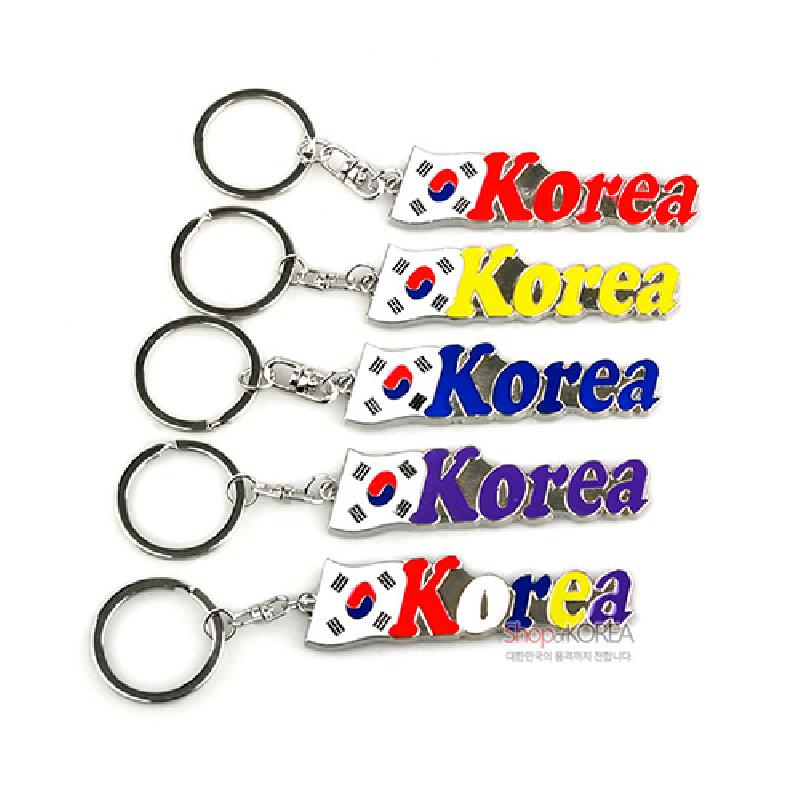
For example, 고운 열쇠고리 5p세트- 코리아(전통예복) (Elegant Keyring 5-Piece Set – Korea (Traditional Formal Dress)) is a type of keyring set that is easy to distribute when there are several family members. The small traditional formal dress motif conveys a Korean impression immediately, and because it is not bulky, it is not burdensome to hand over at the airport or at a final meal before departure. The meaning of this kind of gift lies not in appearing especially grand to any one person, but in conveying the same feeling to all the family members who came together.

When choosing keyrings or small stationery items, it is worth checking whether they look too much like common tourist souvenirs and whether the size is appropriate for the recipient to actually attach to a bag or keys. As one review noted—that it was chosen as a gift for a foreigner visiting Korea and was easy to prepare without stress even while thinking about gifts for the children at the same time—in situations where several people need to be taken care of, a small and practical configuration actually makes the choice easier. Adding a postcard or a short handwritten message means that even a small gift conveys family sincerity more clearly.
For older relatives, the clearer the Korean symbolism, the easier it is to explain
For older relatives, products with clear Korean symbolism that are easy to store tend to work better than designs that follow trends too closely. Types whose meaning can be explained briefly—such as a map of the Republic of Korea, the taeguk (taegeuk) pattern, images of traditional heritage, or a cutlery set connected to Korean food culture—are reliable choices. However, the stronger the symbolism of a gift, the more the recipient's home environment and usage habits must also be considered; for someone who does not enjoy decorative objects, an item with a practical-use element is preferable.
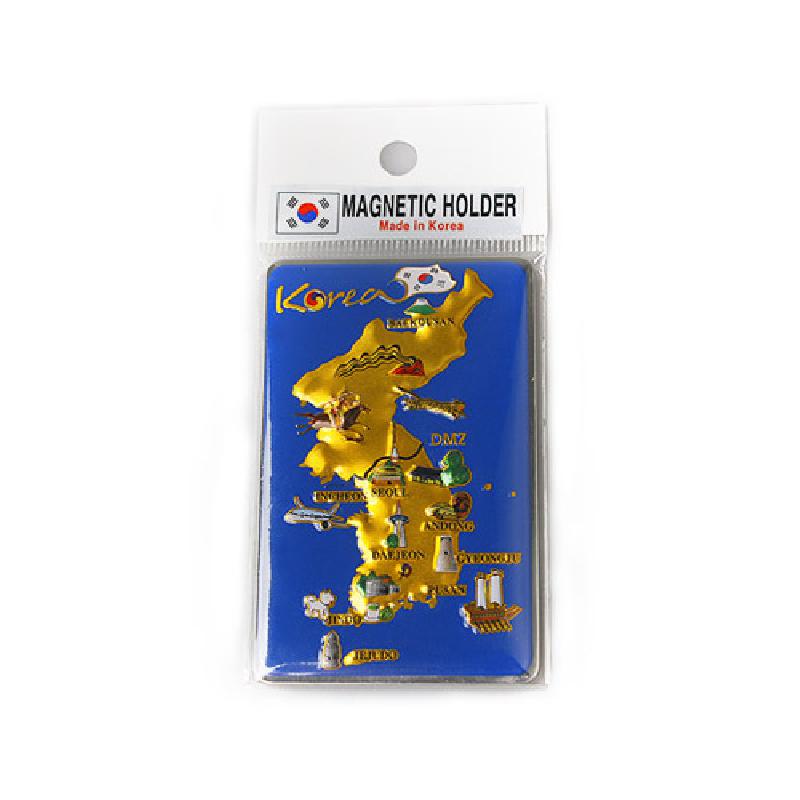
For example, products such as a memo holder with a map motif, postcards featuring Korean heritage, or a Korean Peninsula cutlery set are well suited to leaving the memory of a Korean visit in an everyday space. Even if the gift itself is not large, the meaning of "having visited Korea" comes through clearly with this type, and it is easy to open together at a family gathering and share stories. As one review noted—that it was chosen as a small but meaningfully Korean gift for an acquaintance about to leave the country—configurations where the meaning is clear tend to be received more comfortably than large ones in the period just before departure.
In this situation, the manner of packaging and presentation also matters. When giving a gift to an older person, it is better to settle on one clear criterion and present it calmly rather than laying out many items. Explaining it as "I chose a Korean gift that would be comfortable to use at home" or "a small keepsake to remember this visit by" keeps it from feeling like an excessive gift.
The related products at the end are not simply a list showing the items mentioned in the body again; they are candidates to compare side by side within the same situation of giving a gift to overseas relatives visiting Korea. The right type differs depending on whether the recipient is close family, a child or younger relative, whether the gift needs to be divided among several people, or whether the burden of luggage on the way home is a major concern. If you decide on the moment of giving and the scene in which the recipient will use the item before thinking about the product name, it becomes easier to choose a gift that conveys both sincerity and Korean refinement.