Shopofkorea guides
How to Choose Korean Cultural Gifts for Onboarding New Foreign Employees
Official product names are shown in Korean. Product pages are in Korean; prices are in South Korean won (KRW).
Choosing an onboarding gift for a new foreign employee is harder than simply looking for something "Korean." The right size and level of formality differ depending on whether the gift is a welcome present handed over on the very first day, a desk accessory meant to stay at a personal workstation for a long time, or a souvenir that naturally introduces Korean culture with a brief explanation.
- When first impressions matter: packaging, a message card, and a composition that is immediately understood
- When you want the recipient to use it at their workspace: a size and practicality suited to sitting on a desk
- When you want to convey a Korean cultural meaning lightly: patterns and materials that are easy to explain
- When you need to distribute to multiple people: portability, risk of breakage, and uniformity of the set
A welcome feeling that does not seem out of place on a desk on the first day
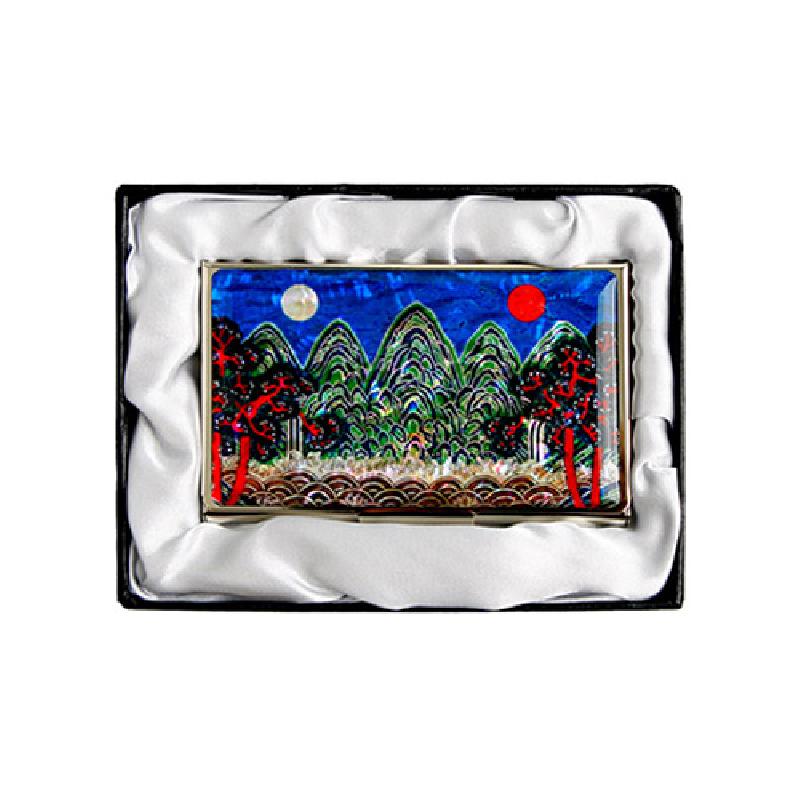
A gift given on the first day of work is encountered by someone who does not yet know the atmosphere of the company well. For that reason, a composition in which the context of "starting work life" is naturally visible is better than something overly decorative. Accessories connected to work—such as a business card case, a ballpoint pen, or a key ring—communicate their purpose immediately without requiring a long explanation. However, for interns or junior employees who rarely use business cards in their role, a composition that includes a pen or a small desk accessory alongside any business-card-related item, rather than giving a business-card item alone, reduces the sense of pressure.
For example, a set such as a business card case with a jogakbo (Korean patchwork) pattern together with a key ring and a ballpoint pen has a Korean color sensibility while fitting well with the practical needs of a first day at the company. Rather than giving a long explanation of the gift's meaning, conveying it briefly as a "welcome gift featuring traditional Korean patterns" makes it easy for the recipient to accept comfortably. Sets that repeatedly receive reviews noting clean packaging also help manage the first impression. Especially when the same standard must be applied across multiple departments, a set with a clearly defined composition makes both preparation and delivery straightforward.

This type of gift is better understood as a reference point that is easy to include in an onboarding kit rather than as a single correct answer. Even within the same category of business accessories, you can compare options by weighting the business card case more heavily for an employee who has many external meetings, and pairing it with items used immediately—such as writing instruments or a USB drive—for an employee whose work is primarily internal. What matters is the standard of "a welcome accessory that is immediately understood on the first day of work" rather than "a Korean souvenir."
A Korean accent on the desk that does not feel burdensome even after a long time
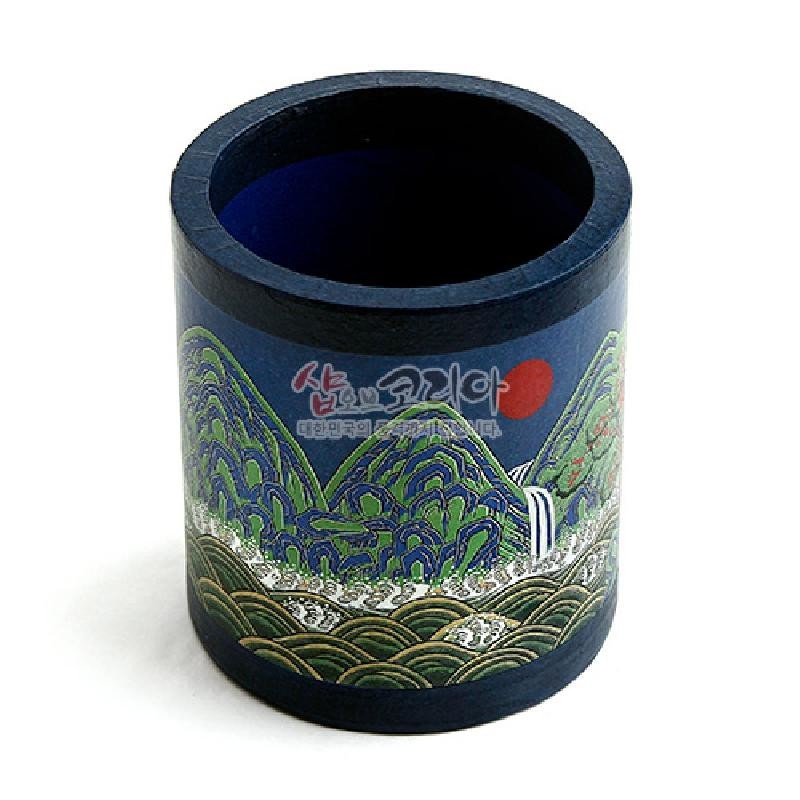
For a gift placed on a personal desk, size and presence are important. If something is too large or strongly decorative, the recipient may feel pressured to keep it out even if it does not suit their taste. Conversely, accessories that have a role within the workspace—such as a pen holder, a memo holder, or a small stationery organizer—make it easier to strike a balance between decorativeness and practicality. A Korean image should be conveyed through patterns or the feel of the material, while the context of use should feel natural within an office setting.
A pen holder (펜꽂이, pen holder) using the Irworobongdo (일월오봉도, a royal court painting depicting the sun, moon, and five peaks) image immediately finds a use on a desk, and is easy to explain briefly to someone unfamiliar with Korean culture—for instance, as "a symbolic image from royal court painting." However, if the entire team's desks are small or the organization has a high proportion of remote workers, a flat item or one that is easy to carry may be more appropriate than a bulky accessory. A gift lasts longer when the recipient's workspace and working style are also taken into account. For something placed on a desk, whether it is comfortable to look at every day matters more than whether it is beautiful.
When choosing this type of gift, it is better to avoid trying to explain the meaning of the pattern at too great a length, and instead to deliver it alongside a welcome message in a tone of "I hope you will use this comfortably in your workspace." Even if you want to introduce Korean culture to a foreign employee, giving too much information on the very first day can make the gift feel more like a lesson than a present. If there is a small explanation card, it should contain only one or two sentences, and the fuller story can be added naturally when conversation continues.
For short-term employees or interns, a light accessory that leaves a gentle impression is more comfortable
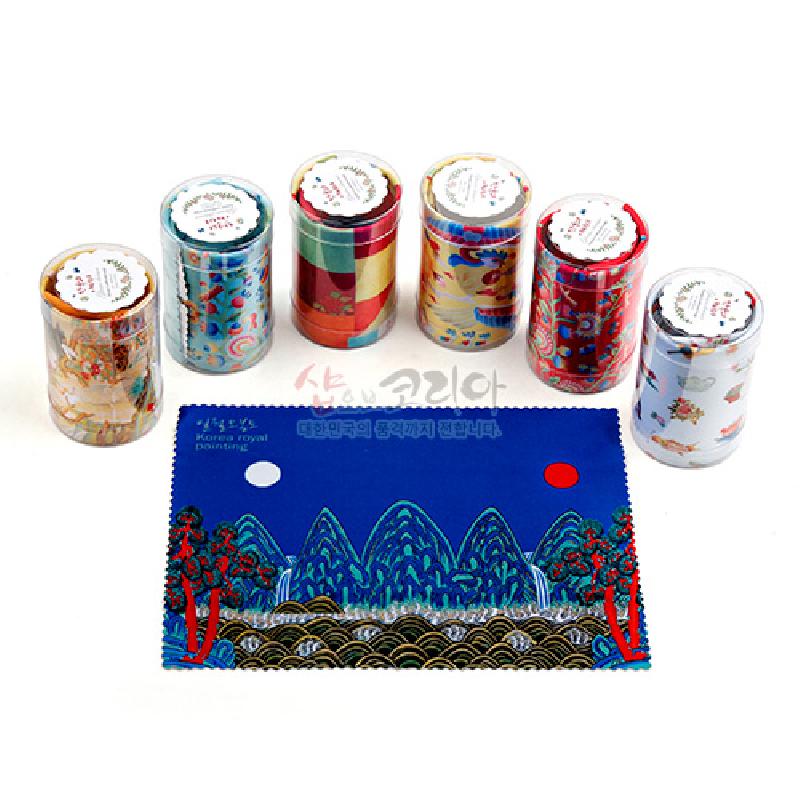
Not all foreign employees join the company with the assumption of a long tenure. For interns, seconded workers, or those joining for a project, a gift that is easy to carry and store may be more appropriate. In such cases, it is better to look first at types that are small in volume and carry a low risk of breakage—such as a memo holder, a card-type USB drive, a lens-cleaning cloth, or a slim ballpoint pen set—rather than a decorative object. The formality of the gift can be supplemented through packaging and the accompanying message, while the item itself should be something that can be taken away lightly.
An accessory such as a memo holder in the shape of a map of the Republic of Korea (대한민국 지도 메모홀더, map of Korea memo holder) is not burdensome in size, can find a use on a desk, and is not too much even for a short-term visitor. The form clearly evokes Korea, but because a practical purpose accompanies it, it is easier to accept than a purely decorative item. However, because items in the shape of a map or national symbol may be interpreted differently depending on the recipient's country and cultural background, it is safer to convey it as something like "a small accessory to remember the beginning of your time in Korea" rather than as a strongly worded message.

In an onboarding situation where gifts must be distributed to multiple people, a good approach is to issue the same product uniformly while personalizing the message card with the recipient's name or team name. Composing the products very differently for different people can raise issues of fairness, but a short phrase raises the warmth of the welcome. Reviews also confirm cases in which packaging and first impression were considered important when choosing a gift for a foreign employee. Ultimately, the lighter the gift, the more important it is to attend carefully to the packaging and the delivery message so that it does not appear lacking in sincerity despite its small size.
If you want to explain Korean culture, leave room for conversation rather than relying on symbols
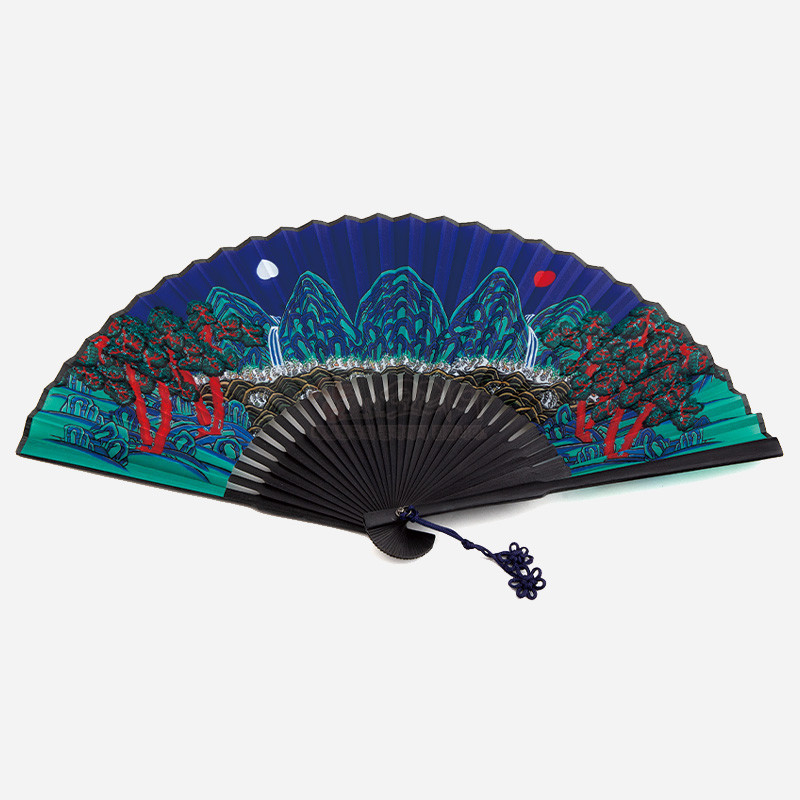
The most common concern when choosing a Korean gift is the pressure to select something with a clearly traditional character. However, an onboarding gift is not a cultural experience program; it is the first point of contact through which the company conveys its welcome. Types with clear symbolic character—such as a fan, a hanbok (한복, traditional Korean garment) image, or a ballpoint pen set with traditional patterns—are good for creating an atmosphere with a brief explanation, but they can also lean more toward decoration than practical use. For that reason, you need to adjust the size and the intensity of expression by thinking through whether the recipient will place it on their desk, take it home, or show it to a colleague.
For example, a ballpoint pen set featuring hanbok and Seoul imagery is easy to include in a group welcome kit and conveys a Korean impression simply. However, if the wording emphasizing "tradition" becomes lengthy, the recipient may become more conscious of the explanation than of the gift itself. In such cases, it is more natural to say something plain, such as "a small stationery gift featuring Korean colors and city imagery." It is more stable to let the object speak for the cultural meaning on its own, while the company's welcome message is conveyed separately and briefly.
The related products at the end are not a definitive list of answers limited to the products mentioned in the body, but rather candidates to compare alongside one another in the same situation of onboarding foreign employees. Deciding first whether the gift is something to hand over immediately on the first day, a desk accessory to keep out for a long time, or a light souvenir to distribute to multiple people makes the choice considerably easier. When you use the delivery scene and the context of use as your criteria rather than the product name, you can convey a Korean atmosphere and the company's welcoming intention together, without placing a burden on anyone.