
Shopofkorea guides
Ebony Small Keychains: Check Knot Thickness and Attachment Method Before Clipping to Your Phone
Official product names are shown in Korean. Product pages are in Korean; prices are in South Korean won (KRW).
When attaching a small keychain decorated with ebony and mother-of-pearl to a phone, it is better to examine the attachment conditions before the pattern. Even if the item looks small, it is difficult to judge from photos alone whether the knot end will pass through the phone's ring or a separate connector. First confirm whether your phone has a point for attaching a charm, then compare the knot thickness of the item against the shape of your existing ring.
- If you can thread the knot cord through directly: first check the thickness of the knot end and whether it will pass through
- If direct attachment is difficult: consider a thin auxiliary strap or a separate connector ring
- If your phone has no attachment point: check whether a compatible connector can be obtained separately
- If you are comparing multiple charms: look at the attachment structure before the pattern
Whether it passes through in one go is the first uncertainty to resolve
If your phone already has a ring for attaching a charm, you should first check whether the item's knot cord and knot end can pass directly through that connector. At this stage, looking only at the overall size of the charm is not enough. Examine any photos on the product page that show the attachment area, and if thickness information is not provided, it is advisable to ask the seller for the specifications of the knot end or whether direct attachment is possible. The key point is not to assume that the item will fit a particular phone or case before this has been confirmed.
For example, a small charm such as the 흑단 작은열쇠고리-복식당초 (ebony small keychain – boksik-dangcho, a double-vine scroll pattern) is a candidate where you should look at photos and specifications of the attachment area before choosing a pattern. Even if the name includes "small keychain," that does not mean it will fit directly into a phone's narrow connector. Placing your current ring and the item's attachment area side by side for comparison makes the decision considerably easier. If the necessary information is not visible, review the following attachment methods together rather than choosing on the assumption of direct connection.

This item is not so much a definitive answer for a specific phone as it is an example showing what to check first when selecting a small ebony charm. Whether the pattern is boksik-dangcho, yeop-jeon (coin), or jangmibul (rose flame), the order of verification is the same. Checking in sequence — whether a connector exists, the thickness of the knot end, and whether direct threading is possible — reduces the mistake of choosing based on design alone. If specifications have not been confirmed, it is safer to leave compatibility as unconfirmed as well.
If it cannot be attached directly, auxiliary connectors broaden your options

If direct threading is difficult or you have been unable to confirm whether it is possible, look into whether a thin auxiliary strap or a separate connector ring can be used. What matters here is not merely that such accessories exist, but whether each one can be joined to the phone's connector on one side and to the keychain's ring on the other. The cord thickness, ring shape, and joining method of accessories can differ by product, so individual specifications must be confirmed. If the phone itself has no attachment point for a charm, also check whether a compatible separate connector is needed.
In one actual review, a customer was satisfied with the pattern and ring but noted that a separate connector would need to be prepared for the phone they were using. This shows that the quality of the charm and phone compatibility are two separate considerations. When looking at a type such as the 흑단 작은열쇠고리-엽전 (ebony small keychain – yeop-jeon, a coin pattern), check the shape of your existing ring alongside your pattern preference. When choosing an auxiliary accessory, whether it fits the connectors on both sides is a more important criterion than a label such as "for phones."
An auxiliary attachment method is an alternative to consider when direct connection has not been confirmed. However, if the product information does not include the joining structure or specifications, it is difficult to assume in advance that a particular accessory will be compatible. It is better to request photos that clearly show the connection area between the keychain and the accessory, or to confirm the specifications on both sides before making a choice. If the item is a gift, also confirm before handing it over whether the recipient will need to obtain separate parts.
Looking at the attachment structure before the pattern keeps your decision from wavering
Within the same ebony small keychain range, you can compare several patterns such as jangmibul (rose flame), sumun, and bunet-al (bunet mask). However, if the goal is a phone charm, you should narrow down candidates that meet the attachment conditions before choosing a pattern. Deciding first whether to connect directly, use an auxiliary strap, or obtain a separate connector — and then comparing designs — makes the order of selection clear. This standard can be applied unchanged even when the item changes.
The 흑단 작은열쇠고리-장미불 (ebony small keychain – jangmibul, a rose flame pattern) is another example within the same small charm range where attachment conditions should be checked first. Do not judge knot specifications or phone compatibility from the product name alone; use the detailed photos and the information provided as your basis for verification. When looking at sumun or bunet-al types at the same time, it is good practice to treat the difference in pattern and the possibility of attachment as separate items. Leaving parts you cannot confirm as questions for the seller makes comparison easier.
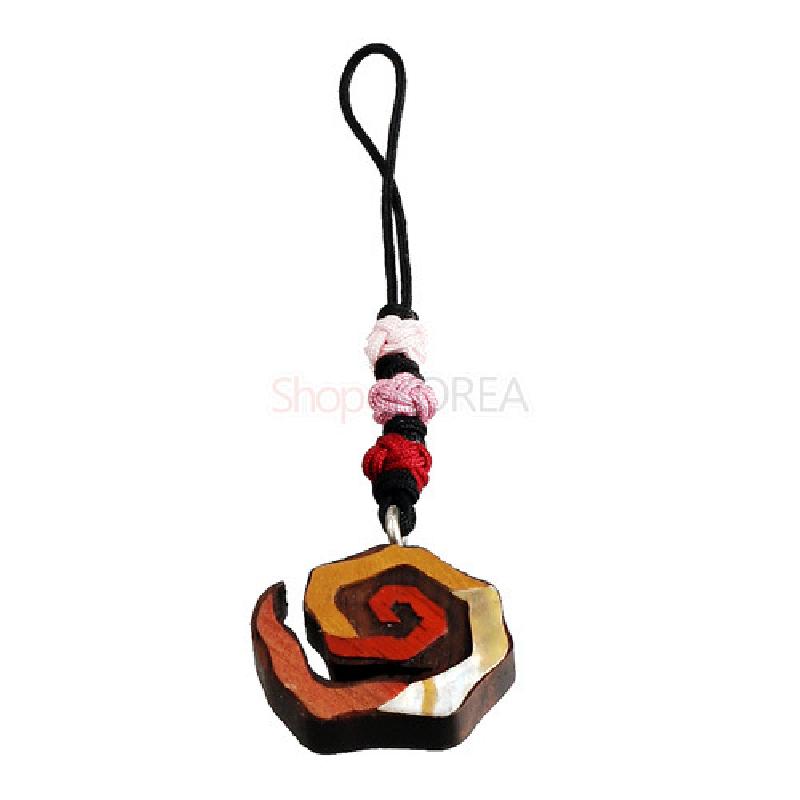
The related products at the end are not a list repeating the same answer as the body examples, but candidates to compare under the same attachment conditions. When examining the five ebony small keychains, first confirm whether direct threading is possible, and if it is not, compare auxiliary attachment methods and the required specifications. Ultimately, what determines the choice is not the name of the charm but the phone's attachment point, the knot thickness, and the method of joining the two sides.
If you want to compare a broader range of products
The pages below link only to product ranges that connect directly to the selection criteria in this article.
- Phone straps — Allows you to compare phone-strap-focused candidates, directly helping you explore strap structures suited to narrow phone connectors as well as auxiliary attachment methods.
- Keychains — In the keychain category, you can broadly compare products with different ring and knot forms as well as charm sizes, and assess compatibility.