Shopofkorea guides
Traditional Thank-You Gifts a Bookshop Owner Can Give After Hosting a Foreign Author
Official product names are shown in Korean. Product pages are in Korean; prices are in South Korean won (KRW).
After a lecture or book talk featuring a foreign author, a gift that is too large can feel burdensome, while one that is too modest may obscure the sincerity of the thanks. In particular, a thank-you gift handed over directly at a bookshop should feel natural only when the atmosphere of the event, the author's travel schedule, and the context of books and writing are all taken into account.
- If handing it over directly right after the lecture: small stationery items whose meaning is easy to explain with a brief greeting
- If it is before a signing session or departure: a bookmark that can be slipped inside a book or stored easily in a bag
- If the author's note-taking habits are a consideration: a notebook or writing set featuring traditional imagery
- If accompanying publishers or editors also need to be included: a set-style item that can be distributed by the same standard
Gifts Whose Meaning Comes Through Even with a Brief Greeting
If the setting after a book talk makes it difficult to have a long conversation with the author, it is better to choose a gift whose meaning comes through without a lengthy explanation. Something the bookshop owner can present with words along the lines of "I hope this stays with you as a memory of today's book" is quite sufficient. In such cases, a bookmark-type item that connects directly to books is more natural than something large and decorative. If the author needs to travel between several cities, volume and weight are also important criteria.
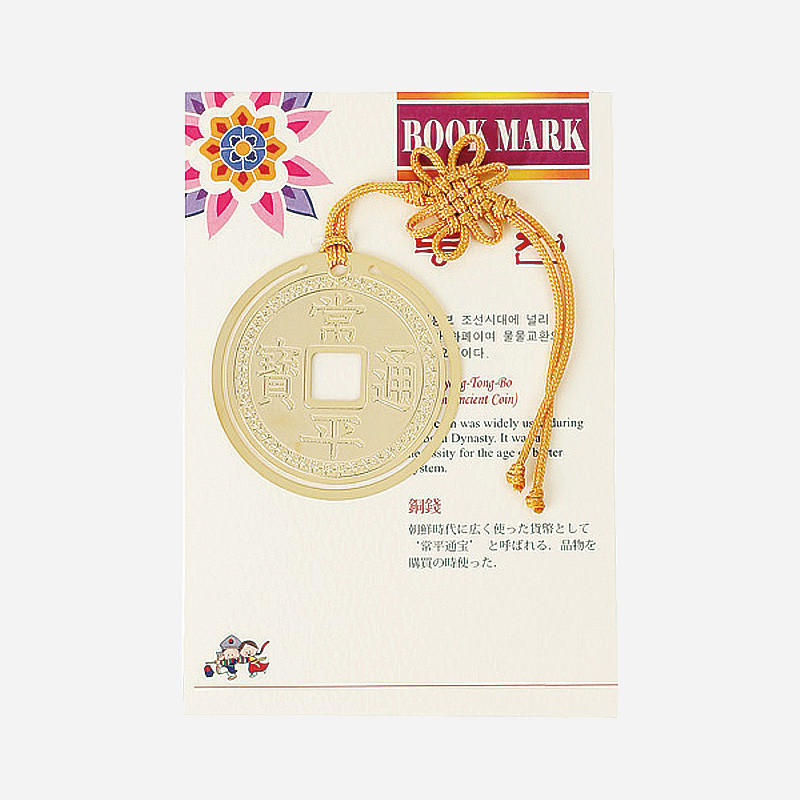
For example, a type that can be kept inside a book—such as a small gold-foil bookmark—pairs well with the brief expression of thanks immediately after a lecture. A bookmark with a small decorative element like a wind-bell (punggyeong jong) leaves a Korean impression while also having a clear use scenario. However, if a decorative element produces sound, it is advisable to check the packaging condition and storage method together. Rather than explaining the meaning of the gift at length, conveying it as "a small keepsake that goes nicely with a book" reduces any sense of burden.
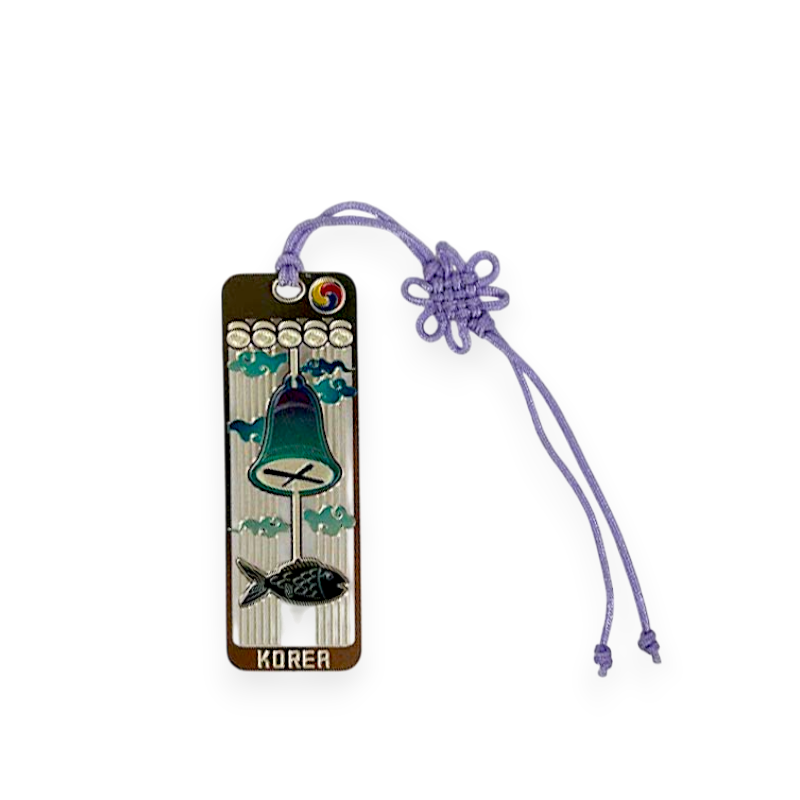
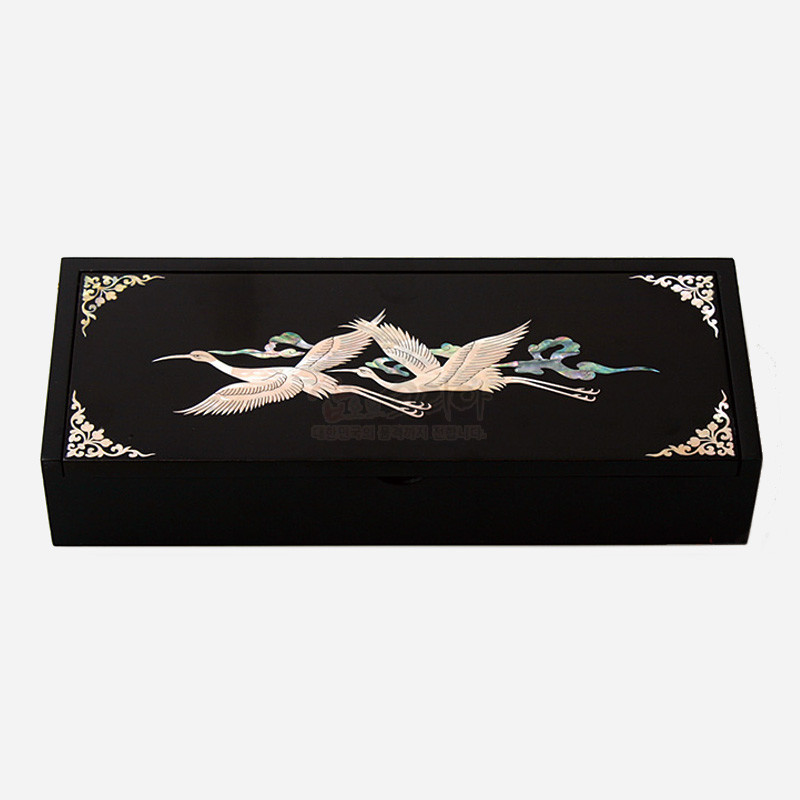
For this type, no single product is the definitive answer; it is simply the most unobtrusive choice that connects naturally to a bookshop event. Because it can be tucked in alongside the book the author received, the event leaflet, or a signed copy, the moment of presentation does not feel awkward. If you want to add a slightly more formal touch, it is also worth comparing gold-foil or mother-of-pearl (jagae) bookmarks. Conversely, when you do not know the author's personal space or tastes, it is better to be cautious about highly decorative items with strong individual character.
When You Want to Leave Something That Reflects the Context of Books and Writing

There are times when "something Korean" alone is not enough for a thank-you gift to an author. At a literary event, what matters is whether the recipient can actually use it, or at least receive it naturally on a desk. A set that combines a bookmark and a writing instrument simultaneously evokes scenes of reading and writing, making it easy to explain. For authors from English-speaking countries in particular, items incorporating Hangeul motifs or a Hunminjeongeum (훈민정음, the Korean alphabet promulgation document) motif can serve as a starting point for conversation.
A type such as the 훈민정음 책갈피 볼펜세트 (Hunminjeongeum Bookmark Ballpoint Pen Set) is easy for a bookshop operator to explain briefly. Presenting it as "a stationery set that evokes Korean script and reading culture" keeps it from looking overly like a tourist souvenir. Because the set includes a writing instrument, there is a real possibility the author will actually use it, giving a more practical impression than a purely decorative item. However, since writing instruments are a matter of personal preference, it is more natural to regard it as a small keepsake used alongside the bookmark rather than to emphasize the writing instrument itself.
This kind of set-style gift works well when presenting to a single author, but it can also be considered when you need to prepare a thank-you of the same character for an interpreter or a publishing-industry contact. Reviews also confirm the context of preparing it as a gift for a foreign recipient and the response of having it ready to fit an overseas schedule. However, reviews are only a reference for specific situations, so it is best to look at the nature of the event and the recipient's travel itinerary together. Checking whether the packaging is neat and whether the volume is not too large when placed in a bag will also make the moment of presentation more assured.
For an Author Who Will Be Traveling for a Long Time, Light and Easy Storage Come First
A guest author may need to return to their accommodation immediately after the lecture, move on to the next city, or repack luggage for the journey home. In that case, a thank-you gift that is fragile or bulky may be appreciated in spirit but burdensome to actually store. A gift handed over at a bookshop is most convenient when it is light and flat and can be slipped in alongside books or a notebook. Rather than elaborate packaging, it is more practical to reduce the risk of crushing or damage during travel.
By this standard, bookmarks, thin notebooks, and small stationery sets are safe choices. Types with material character—such as mother-of-pearl (jagae) bookmarks or gold-foil bookmarks—are also good, but if decorative elements protrude, the case and packaging condition must be checked. For an event where items need to be distributed to multiple people, matching the same item by quantity is also a stable approach. However, if the gift for the author personally is distinct from the thank-you items for staff, differentiating them slightly in packaging or with a message card will appear more considerate.
If You Want to Leave a Quiet, Lasting Impression of the Bookshop
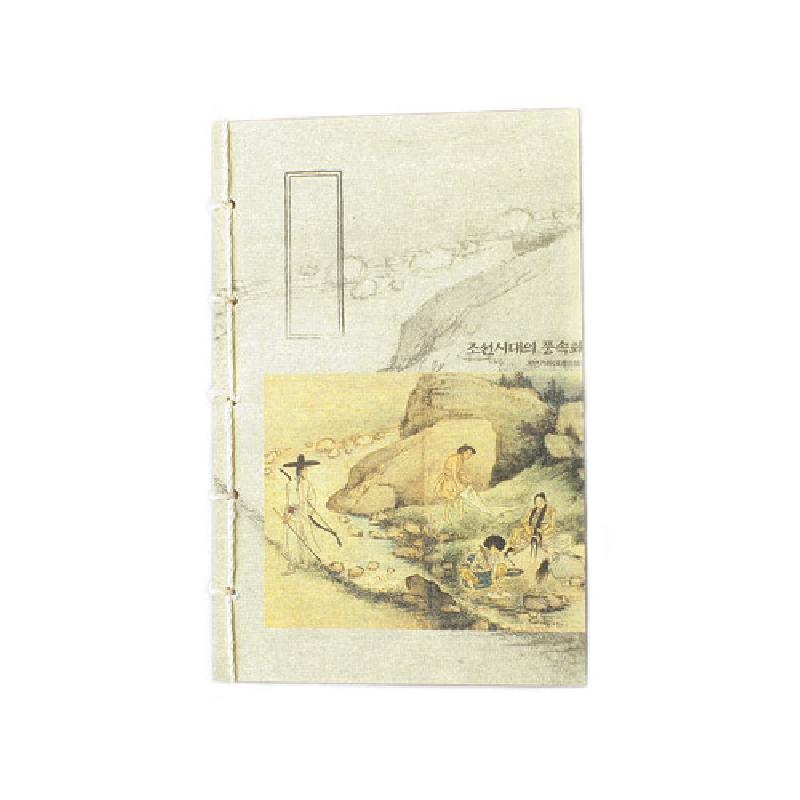
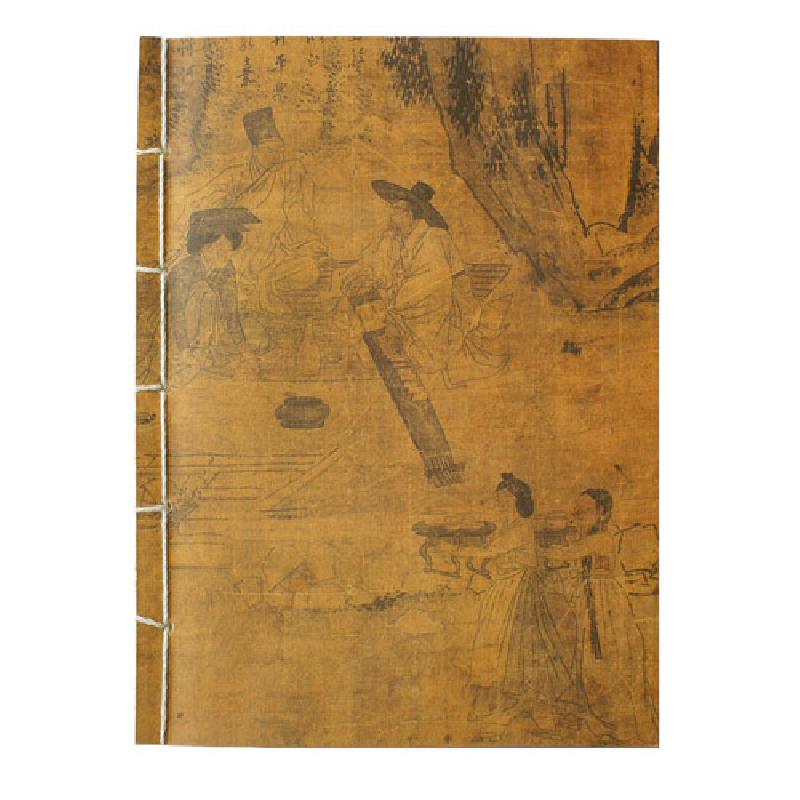
The gift does not have to be a bookmark. If the author is someone who writes frequently, a notebook featuring traditional paintings is also a good candidate. A notebook connects naturally to the context of a bookshop, literature, and writing, and can remain on a desk or in a bag long after the event. However, since the size and cover aesthetic of a notebook matter, large products that are too decorative or inconvenient to carry should be considered in light of the recipient's travel schedule.
Stationery such as 옛노트 (Yet-note, "Old Notebook") featuring genre paintings (pungsokwa) can convey scenes of Korean daily life in a calm way. Subjects like a washing place (ppallaeteo) keep traditional imagery from appearing overly solemn and offer the author a small clue to the everyday quality of an unfamiliar culture. When presenting it at a bookshop, an explanation along the lines of "Please feel free to use it lightly when you write, or think of it as a notebook for keeping today's memories" is quite enough. It is good to balance usability and commemorative value so that the gift does not appear to be attempting to interpret the author's creative world.
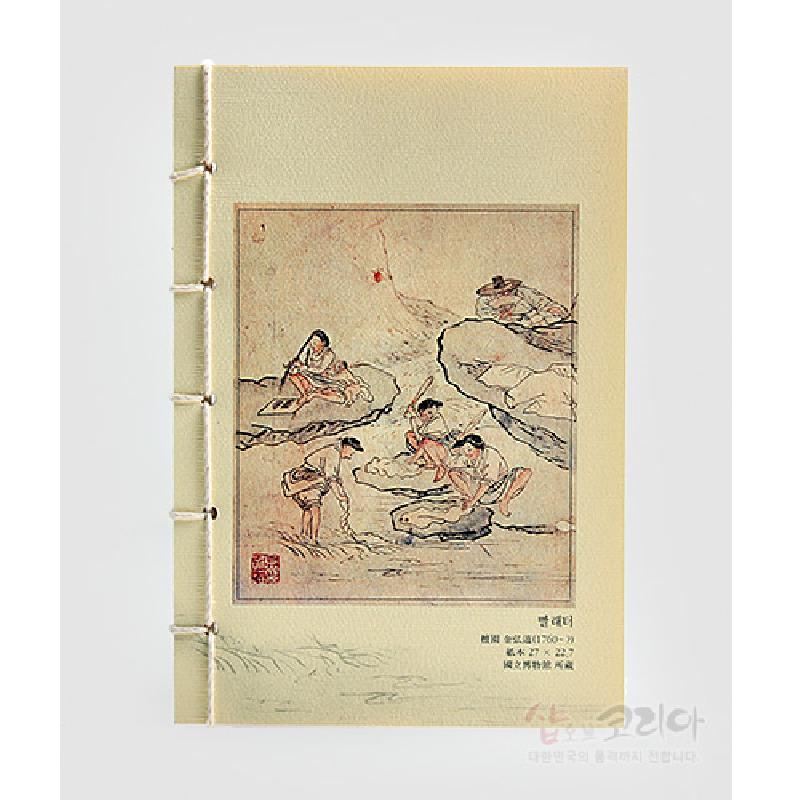
Notebooks in particular require a careful approach when you do not fully know the author's preferences. If the cover carries too strong a message, or if the size is large enough to be awkward in a travel bag, it can feel like a burden. For that reason, when choosing a thank-you gift for a bookshop event, it is better to prioritize stationery of medium size or smaller, calm imagery, and materials that can be explained simply. Even within the same minhwa (민화, Korean folk painting) or pungsokwa genre-painting category, you could prepare a notebook for the author personally and a practice pad for accompanying guests, dividing them by intended use.
When Looking After Several People at Once, Set the Standard First
A foreign author invitation event often involves not only the author but also an interpreter, a publisher's representative, and event staff moving together. At that point, you need to decide in advance whether to prepare gifts of the same level for everyone, or to give the author something slightly more personal while offering the other attendees a practical thank-you. If the standard is not settled, the difference in packaging rather than in the items themselves can end up looking more ambiguous. Including a small card with the bookshop's name or a message of thanks makes the intention of the gift clearer.
A set-style bookmark and ballpoint pen set is an easy candidate to distribute to multiple people. If the set incorporates Korean cultural motifs, it is easy to explain the context to foreign recipients and can give a sense of unity as an event thank-you gift. However, if there is a separate gift to be delivered to the author alone, it is better to be careful about the order of presentation and the packaging rather than handing it over in a way that invites comparison in the same setting. The related products at the end should be seen not as a list that merely repeats the items covered in the main text, but as candidates to compare alongside them within the same context of literary-event thank-you gifts.
For traditional thank-you gifts handed to a foreign author, naturalness in the moment of presentation matters more than visual splendor. If it is a brief greeting right after the lecture, a bookmark; if you want to honor the context of writing, a writing set or notebook; if you are looking after several people at once, a set-style stationery item—dividing the situation in this way makes the choice considerably clearer.