Shopofkorea guides
A Gift Guide for Interior Accessories in Korean Traditional Colors
Official product names are shown in Korean. Product pages are in Korean; prices are in South Korean won (KRW).
Choosing Korean traditional-color interior accessories by the rule of "anything Korean will do" turns out to be surprisingly difficult. The right choice changes depending on whether the space is a home or an office, and whether the recipient prefers vivid colors or finds a subtle accent more comfortable.
- When you need to change the mood of a space, as with a housewarming: accessories that draw the eye, such as wall décor or lighting
- When you need to keep things low-key, as with an office visit: small, practical accessories that can sit on a desk
- When the gift is for a foreign acquaintance: patterns whose Korean character is immediately legible, such as saekdong (multicolored stripes), hanbok, and jogakbo (patchwork)
- When the space is calm and understated: types with reduced color intensity, such as celadon blue, wood, and soft light
When the atmosphere should change the moment it is placed
For housewarming or new-office visit gifts, the recipient is likely to decide on a spot themselves, so it matters whether the piece will clash with the space's first impression. In such cases, accessories that settle naturally on one side of a wall or on a shelf are more comfortable than decorations that are excessively large or whose colors are too strong. A type that combines decorative character with the nature of a fragrance accessory—such as a framed piece with traditional patterns—clearly conveys a "Korean feel" while remaining simple in function, so it places little burden on the recipient. That said, if the home already has a strong interior tone, it is worth checking once more whether vivid traditional colors such as yellow, red, and blue will clash with the surrounding colors.
For example, the traditional-pattern fragrance frame type has patterns with clear meaning—such as lotus flowers and gwimyeonmun (demon-face motifs)—and vivid coloring, giving it a presence befitting a visit gift. It is a good match when the recipient enjoys wall-hung decorations or wants a small accent in an entryway, living room, or reception area. Reviews also confirm the sentiment that the person who gave the gift felt reassured after choosing something Korean and hearing that the colors were beautiful. With this type, rather than looking at a single specific product, it is better to compare the mood of the pattern, the intensity of the background color, and the wallpaper or furniture color of the space where it will be placed.
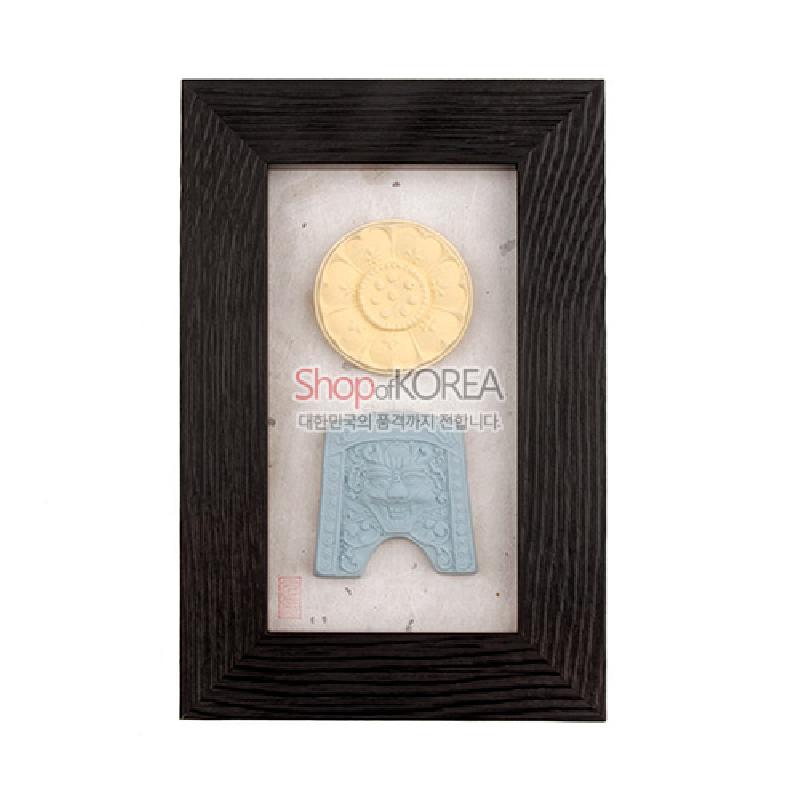
Because accessories in this category lean toward "decoration that showcases traditional color," when you have no idea about the recipient's taste it is safer to choose a color that blends into the space rather than one that is too strong. Conversely, in spaces where vivid color is actually an advantage—a home that receives foreign guests, a Korean restaurant, or a counseling room where a Korean atmosphere is intentionally cultivated—bold coloring becomes a strength. Before giving the gift, it is also worth checking whether the piece is wall-mounted or free-standing, and, if it has a fragrance function, whether the recipient is sensitive to scent.
When a Korean impression must come through without explanation

For gifts to foreign acquaintances, overseas business contacts, or homestay families, it matters whether a Korean impression is immediately legible without a lengthy explanation. Saekdong, hanbok, jogakbo, and dancheong (traditional decorative paintwork) motifs convey Korean traditional colors intuitively, so the first impression is delivered quickly. However, accessories with many colors can feel strongly decorative depending on the recipient's space, so a form that is easy to position—such as a wall-hung piece—is comparatively convenient. Even a small size carries sufficient presence when the color contrast is clear, so it is better to look at the pattern and color combination before size.
A type such as a wall-hung fragrance sachet with a saekdong jeogori (short jacket) motif has a clear gift intention. It showcases Korean colors without being bulky, and it can be hung on a door, wall, or around a display cabinet, so the recipient does not need to think hard about how to use it. When color variations exist—such as a red skirt or a blue skirt—you can choose according to whether the recipient's space has a warm tone or a cool tone. As one review noted, the colors were prettier than expected and the packaging was done well enough that little additional preparation was needed; this kind of gift is well suited to considering the impression made at the moment of giving.
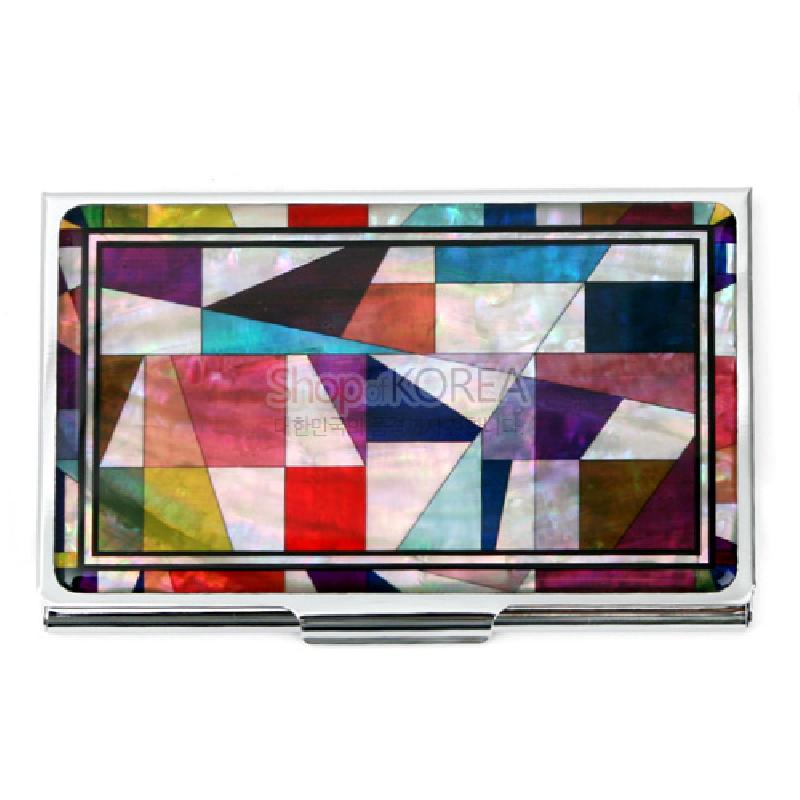
That said, because the appeal of saekdong colors is as vivid as it is, it may look somewhat decorative to someone who prefers minimalist interiors. In such cases, it is better to broaden the range to framed pieces, coasters, or business-card accessories that use the same Korean patterns but with fewer colors or a calmer background color. For a foreign recipient, the advantage is that "Korean decoration" is immediately apparent; for a Korean acquaintance, when it suits their taste it can remain as a long-lasting accent accessory.
When you are worried that a strongly colored gift may be too much, choose by subtle material quality
If you do not know the recipient's taste well, accessories in which a Korean atmosphere comes through from the material and form—rather than from a vivid display of traditional color—are more reliable. Celadon blue, a ceramic texture, and a small bottle form give a soft color impression and tend not to stand out wherever they are placed. In particular, spaces where many objects are already arranged—such as bookshelves, console tables, or reception-room shelves—may suit a calm color field better than a strong pattern. At such times, you should think not only about "is it Korean?" but also about where the recipient can actually put it.
A type such as a celadon mini jumabyeong (small vase) is an example of quietly showcasing traditional color. Even in spaces where vivid obangsaek (the five cardinal colors) or saekdong would feel like too much, celadon-family colors blend in comparatively naturally. A set-type decoration can be placed as a single piece or distributed across a small space, giving the recipient flexibility in how they arrange it. Reviews noting that it was chosen as a decorative piece and that the Korean feel and clean material quality were appreciated confirm that this type is suitable when a tidy impression matters more than showiness.

When choosing from this category, it is not safe to assume that a small size automatically means less burden. Ceramic pieces carry a risk of breakage, so if the gift involves travel or overseas delivery, the packaging condition and method of transport must be considered together. Also, if the recipient has young children at home or plans to place the piece somewhere objects are frequently moved, it is worth checking whether the form stands stably. Although the color is understated, the material quality lends the gift a sense of formality, making it worth considering across a wide range—from close acquaintances to formal visit gifts.
When you want to leave an impression of something used for a long time

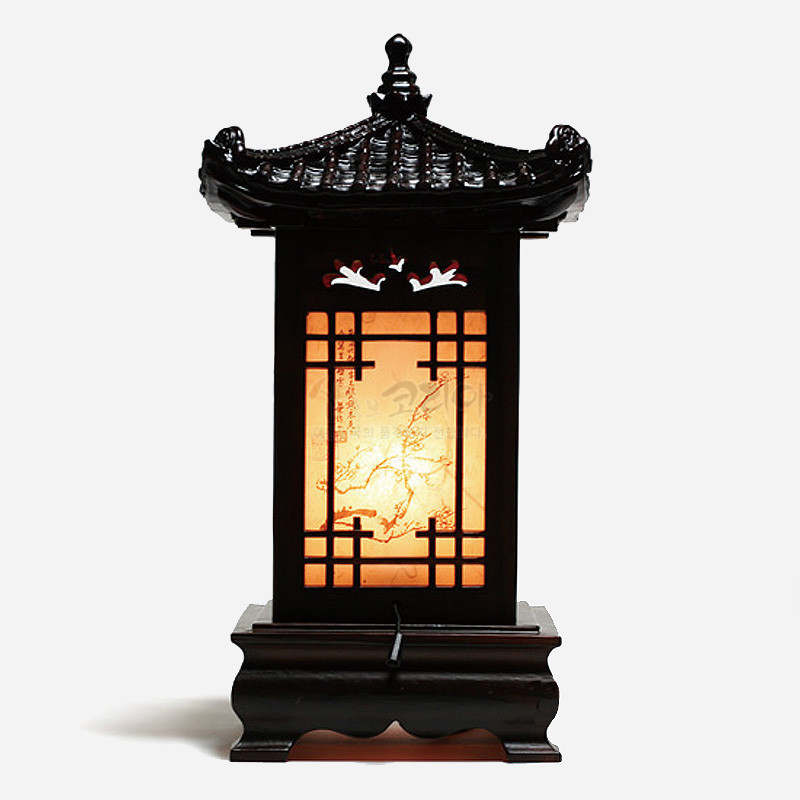
For gifts intended for an office, study, or reception area, practicality matters as much as decorative quality. A decoration that is too personal is hard to find a place for, but when there is a function—such as lighting or a business-card accessory—the recipient can make natural use of it. A seated lamp (jwadeung) featuring a traditional roof-tile image, or stationery accessories with jogakbo or dancheong flower patterns, are types that show Korean color sensibility and utility together. In a work space, however, accessories that are excessively vivid in color or large in size are less suitable than pieces of a size that can sit without difficulty on a desk or on one side of a shelf.
A jwadeung (seated lamp) with a roof-tile motif is an example of creating atmosphere through light and form without relying heavily on direct use of traditional color. As a housewarming gift it can be placed as a supplementary light in a living room or bedroom; as an office visit gift it can serve as a decorative light around a reception table. It has a traditional form but a clear function, so the recipient can relatively easily picture where to put it. If the space is small or already has ample lighting, it is better to look at small practical accessories in the same traditional-pattern family, such as a business-card case or a storage box.
In this way, for a gift meant to be kept and used for a long time, it is better to picture the scene of use first rather than deciding on color beauty alone. For an office desk, accessories that fit into the work flow—such as a business-card holder or a pen set—are comfortable; for a rest area at home, accessories that create atmosphere—such as a jwadeung or a small decorative bottle—are natural. The related products at the end are not a definitive list of the only items mentioned in the body, but candidates to compare alongside one another in the same interior-gift situation. Ultimately, when it comes to Korean traditional-color accessories, breaking down the recipient's space, color preferences, and the actual spot where the piece will be placed makes the choice much clearer.