Shopofkorea guides
Premium Korean Gifts — A Guide to Choosing Craft Gifts for Special Occasions
Official product names are shown in Korean. Product pages are in Korean; prices are in South Korean won (KRW).
When choosing a Korean craft gift for a special occasion, it helps to think first about the moment of giving rather than simply asking 'how luxurious does it look?' The right type of gift varies depending on whether the recipient is an individual or an institution, whether the presentation takes place in a public or private setting, and whether the item can comfortably remain on a desk or in a space for a long time afterward.
- For occasions requiring business formality: prioritize decorum and packaging stability
- For personal expressions of gratitude and anniversaries: prioritize a manageable size and everyday usability
- For institutional recipients or overseas guests: prioritize Korean symbolic value and durability for long-term keeping
- When transport or shipping is involved: prioritize breakage risk, volume, and ease of care after delivery
When the recipient needs to feel the formality of the occasion on the spot
For situations where the atmosphere of the moment of giving matters — such as official visits, receiving distinguished guests, or expressions of gratitude between organizations — a set-format craft gift with a sense of composition is more reliable than a single item. When several pieces are arranged together in one cohesive presentation, the intent of the gift becomes clearer, and the recipient can more easily understand it as a gift given with proper respect. However, items that are excessively large or heavily decorative may place a burden on the recipient's space, so it is worth checking whether the size allows for both storage and display. For example, [선물세트]상감 자동함 3종-전통무늬 (a gift set of three sanggam-decorated automatic boxes with traditional patterns) can be seen as an example of a type in which Korean patterns and a set composition are both visible during a formal presentation.

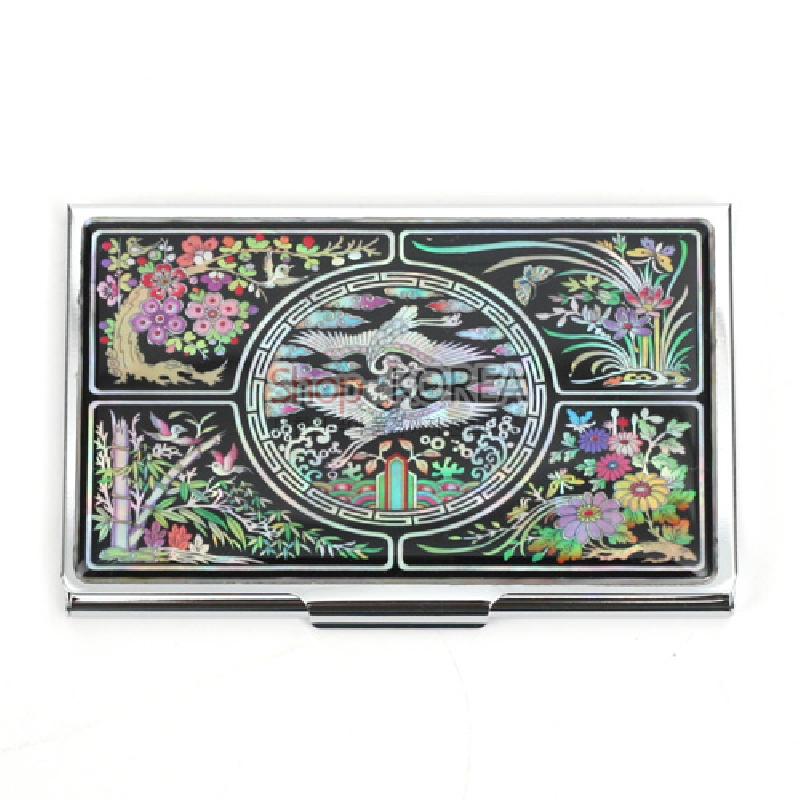
With this kind of set gift, rather than treating any single product as the only correct answer, it suits the situation better to compare the mood of the patterns and compositions and choose accordingly. Designs with clearly defined traditional patterns convey formality well, while patterns with symbolic meaning — such as cloud-and-crane (unhak) or paired cranes (ssanghak) motifs — are well suited to adding a sense of celebration and commemoration. If the recipient is a company executive or an institutional representative, it is also safer to check the condition of the packaging and whether the gift is easy to carry and transport at the time of presentation. Even if the gift is not used immediately after being received, a composition that does not feel awkward simply to store will leave a lasting impression from an important occasion.
When you want something that can stay on a desk for a long time without feeling like a burden

Personal expressions of gratitude, congratulations on a promotion, or anniversary gifts can create a sense of distance if they appear too ceremonial. In these cases, it is worth looking at practical craft items that the recipient can actually keep on a desk or in a study. Business card cases, writing instruments, and small storage accessories add traditional surface decoration to everyday objects, which makes them feel less imposing. However, if the recipient tends not to keep many items around, a compact accessory that fits in the hand is more natural than a large, ornate decorative piece.
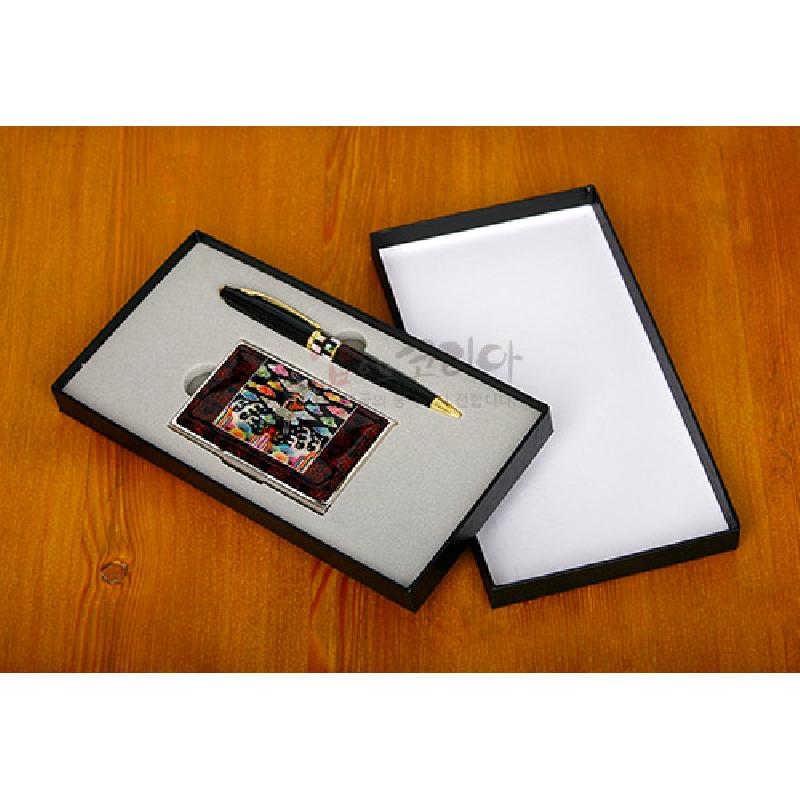
Even in a business relationship, if you want to avoid an overly personal feel, a set with a clear purpose — such as a business card case and ballpoint pen — is comfortable. For example, 명함케이스와 볼펜2종세트-청자상감운학문 (a business card case and two-piece ballpoint pen set with a cheongja sanggam cloud-and-crane pattern) is an example of a type that incorporates Korean patterns while being easy to understand as an actual work tool. Even in a setting where there is little time to explain the gift, the message of 'a Korean craft accessory that can be used at work' is conveyed immediately. Checking whether the color and pattern are unlikely to clash strongly with the recipient's personal taste can also help reduce the chance of a poor choice.
This kind of practical set can be broadly suitable for nearby business contacts, acquaintances who have offered help, and overseas buyers alike. However, since it is less suited to the purpose of long-term display — as a commemorative plaque might be — it fits better when the focus is on 'respectful gratitude and continued use' rather than 'official commemoration.' Products with strong patterns convey a distinctly Korean impression, while those in the jogakbo (patchwork) or sagunja (four gracious plants) style carry a somewhat softer atmosphere. Whether the recipient actually uses business cards in their role can also serve as a small deciding factor.
When you want the gift to be remembered as something that remains in the space
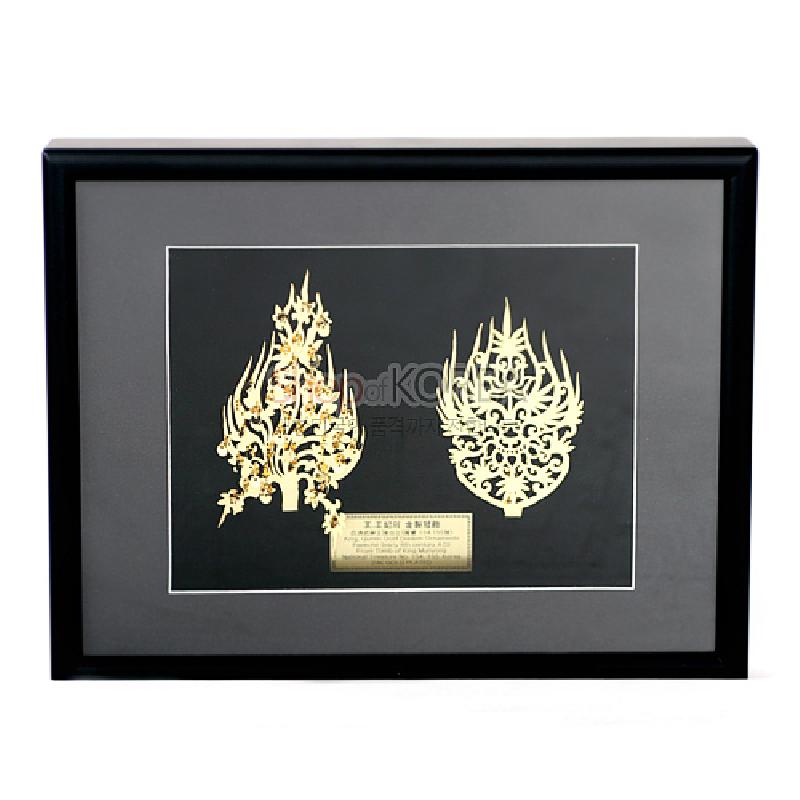
For occasions where it matters that the gift remains in a space after being received — such as institutional visits, office relocations, or commemorative exchanges with overseas partners — a framed craft piece is worth considering. Because a frame focuses on display and symbolism rather than practical use, the subject matter is important: it should not look out of place when placed in the recipient's office or reception room. A design with a clearly Korean subject is easier to explain than one that reflects strongly personal artistic taste, and the purpose of the gift also becomes more distinct. However, since it may feel like a burden to a recipient who has limited wall or display space, the size and method of installation should always be confirmed.
A type such as 액자-국궁 (a frame with a gukgung subject) is a useful reference when you want to leave a Korean subject as a spatial decoration. Because the focus of the gift is on 'commemoration and display' rather than 'use,' it also lends itself well to accompanying words of gratitude or the significance of the visit at the time of presentation. For overseas guests or institutional representatives in particular, the subject matter itself can serve as a starting point for conversation, so a Korean impression is conveyed with only a brief explanation. However, if the recipient intends to place the gift in a personal living space rather than an office, decorative taste plays a larger role, so it is better to first determine whether it is intended for a work space or a home.
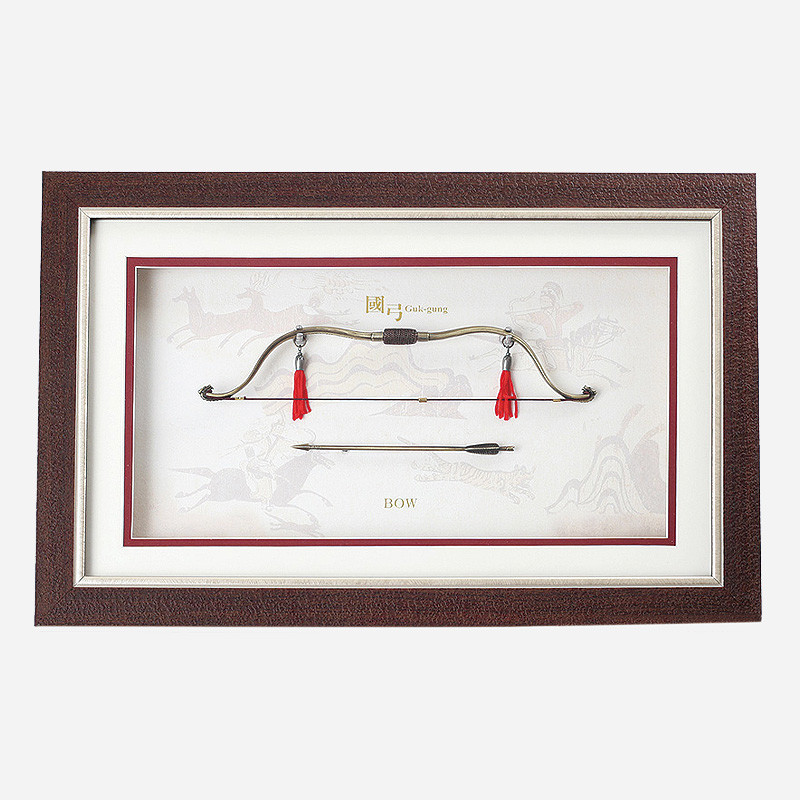
Because a framed gift is something that remains for a long time, the criteria for choosing one should also be a little more measured. Types with strong metallic decoration or historical symbolism may appear highly formal, but they can carry a weight that makes them difficult for the recipient to receive casually. Conversely, a design whose subject is easy to explain reduces the sense of burden even in a formal setting, and makes it easier for the recipient to introduce it to those around them. If 'the likelihood of being kept for a long time' is the top priority, it is better to think not only about the packaging but also about how the piece will look once it is on display.
For overseas guests, choose a symbol that communicates even with a brief explanation
For overseas business trips or international exchange settings, a gift that has a clear Korean character while not being difficult to care for is the reliable choice. When elements that immediately evoke Korea are present — such as jagae (mother-of-pearl inlay), sanggam inlay, traditional patterns, hangeul, or royal court subjects — the intent of the gift is conveyed easily. However, overly delicate ceramics or large decorative pieces may be a concern for breakage during transit, so portability and packaging structure must also be considered. If there are multiple recipients, it is also important to check whether individual packaging is possible and whether it is easy to prepare a consistent quantity by the same standard.
In this case, the appropriate choice among a set format, a practical format, or a framed format can be determined by first settling on the nature of the occasion. For a formal reception, a set with a sense of composition is reliable; for a brief expression of gratitude after a short meeting, a small accessory with a clear purpose — such as a business card case or writing instrument — is more natural. If the goal is to leave something in an institutional or office space, a framed craft piece may be more fitting. The related products at the end are not simply a repetition of the items covered in the main text; they are better understood as an exploratory rail for comparing additional gift candidates for the same kind of important occasion. If you first define the relationship, the level of formality of the occasion, and the space where the gift will be placed after it is received, premium Korean craft gifts become far less daunting to choose.