Shopofkorea guides
Retirement Gifts for Foreigners — A Guide to Choosing Korean Crafts with Dignity
Official product names are shown in Korean. Product pages are in Korean; prices are in South Korean won (KRW).
When choosing a retirement gift for a foreigner, it is better to consider both the formality of the occasion and the recipient's living space, rather than selecting something simply because it feels Korean. The appropriate type of craft differs depending on whether the gift will be presented at a formal retirement ceremony where many people are watching, at a private occasion to express personal gratitude, or as a keepsake intended to remain for a long time in an overseas office or study.
- For a formal retirement ceremony: prioritize dignity, durability, and Korean symbolism.
- For a professor, executive, or advisory committee member: look for practical crafts that can be placed on a desk or in a study.
- For a gift to be kept in an overseas home or reception space: consider decorative quality and motifs that are easy to explain.
- When several people are preparing the gift together: a commemorative composition that does not lean too heavily on personal taste is preferable.
When others are watching, the first impression determines the gift's dignity
At a formal retirement ceremony or an executive's farewell, the impression made the moment the gift is brought out matters greatly. In such settings, a decorative craft whose commemorative meaning the recipient can grasp immediately is more reliable than something small and practical. A framed commemorative piece is easy to picture in a specific place — behind a desk, in a reception room, or on an office wall — making it well suited as a formal gift of appreciation. However, items that are excessively large or whose motifs are difficult to explain can create awkwardness at the moment of presentation, so it is better to look for pieces with clear Korean symbolism that are also easy to store.
For example, framed decorative crafts in the style of the geumjeogwansik (金製冠飾, royal crown ornament) are a type well suited for presenting formally to a high-ranking foreign recipient. The symbolism drawn from royal ornamentation can be explained briefly, and the gift itself tends to be received as a commemorative gesture rather than a reflection of personal taste. This type of piece is not the only correct answer for any specific product; rather, it serves as a useful reference when looking for a "Korean keepsake that can be preserved for a long time" at a formal occasion of appreciation.

This kind of decorative gift feels more natural when accompanied by a message card or text in the style of a letter of appreciation. If it is difficult to know where the recipient will place the gift after retirement, a piece that can be either stood upright or hung on a wall reduces the burden of choice. Conversely, unless the relationship is a very close one, it is wise to be cautious about items such as everyday household goods that strongly reflect personal taste.
For those who use a study and a desk, something that stays close even after retirement is ideal
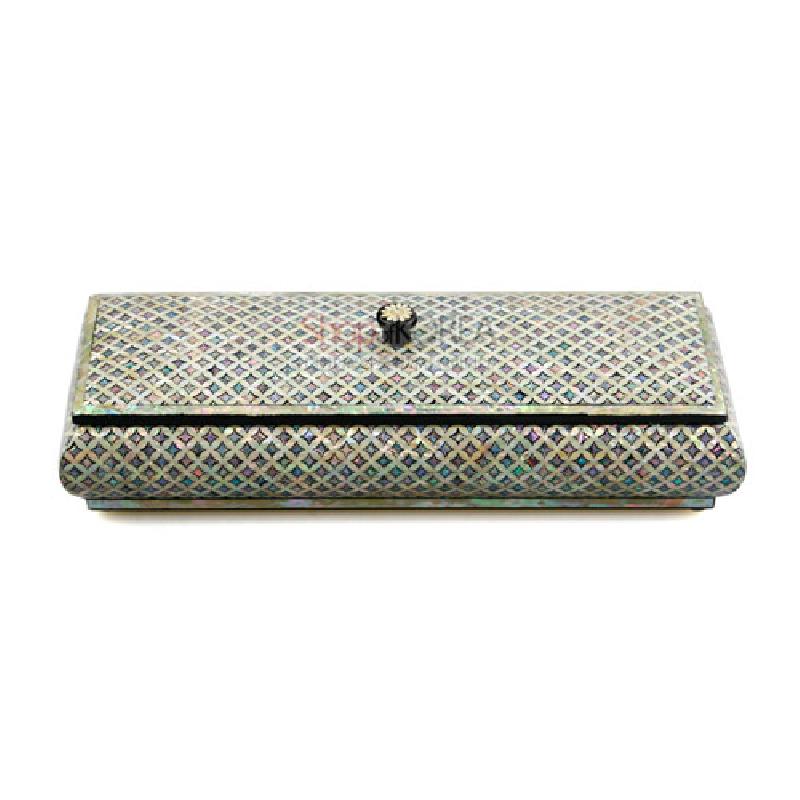
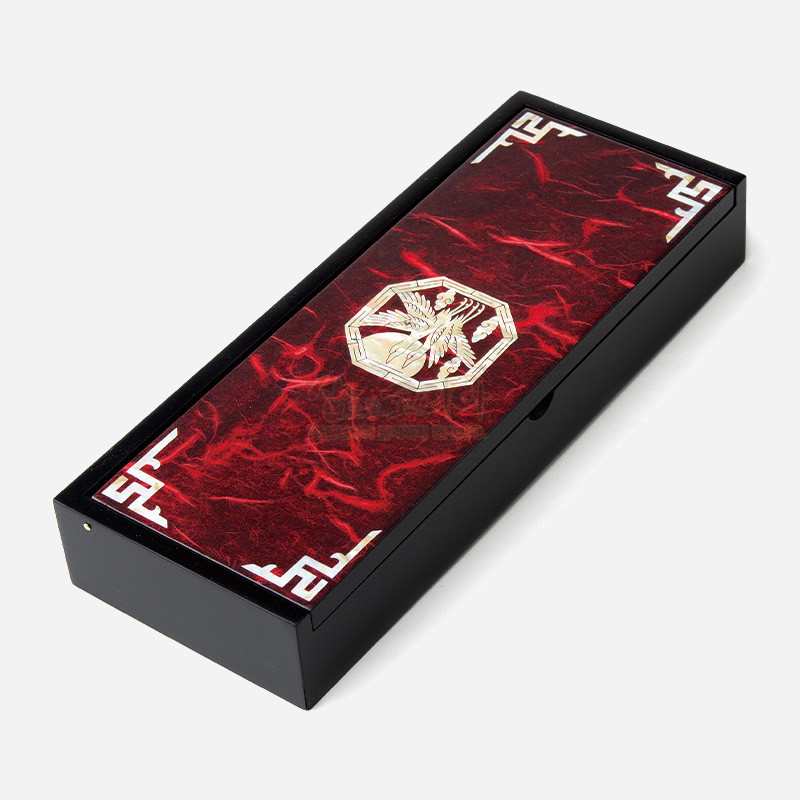
For someone who will continue to use a desk and study — such as a professor, researcher, advisory committee member, or a long-time partner company executive — a craft with practical utility is also a good choice. Because retirement does not always mean the end of work, a brush-holder-style gift (pilham, 筆函) for storing writing instruments or small stationery can leave a quiet expression of gratitude. The important criterion here is not so much practicality that compels daily use, but whether the piece looks dignified on a desk without being overly ornate, and whether its Korean motifs appear refined. A casual office supply set risks making the weight of a retirement commemoration feel diminished.
A pilham (brush holder / stationery box) featuring najeon (나전, mother-of-pearl inlay) or traditional patterns is a type that suits this situation well. For example, a craft piece with clearly defined motifs and materials — such as a jagae-kkokji pilham (자개꼭지필함, mother-of-pearl-knob brush holder) — shows both decorative and practical qualities when placed in a study. It is also easy to explain at the time of presentation as "a Korean craft piece you can keep on your desk for a long time," helping to strike a balance between a personal expression of gratitude and a formal gift.
For a pilham-style gift, it is advisable to check the size and weight if the recipient's space is very limited or if they travel frequently. In particular, for a gift that will be taken overseas, portability and the stability of the packaging should be considered. In fact, among customer reviews from those who prepared gifts to give to foreigners, there are cases where the condition of the packaging and its suitability for a formal occasion were noted as important factors, which suggests that for practical craft pieces, the appearance and the quality of the packaging are worth examining together.
If you want to explain Korean meaning, a craft with clear motifs makes it easier
When presenting a Korean craft gift to a foreign recipient, the ability to say briefly "what it symbolizes" matters more than one might expect. A gift with explainable elements — such as najeon (나전, mother-of-pearl inlay), sanggam (상감, inlay technique), celadon, or the cloud-and-crane (unhak, 雲鶴) motif — allows conversation to flow naturally at the moment of presentation. At a retirement commemoration, something that conveys the beauty of Korean tradition and a sense of gratitude in one or two sentences is preferable to a lengthy explanation. However, if the motifs are too complex or the colors too bold, the piece may not suit the recipient's space, so it is safer to choose something that, even if decorative, gives a calm impression.
A decorative craft set that combines celadon and the cloud-and-crane motif is an example that illustrates these criteria. It can be placed in a home or reception space after retirement, conveys a clearly Korean image, and does not impose a particular mode of use the way a household item would. For instance, a type such as a 청자상감운학 주매병 세트 (Cheongja Sanggam Unhak Jumabyeong set, celadon inlaid cloud-and-crane ewer set) is easy to introduce as "a decorative craft featuring traditional Korean motifs."
This kind of decorative craft is relatively safe even when you do not know the recipient's tastes in great detail, because the purpose of the gift lies in commemoration and preservation rather than use. However, for ceramic pieces with a risk of breakage, or for set-type products, the method of delivery and the route of transport must also be considered. If direct hand-delivery is possible, that is ideal; if overseas travel is involved, the packaging and volume must be examined more carefully.
For a jointly prepared gift, a composition that reduces burden is important
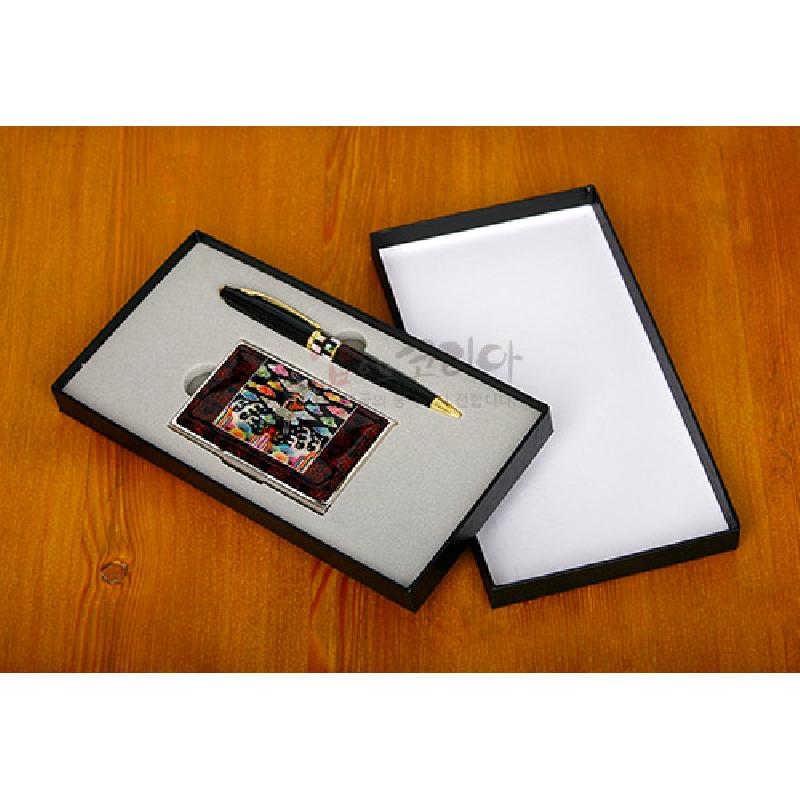
A retirement gift prepared together by multiple departments, a research team, or business contacts is better suited to conveying the formality of the entire relationship rather than any one person's taste. In this case, a composition that has presentable packaging, clear Korean elements, and gives the recipient the choice of whether to use or keep it is more reliable than something too personal. Types such as a small box, a stationery set, or a decorative plaque tend to reduce the burden on the giving side while also being unlikely to feel excessive to the recipient. However, if the gift is being presented in the names of multiple people, it is advisable to check the materials and the impression of the finish so that it does not come across as too lightweight a souvenir.
A sanggam jadongham set (상감 자동함 세트, sanggam-inlaid automatic-lid box set) or a small-item composition featuring traditional patterns are worth comparing for this kind of joint-gift situation. The contents are practical, the gift takes on a proper form when packaged, and the Korean motifs are easy to explain briefly. Dividing the criteria — a slightly more practical composition for a close colleague, and one with greater decorative quality and preservation value for an executive or distinguished outside guest — makes the selection considerably clearer.
The related products at the end are not simply a list repeating items mentioned in the body text; they are candidates to compare alongside one another in the same context of a retirement gift for a foreigner. Clarifying first whether the occasion is a formal retirement ceremony, a personal expression of gratitude, or a keepsake to be kept for a long time in an overseas space will make the range of choices much clearer. For a retirement gift, what matters more than size or visual splendor is whether it fits naturally within the formality of the relationship and the recipient's future space.