Shopofkorea guides
Warning: Chinese-Made Najeonchilgi (Mother-of-Pearl Lacquerware)
Official product names are shown in Korean. Product pages are in Korean; prices are in South Korean won (KRW).
With najeonchilgi (mother-of-pearl lacquerware), it is difficult to determine the country of origin or production method from surface gloss and pattern alone. That is why, the clearer the gift's purpose, the more important it is to look first not at whether something "feels Korean" but at whether it is described as Korean-made, what production information the seller provides, and whether there is a record you can refer back to later.
- If it is a gift for a foreign recipient or institution: check first for Korean-made labeling and appropriate presentation formality
- If purchasing at a tourist site or offline store: check the labeling and exchange conditions rather than relying on verbal explanations
- If purchasing online: prioritize sellers where product descriptions, sales records, and inquiry responses can be kept on record
- If it is a gift intended for practical use: check the finish, size, and storage convenience alongside the country of origin
Why a "Chinese Najeonchilgi Warning" Is Needed Now
For some time, buyers largely assumed that najeonchilgi was Korean-made craft. Recently, however, there has been a growing number of cases in which some businesses have moved their production facilities to China or are making use of local Chinese production. In the past, differences in finish or materials often made quality differences noticeable, but these days, because Korean artisans or skilled craftspeople are sometimes involved in overseas production, it has become much harder to distinguish Korean-made from Chinese-made products by appearance alone.
The najeonchilgi and jagae (mother-of-pearl) products introduced on Shop of Korea are described as 100% Korean-produced. However, we do not issue separate certificates of guarantee or certificates of origin. Instead, verifiable documentary records remain in the form of online product pages, order histories, and inquiry responses. This makes it practically difficult to misrepresent the country of origin or production information in an online setting, and buyers can later confirm what description they saw when they made their purchase.
On the other hand, when buying najeonchilgi at an offline store or tourist site, a little more caution is warranted. Even if a product looks beautiful and the seller gives a friendly explanation, relying on verbal explanations alone may leave you without a way to verify anything later. If the intention is to present it as a Korean-made gift, it is advisable to check the country-of-origin labeling, receipt, exchange conditions, packaging condition, and any written explanation the seller provides.
When the Meaning of Korean Craftsmanship Is Part of the Gift
In settings where the significance of "a traditional craft prepared in Korea" matters — such as gifts for foreign buyers, institutional visits, or overseas business trips — confirming the country of origin is not merely supplementary information. When explaining the gift to the recipient, being able to say briefly that "jagae is a material made by thinly processing seashells, and najeon refers to the technique of creating patterns with that jagae" allows the context of the gift to come across naturally. That said, since najeonchilgi techniques have been passed down across East Asia for a long time, distinguishing Korean-made from Chinese-made products by appearance alone is risky. It is more reliable to check the seller's country-of-origin labeling, production description, packaging condition, and exchange conditions together.
For occasions requiring symbolic or display value, types that can be set out and viewed — such as framed plaques or jewelry boxes — are a good fit. For example, a type such as the 자개장식 나전칠기패-남대문 (jagae-decorated najeonchilgi plaque featuring Namdaemun Gate) is relatively easy to explain at an official visit gift-giving occasion because it shows both a recognizably Korean landmark image and jagae decoration together. What matters in this case is not the specific product name but rather "where it can be displayed, what scene it depicts, and how it is described as Korean-made." Rather than selecting a product on the premise that a separate certificate of guarantee or certificate of origin will be issued, it is more practical to base your judgment on what can be confirmed from the sales page and purchase record.
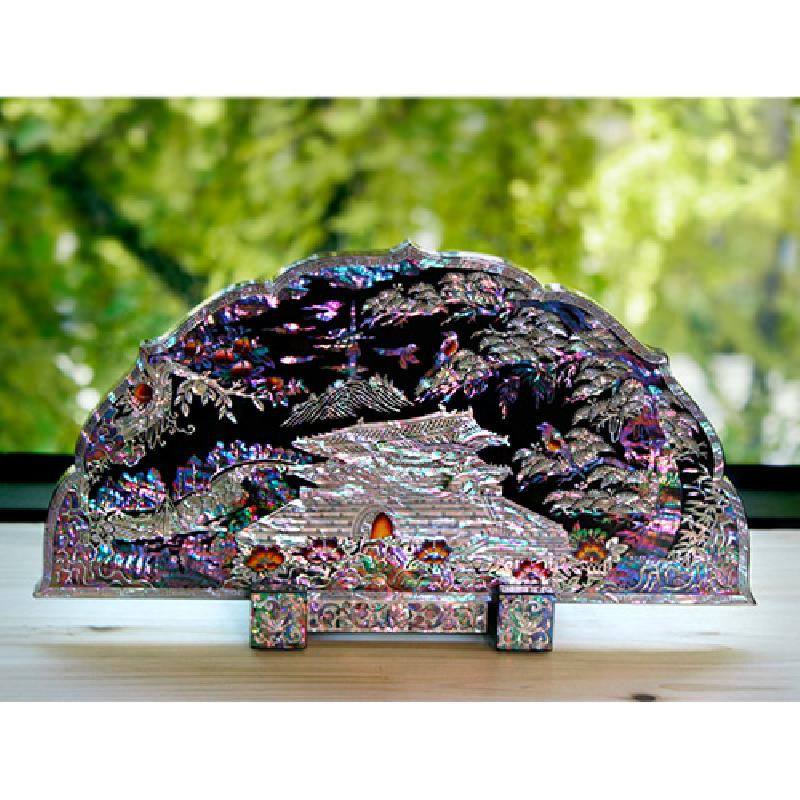
Because display-type gifts have a certain size and presence, you should also consider the recipient's space. For someone with a place to put it — such as an office, reception room, or meeting room — the impression will last a long time, but for someone with a busy travel schedule or significant luggage constraints, a smaller accessory-type item may be more convenient. If the gift must be handed over already packaged and cannot be opened for inspection beforehand, it may be difficult to verify the contents, so it is better to review the product description and packaging options more carefully before ordering. In actual gift-giving reviews, there are cases where the item was handed over without being personally inspected due to its packaged state, which makes the pre-purchase verification process all the more important.
When You Need to Buy on the Spot at a Tourist Site, You Need Verification That Leaves a Record Rather Than Just Words

At tourist sites or offline stores, you have the advantage of seeing the product in person, but at the same time it is easy to rely on on-the-spot explanations. Even if a seller says "Korean traditional jagae," you need to confirm whether that means Korean-made, Korean-style patterns, or simply a traditionally inspired design. Especially for gift purposes, you should also check the receipt, exchange conditions, country-of-origin labeling, and packaging condition so that you have something to refer to if a problem arises later. The key point is not that Chinese-made products should be avoided without exception, but that the purpose of presenting it as a Korean-made gift and the actual information provided should not be at odds.
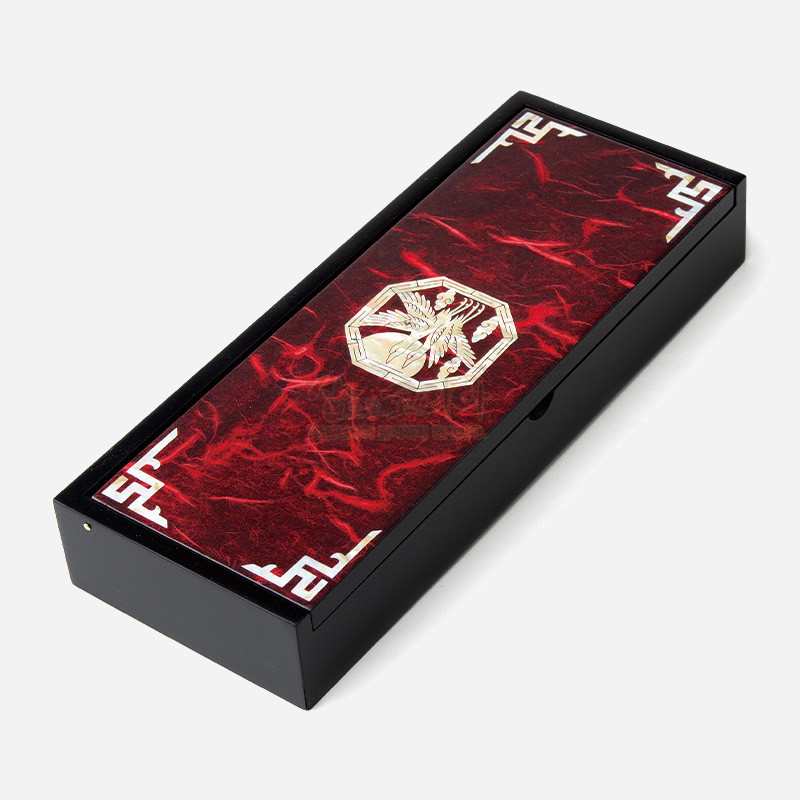
Jewelry box types are frequently seen at tourist sites as well, but it is difficult to judge quality and place of production from surface gloss alone. For example, a type such as the 나전칠기 직보석함-액자 속 송월학(적색) (najeonchilgi straight jewelry box — crane and moon in a frame, red) catches the eye as a gift option because of its vivid pattern and color, but when purchasing you should also check the finish lines, how the lid opens and closes, the interior treatment, and packaging stability. For foreign buyers or official return gifts, it is safer to look beyond "a pretty object" and consider whether it will be easy to store after being given, and whether the description is not exaggerated. Even for products described as Korean-produced, whether a separate certificate is issued may vary by sales terms, so if needed it is advisable to submit an inquiry before purchasing.
If you find something you like on the spot but cannot decide right away, one option is to compare the same type of item online. Even with the same jewelry box, the atmosphere of the gift changes depending on the wood base, hanji (Korean traditional paper) combination, pattern arrangement, and color. You should also consider whether the recipient enjoys traditional decoration, prefers something to keep on a desk, or feels comfortable with something as personal as a private storage box. In an on-the-spot purchase, the more important criterion is not "does it look good right now" but "can I explain it later and confirm the exchange conditions."
Business Gifts, Even Small Ones, Cause Less Awkwardness When the Description Is Clear
For business gifts involving a mix of relationships — such as gifts for clients, buyers, or presenters — practical items with a clear purpose, such as business card holders, pen cases, or business card cases, are more comfortable than overly large decorative pieces. In this case, in addition to confirming the country of origin, you should also check whether it is too conspicuous on a desk, whether the logo or pattern feels excessive, and whether the packaging is neat. Reviews mentioning that the jagae feel made it easy to present as a commemorative gift to someone close also connect to this context. However, since the reactions described in reviews do not necessarily apply to every recipient, it is better to use the formality of the relationship and the context of use as your primary criteria.
A type such as the 자개꼭지명함함-전통무늬 (jagae-knob business card holder — traditional pattern) makes it easy to demonstrate both practical usability and Korean decorative character in a business gift setting. A business card holder allows the recipient to immediately understand its purpose, and it does not feel like an oversized decorative piece when placed on a desk. In this case, understanding it as "a practical accessory for storing business cards with jagae decoration added" rather than focusing on the product name broadens your range of choices. It is also worth checking whether it is described as Korean-made, whether the pattern description is clear, and whether packaging quality is consistent when preparing multiple units.
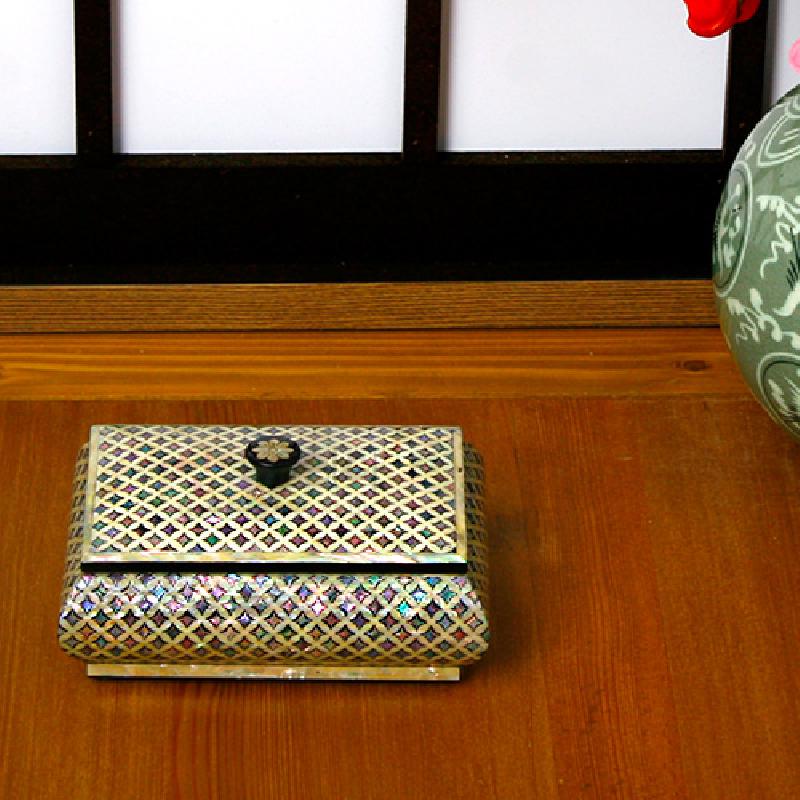
With smaller accessories, differences in finish can actually be more visible. You should check whether the lid and body fit well, whether the edges of the jagae decoration are not rough, and whether surface blemishes can be confirmed before gifting. When distributing to multiple people, individual packaging and consistent labeling become more important; when presenting formally to one person, whether the pattern's meaning and color suit the recipient becomes more important. With business gifts, a clear and stable description reduces awkwardness more than size does.
For Online Purchases, It Is Advantageous to Have Country-of-Origin and Production Descriptions on Record
When selecting najeonchilgi or jagae products online, you cannot handle the product in person, but you do have the advantage of being able to keep descriptions and inquiry records. Check how the product detail page describes the country of origin, production-related information, materials, and packaging, and if it is an important gift, it is advisable to confirm any necessary points through an inquiry before purchasing. In particular, for institutional gifts or items to be delivered overseas, you should ask separately whether the product is "described as Korean-made" and whether "a separate certificate can be issued." The najeonchilgi and jagae products on Shop of Korea can be browsed as examples of items described as Korean-produced, but they are not presented on the premise that a separate certificate of guarantee or certificate of origin will be issued.
The related products at the end are not a definitive list of the only products mentioned in the body of this article, but rather gift candidates in najeonchilgi and jagae that can be compared using the same criteria. Breaking them down by purpose and presentation context — framed plaque type, jewelry box type, business card holder type, pen case type — also allows for more specific confirmation of country of origin. In the end, there is one thing to check before purchasing: if the meaning of Korean-made craftsmanship matters for the gift, look first at the country-of-origin labeling and production description, the sales record, and the conditions available for verification if a problem arises after delivery, rather than at the appearance alone.