Shopofkorea guides
A Guide to Choosing Jwadeung-Centered Display Pieces That Add a Korean Atmosphere to a Home Abroad
Official product names are shown in Korean. Product pages are in Korean; prices are in South Korean won (KRW).
When you want to add a Korean atmosphere to a home abroad, it is better to start by asking not "How Korean will this look?" but "Where will it sit naturally?" Because a jwadeung (Korean floor/table lamp) functions as a light source while also appearing as a small display piece, the criteria for choosing one differ depending on which space—living room, study, or bedroom—is where the eye tends to linger.
- If placing it in the living room: prioritize first impressions, eye-level presence, and the visual impact of traditional patterns
- If placing it in the study: prioritize the calm quality around bookshelves and desks, and whether the size feels burdensome
- If placing it in the bedroom: prioritize light intensity, a sense of stability, and an atmosphere that is not too strong
- If sending it as a gift: also check voltage and plug compatibility, as well as bulk and fragility concerns
The spot where a Korean atmosphere reads naturally when guests walk in
The living room is the space where a jwadeung most resembles a display piece. When placed on a side table next to a sofa, a low display cabinet, or a console in a home abroad, the form is noticed before the light itself, so types that convey a relatively clear impression of roof tiles (giwa), lattice windows (changsal), or the feel of hanji (Korean mulberry paper) tend to work well. That said, rather than trying to transform the entire living room into a traditional Korean setting, it is less overwhelming to simply introduce one Korean accent point among the existing furniture. Overly large decorations can clash with the surrounding atmosphere, so if there are already many frames or vases nearby, it is more stable to start by looking at medium-sized pieces or smaller.
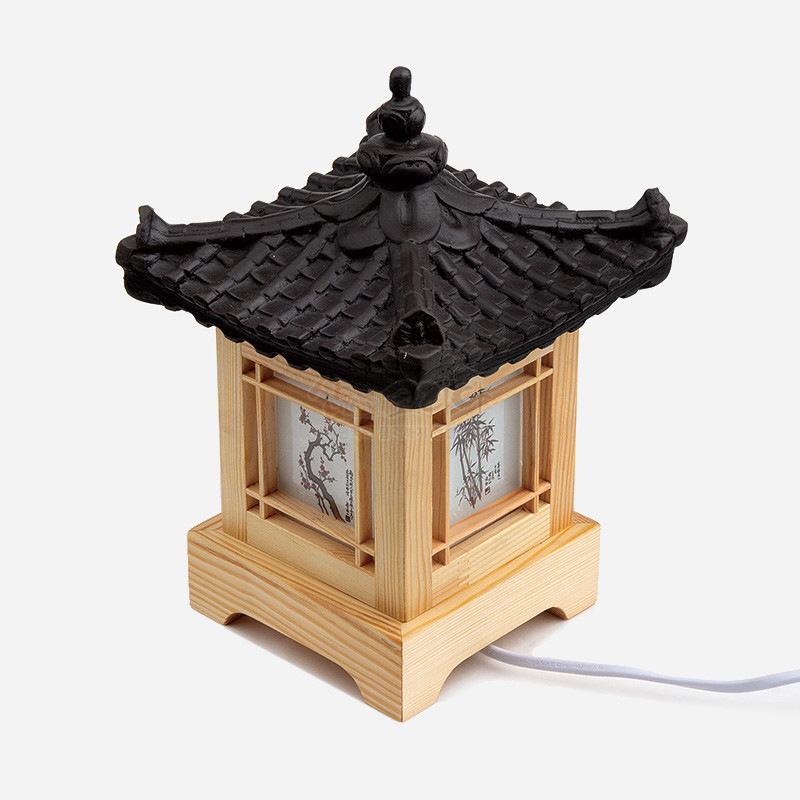
For example, a jwadeung that evokes a tiled roof conveys the impression of "a Korean object" relatively easily even to foreign family members or acquaintances seeing it for the first time. A type such as the 2색좌등中-기와등스탠드 (two-tone medium jwadeung – giwa lamp stand) is well suited to places where the eye lingers for a long time, such as a living room or study, because it shows both form and light together. The important point is not that this one product is the definitive answer, but rather that when choosing a jwadeung for the living room, both the recognizability of the form and the balance within the space must be considered together. Just as reviews describe satisfaction after delivering a gift with a clearly traditional atmosphere during an overseas visit, the core of choosing for the living room is whether the recipient can read the atmosphere without any explanation.

A giwa-style jwadeung like this has the advantage of looking like a small architectural object even during the day when the light is off. Conversely, if the living room is already bright and the display cabinet is busy, a piece with a neat form will be more comfortable to look at over time than one with an excessive number of patterns. The more you want to make a strong Korean statement, the more you should leave the surroundings clear; and if a home already has a variety of decorations, placing just one jwadeung tends to look more natural.
Beside a bookshelf and desk, a calm silhouette stays with you longer than the light itself
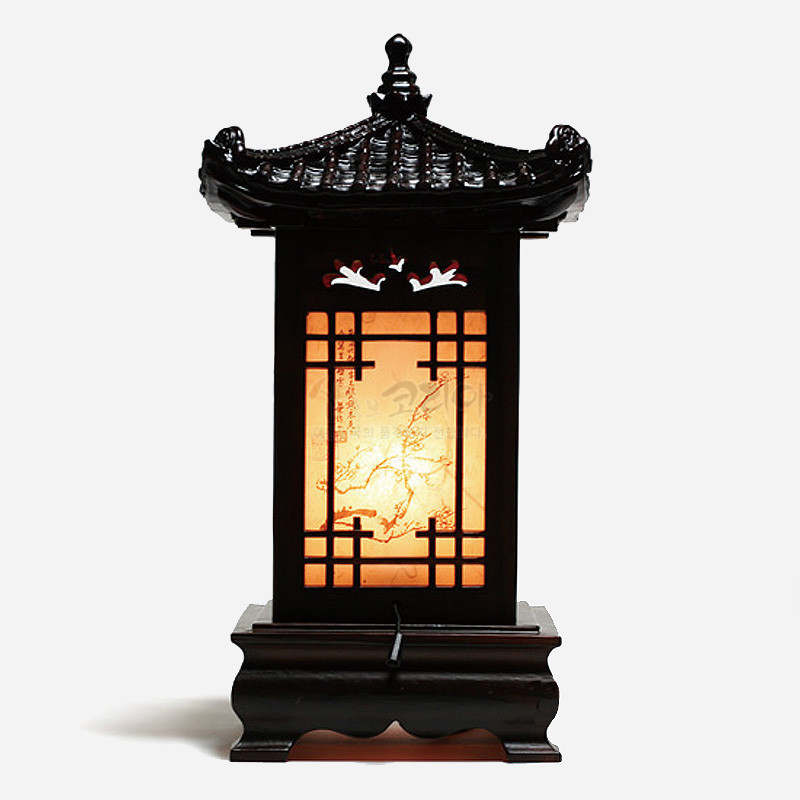
A study or home office is a space where you view a jwadeung at closer range than in the living room. When placing it on a single shelf in a bookcase, a shelf beside a desk, or a corner away from a monitor, what matters is not the brilliance of the light but whether the form is calm and whether it obstructs the field of vision. In overseas living spaces, books, stationery, and electronic devices are often placed together, so if traditional patterns are too strong they can clash with a space meant for concentration. For that reason, a jwadeung that retains the impression of giwa or changsal while keeping its color and form neat tends to suit a study better.
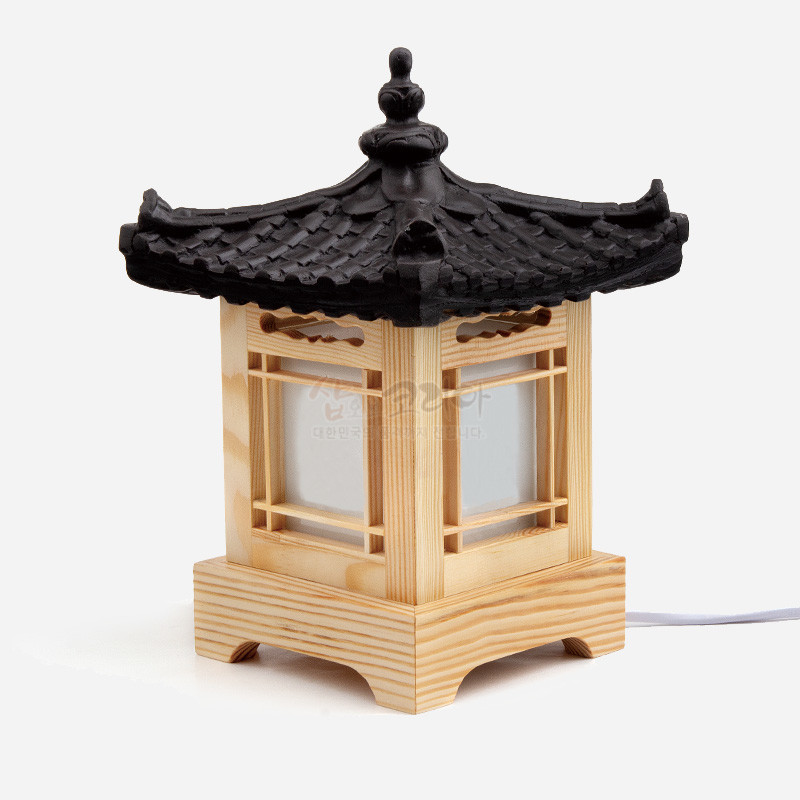
A square giwa-style jwadeung is a type that illustrates these criteria well. A form with clean faces, such as the 2색좌등-사각기와 (two-tone jwadeung – square giwa), does not stand out excessively while still looking like a decorative object when placed on a bookshelf or study shelf. In particular, when the recipient must place the item in their own space themselves—as with a thank-you gift or a visit gift—a size and form that immediately suggests where it could go reduces the sense of burden, more so than an overly large object. Just as reactions describe a space atmosphere changing naturally after choosing a Korean item to decorate a home, a jwadeung for the study benefits from subtle change rather than dramatic change, which lasts longer.
For a jwadeung to be placed in a study, the power supply method must also be checked. If used abroad, mismatched voltage or plugs may mean it can only be kept as a display piece, so if you actually intend to use it switched on, it is best to confirm the usage environment first. If using electricity is inconvenient or uncertain, it is safer to think of it as a display-type decorative piece whose form and pattern are attractive, rather than focusing on its lighting function. Even then, looking at whether it fits within one shelf of a bookcase and whether the pattern feels cramped at eye level makes the choice easier than focusing on the product name.
For a bedroom or small shelf, consider the burden of the light before the size
The bedroom is the space where a jwadeung must be chosen most carefully. Even if you want to add a Korean atmosphere, if the light is too strong or the shadows are complex, the decorative quality can take precedence over a sense of comfort. When placing it on a nightstand beside the bed, a windowsill shelf, or the top of a low storage unit, a small size and a stable base are important. In particular, because the color and material of bedroom furniture in homes abroad are often simple, even a small jwadeung can serve as a sufficient accent.
A type such as the 작은좌등-기와집 (small jwadeung – giwa house) is a good fit for homes where large decorations feel burdensome, or for a space where Korean-style atmosphere is being introduced for the first time. When the form is small, the recipient has more options for placement, and it is easy to move to a hallway shelf or a small reading corner as well as the bedroom. However, being small does not mean it suits any location, so if there are already many low accessories nearby such as candles or frames, placing the jwadeung as a single central decoration tends to look cleaner. Just as reviews describe deliberating over what Korean object to give, a small accessory can reduce the sense of burden while still clearly conveying the intent behind the gift.

For bedroom use, it is also worth comparing square lamps where the hanji feel or changsal pattern appears soft. A type such as the 전통 사각등 작은 땅 - 완자문살 (traditional square lamp, small – wanja-munsal lattice pattern) can be expected to combine the Korean impression given by the pattern with an atmosphere suited to a quiet corner. However, if you intend to use it as an actual night light, you should confirm whether the brightness and method of use suit your lifestyle. Deciding in advance whether it is closer to a decorative piece or a lamp to be left on at night reduces regret.
When sending it as a gift, think about the recipient's home as much as the Korean impression
The criteria differ slightly between placing a jwadeung in your own home while living abroad and giving one as a gift to foreign family members or acquaintances. When using it yourself, you can choose a design with strong traditional character according to your own taste, but for a gift you should first think about which space the recipient will be able to place it in. A living-room piece makes a strong first impression but the bulk may feel burdensome; a bedroom or study piece is small and practical but may feel less impactful. For that reason, when choosing a jwadeung as a gift, it is better to ask not "Does it need a Korean explanation?" but "Does a place to put it come to mind the moment it is received?"
The related products at the end are not simply a list repeating the jwadeung mentioned in the body, but rather candidates for lighting and traditional accessories to compare alongside them in the same situation. The direction that suits each space and relationship can differ—giwa-style jwadeung, hanji window-style square lamps, lamps featuring sagunja (the Four Gracious Plants) patterns, and so on. By dividing considerations around impression for the living room, calm for the study, light burden for the bedroom, and placement possibility for gifts, a Korean atmosphere can settle into a home abroad without feeling excessive.