Shopofkorea guides
A Guide to Choosing Korean Traditional Craft Gifts for Parents on Parents' Day
Official product names are shown in Korean. Product pages are in Korean; prices are in South Korean won (KRW).
When choosing a traditional craft gift for Parents' Day, it is better to first think about where your parents will keep it and how they will feel looking at it, rather than simply picking something pretty. The right size, pattern, and level of practicality will differ depending on whether the gift is for a shared space like the living room where family and guests gather, a personal space like the bedroom or study, or a formal occasion of expressing gratitude.
- If it will be kept long-term in the living room or bedroom: prioritize the meaning of the pattern and durability
- If it will be placed in a study or personal space: prioritize storage function and calm coloring
- If the presentation setting is formal: prioritize packaging and a tidy first impression
- If decorative items feel like too much: prioritize traditional everyday accessories that can be used in daily life
A gift whose Parents' Day sentiment does not fade even after a long time
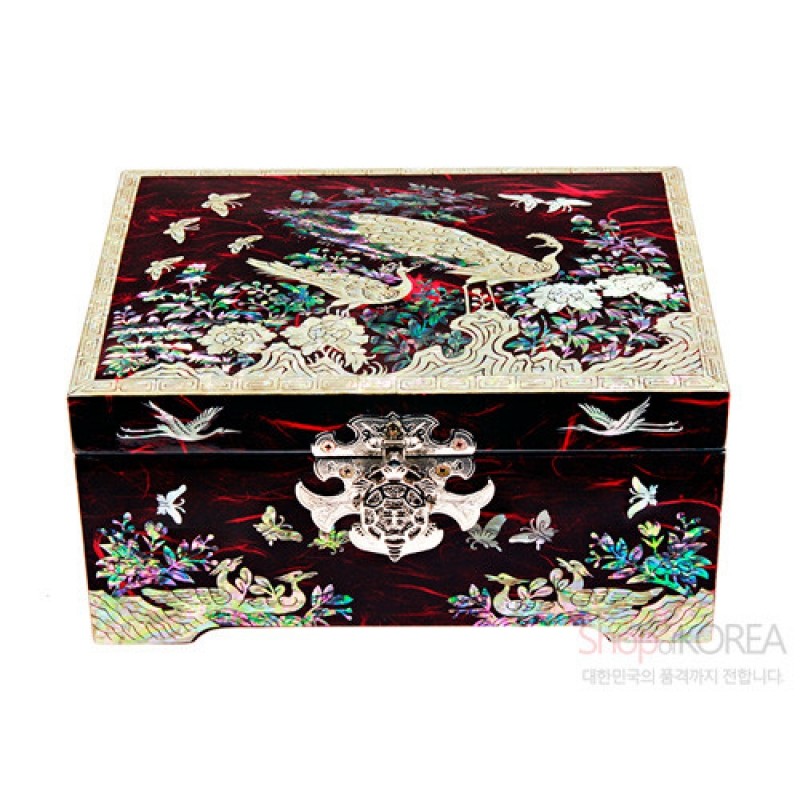
For a commemorative gift to parents, what matters more than the splendor of the moment it is first received is whether it will remain naturally in the home as time passes. Traditional craft items with a clear purpose—such as jewelry boxes or drawer chests—can carry both the meaning of gratitude and a practical storage function in daily life. In particular, patterns such as najeon (mother-of-pearl inlay), traditional motifs, cranes, and chrysanthemums have a decorative quality that also suits the respectful atmosphere of a Parents' Day gift. That said, it is worth thinking first about whether the furniture in your parents' home tends toward calm tones, and whether there are already many decorative items there.
For example, a type such as the 박인호 작품 자개굴림보석함- 전통무늬 (Park In-ho work najeon-gullim jewelry box – traditional motif; najeon-gullim refers to a rounded mother-of-pearl inlaid box) has a clear traditional pattern and a well-defined purpose as a jewelry box, making it well suited to being kept long-term in the bedroom or in one corner of the living room. Rather than thinking of such a gift as one specific answer, it is better to view it as a "commemorative keepsake box" type—something in which parents can store precious items and be reminded of the day of gratitude. Items with a distinct pattern also have the advantage of conveying the meaning of the gift immediately at the moment of presentation. On the other hand, if the space is very small or your parents find decorative items burdensome, it is safer to look one step down in size and color intensity.
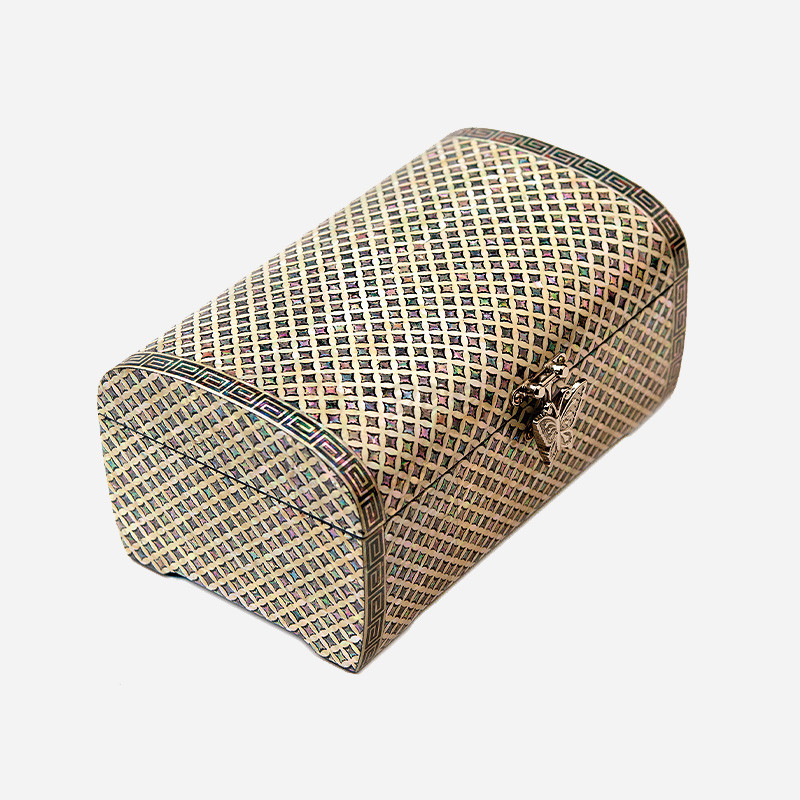
When choosing this type of jewelry box, it is good not only to look at the appearance but also to imagine together where it will actually be placed. There are homes where elaborate najeon inlay fits perfectly, but on top of a neat wooden chest or a dark drawer unit, a calmer pattern may be easier to look at over time. Just as the reaction "what stayed with me was that it was a delicate item that carried meaning" appears in reviews, the impression that care and sincerity can be read from the gift matters more than the object's function when it comes to gifts for parents.
For a father's study or the parents' room, a quietly useful storage-type item is more comfortable
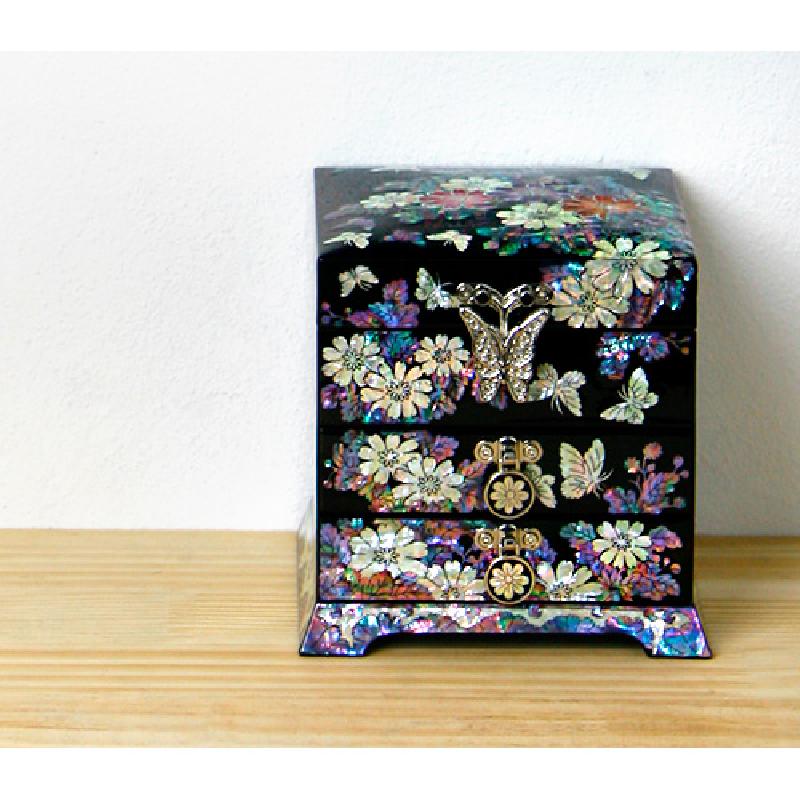
If your parents prefer practical items over decorative ones, a drawer chest or small accessory box will feel more natural than a jewelry box. Because it can be placed somewhere that is frequently reached—such as a study desk, a bedside table, or around a dressing table—the gift can more easily enter daily life. In particular, if it is used to organize small items such as a wristwatch, a personal seal (dojang), glasses, or medicine packets, it does not end as merely "a pretty keepsake." That said, it is worth checking whether there is enough space to place items with many drawers or a large footprint.
A type such as the 2단서랍함 - 국화[흑색] (two-tier drawer chest – chrysanthemum [black]) has calm coloring and a clear storage function, making it a suitable option for a father's study or the parents' room. The chrysanthemum pattern tends to give a neat rather than overly striking impression, so it is less likely to feel burdensome even for parents who are unfamiliar with traditional crafts. Because this kind of gift carries a message of gratitude while quietly residing in a space used every day, it is better to look not only at the decorative exterior but also at the handles, the internal structure, and the stability of the spot where it will be placed.
Storage-type craft items maintain the formality of a gift while reducing the worry of "whether there will be a place to use it." If your parents are good at keeping things organized, a jewelry box is also fine, but if they frequently tidy up their desk or bedside table, a drawer chest may suit them better. When presenting the gift in person on Parents' Day, naturally conveying the intent of the gift by saying something like "I thought you could keep the things you use often in here" helps the purpose come across naturally.
For a mother's taste, the feel of the home's atmosphere and the character of the pattern come before color
When choosing a traditional craft gift for a mother, selecting based on vivid color alone can feel somewhat overpowering in the actual space. Because materials and patterns such as hanji (traditional Korean paper), najeon, cranes, plum blossoms, and peacocks each have a different atmosphere, it is good to also think about the colors your mother usually likes in her clothing and the tones of the accessories in the home. If she prefers a calm atmosphere, a jewelry box with a hanji feel or a subtle pattern would suit her; if she likes a vivid accent, a jewelry box with najeon decoration is also fine. What matters is whether the presence of the gift comfortably enhances your parents' space.
For example, a type such as the 한지 예단보석함 [학] (hanji yedan jewelry box [crane]; yedan refers to gifts exchanged in traditional Korean betrothal customs) combines a crane pattern with the calm texture of hanji, making it well suited to the respectful atmosphere of a Parents' Day thank-you gift. A yedan-style jewelry box sounds formal from its name, but for parents it can be understood as an everyday keepsake box for storing precious accessories or mementos. Even without an elaborate explanation of the pattern's meaning, the tidy first impression alone has the advantage of conveying a sense of gratitude. However, if your mother prefers bright and cheerful accessories, it is also worth comparing a slightly more vibrant najeon jewelry box with a plum blossom or butterfly pattern.
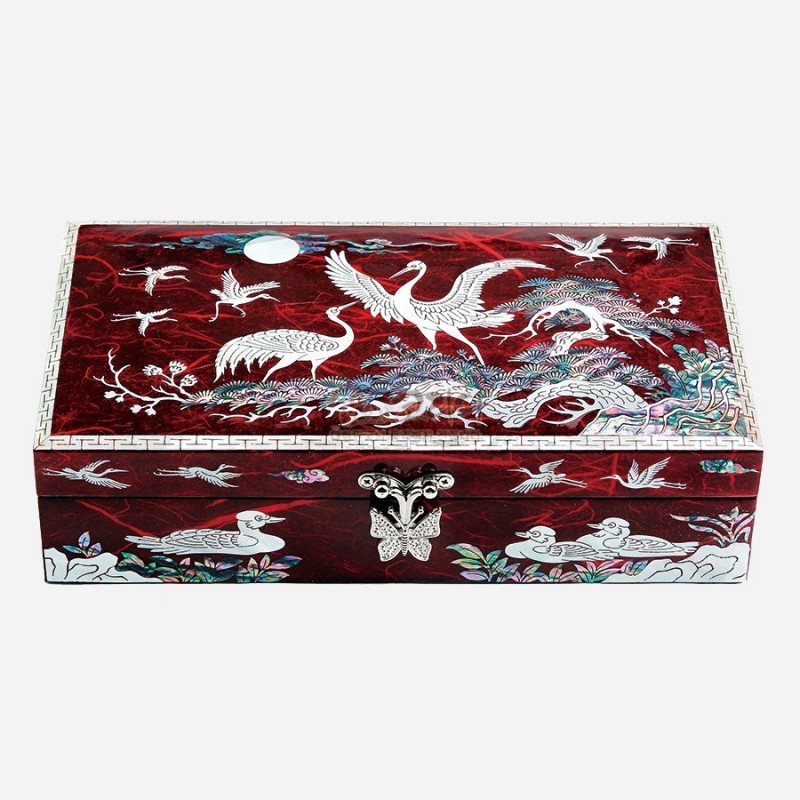
The important criterion in this section is actual taste rather than the label "for mothers." Even with the same jewelry box, hanji gives a soft and calm impression, while najeon becomes more decorative depending on the light. The right fit can vary depending on whether the lighting in your parents' home is bright, whether there is a display cabinet, and whether there is room on the dressing table. Just as reviews note that the traditional feel and refined impression made it a good gift, what helps most with a gift for parents is an atmosphere that looks composed at a glance, rather than an over-elaborate explanation.
When family gathers together, a tidy first impression is reassuring
With a Parents' Day gift, the moment of presentation matters as much as the item itself. The impression the gift makes will differ depending on whether it is given when only the parents are present, or when siblings, a spouse, or grandchildren are also there. In a setting where multiple people are watching, items with a clear traditional pattern and storage function are more universally appropriate than something with a strongly personal taste. Considering the gift wrapping, the size, and whether the purpose is immediately understood when it is taken out will also make the moment of presentation feel more composed.
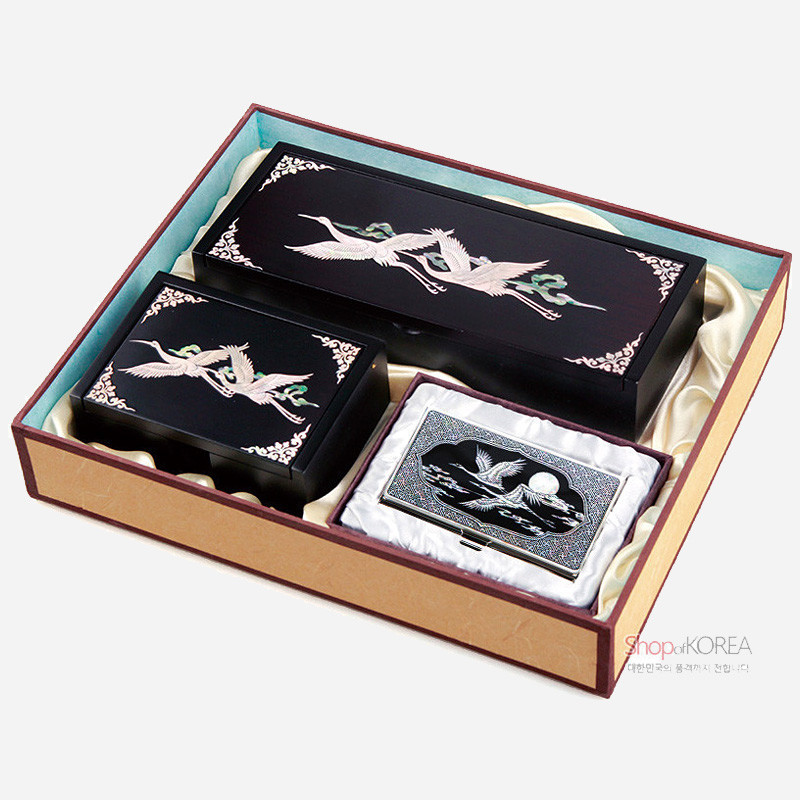
In such cases, it is worth comparing traditional craft items with a clear form, such as a gullim jewelry box (rounded jewelry box), a jik jewelry box (straight-sided jewelry box), or a sanggam automatic box set (sanggam refers to an inlay technique). Patterns such as hwajo (flowers and birds), girin (a mythical auspicious creature), unhak (clouds and cranes), and plum blossoms are well suited to creating an atmosphere of gratitude and commemoration, but if they get too far ahead of the recipient's taste, the item may be difficult to keep out for long. In a setting where family gathers together, a simple explanation such as "I chose this hoping you would keep it close for a long time" fits well. There are also reactions noting that when multiple items were prepared together, traditional packaging helped create an impression of care and sincerity, so it is good to consider the first impression including the packaging.
The related products at the end are not simply a list repeating items mentioned in the main text; they are candidates to compare alongside one another in the same Parents' Day traditional craft gift situation. Once you first determine the space in your parents' home, their usual preferences, and the formality of the presentation setting, it becomes much clearer which direction—jewelry box, drawer chest, decorative accessory, or everyday accessory—is the right fit. More important than the product name is whether your parents will be able to keep it close for a long time, and whether your gratitude can be conveyed without feeling burdensome.