Shopofkorea guides
A Guide to Choosing Korean Craft Appreciation Gifts Instead of a Formal Plaque
Official product names are shown in Korean. Product pages are in Korean; prices are in South Korean won (KRW).
A formal plaque (gamsapae) is a clear way to express official gratitude, but it can feel somewhat stiff depending on the recipient's space or relationship. When giving a gift after an event or project, it is worth first considering the recipient's expected level of formality, the nature of the ongoing relationship, and the actual scene in which the gift will be presented.
- For external VIP guests or sponsors: prioritize storability and a formal impression
- For contacts at partner organizations: prioritize practicality suited to an office environment
- For lecturers or advisors: prioritize stationery items that carry understated meaning without feeling burdensome
- For overseas guests or visitors: consider both Korean-style patterns and portability together
When You Want the Memory of Respect to Last a Long Time
When the moment of presentation is itself a formal occasion—such as an institutional event, a sponsor-appreciation ceremony, or an awards ceremony—it is better for the gift not to look too much like an everyday household item. In such cases, you can first look at boxes, frames, and decorative craft types that, when placed on a desk or display shelf, preserve the memory of gratitude. Even without engraving a message directly as a plaque would, a tidy pattern and material can convey a sufficient sense of respect. However, if the recipient's space is small or their travel schedule is long, the size and risk of breakage should also be examined.
For example, a jautham (automatic-lid box) type featuring sanggam (inlay) patterns can hold documents, business cards, and small accessories, making it easy to describe as combining decorative and practical value. It is more natural to keep in a private space for a long time than a formal plaque, and its impression of Korean craft is clear, making it a good fit for the atmosphere of an official appreciation gift.
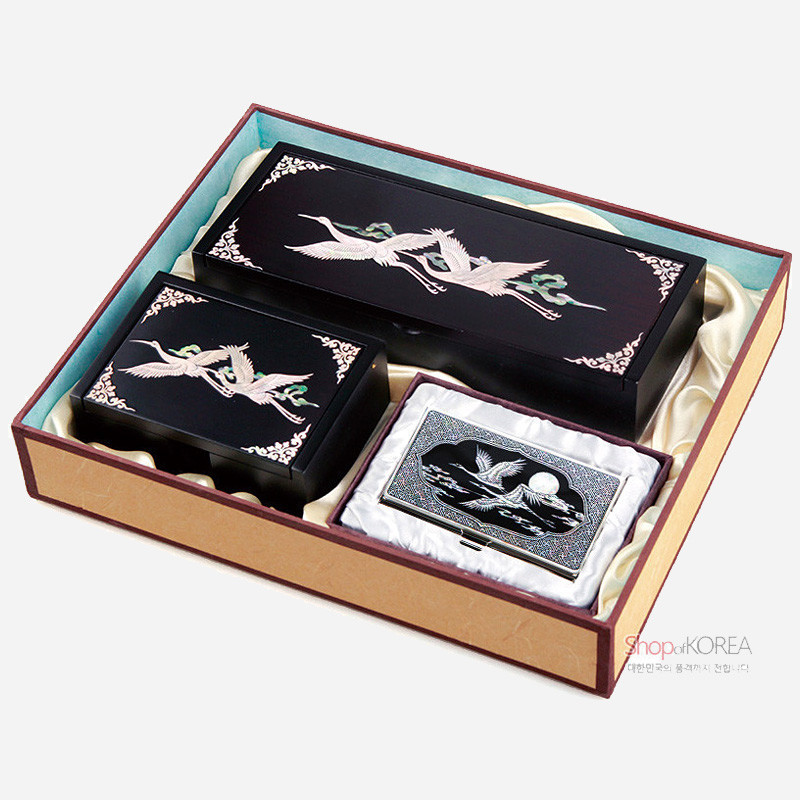
Rather than treating any single product in this category as the only correct answer, it is better to compare options within the broader category of "formal, storage-oriented craft items." Checking whether the packaging looks neat will also help ensure a stable first impression at the moment of presentation. Reviews from actual gift recipients have noted that the packaging made the contents appear more valuable, so for formal occasions, the condition of the packaging—which shapes the first impression alongside the item itself—is also a selection criterion.
When You Want the Gift to Be Seen in an Office for a Long Time
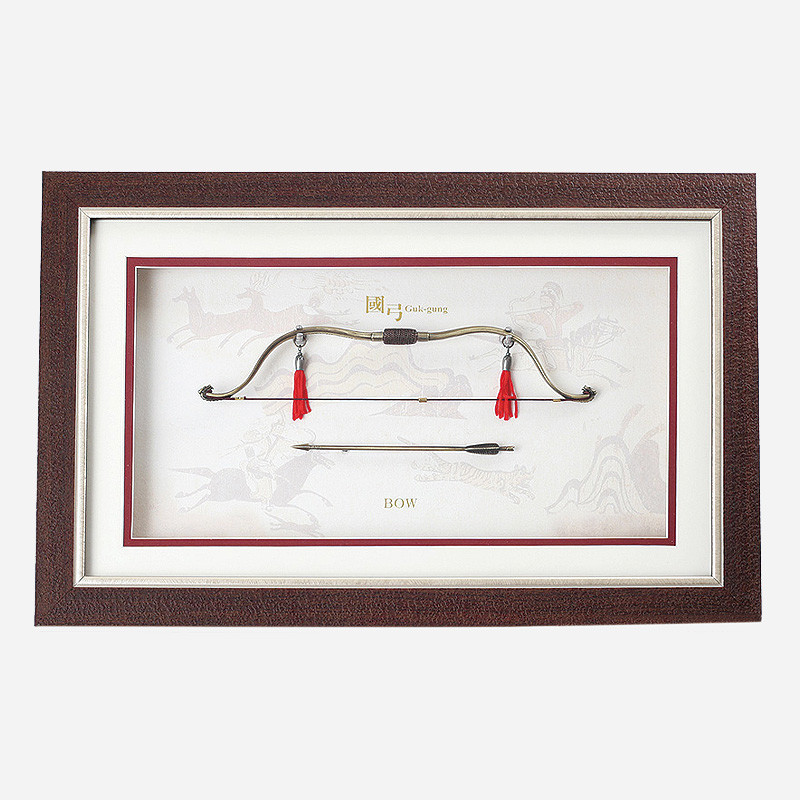
For sponsors, external executives, or VIP guests who are more likely to display a gift in their space than to use it personally on a regular basis, framed pieces or decorative plaque-style items are a natural choice. Such gifts serve a similar role to a formal plaque but can give a slightly softer impression than a plaque with text prominently displayed on the front. In particular, when there are elements that can be explained—such as Korean materials, gukgung (traditional Korean archery), landscapes, or traditional patterns—the gift can help sustain the memory of the event or visit. However, excessively large decorative items may impose on the recipient's space, so size and overall atmosphere should be considered together.
For example, a framed piece featuring gukgung as its subject tends to convey a Korean impression in a measured, not overwhelming, way when placed in an office, meeting room, or reception area. It suits occasions when you want to express gratitude not solely through direct wording but through a keepsake that can be appreciated over a long period.
In this case, rather than trying to match the recipient's personal taste too precisely, it is more practical to consider whether the item looks unobtrusive when hung or stood in a space. Decorative items with strong traditional elements have the advantage of clear meaning, but they may suit a shared office space better than a personal living space. Before presenting the gift, picturing "where the recipient will be able to keep and look at this gift" makes it easier to judge whether it is an appropriate alternative to a formal plaque.
When You Want the Gift to Be Used Naturally Until the Next Meeting
For contacts at partner organizations, working-level partners, or business counterparts who collaborated on a project, craft accessories that can actually be used during work are less burdensome than large decorative items. Objects that are naturally used in business situations—such as business card cases, ballpoint pens, and business card holders—convey gratitude while also giving a sense of continuing the relationship. The key criteria here are neatness when held in the hand rather than showiness, a pattern that is not excessive, and a size that is easy to carry. This type of gift is also well suited to situations where similar items must be prepared for multiple recipients to a consistent standard.
For example, a business card case and ballpoint pen set type featuring the cheongja sanggam unhangmun (celadon inlay crane-and-cloud pattern) is easy to describe as an appreciation gift for a working relationship. Because it connects naturally to occasions such as exchanging business cards, meetings, and business trips, the purpose of the gift is clear, and the Korean pattern does not come across as overpowering.

However, there is also a possibility that the recipient already owns many similar practical items. It is therefore better to regard this type of gift not as something the recipient "must use frequently," but as an appreciation accessory that does not look out of place in a work environment. Comparing candidates with different patterns side by side—such as a business card holder with a jogakbo (patchwork) dancheong (traditional multicolored paintwork) flower pattern, or a business card case and ballpoint pen set with a songhak (pine-and-crane) pattern—makes it easier to match the recipient's age group and workplace atmosphere.
When You Want Gratitude to Linger Quietly on a Desk

For someone who has given their knowledge and time—such as a lecturer, judge, advisor, or interviewee—a stationery-style craft item that can be used or kept on a desk without feeling burdensome is a better fit than an excessively large gift. Bookmarks, letter openers, and writing instrument sets are lighter than a formal plaque, yet can naturally carry the context of "gratitude for time and knowledge." In particular, items that connect to reading, manuscript work, documents, or lecture preparation are easy to explain as gifts. However, items with a clear functional purpose—such as a letter opener with a blade—require consideration of the recipient's work style and the environment into which the item will be brought.
For example, a letter opener type featuring a songhak (pine-and-crane) pattern has more of the impression of a craft item than a standard promotional giveaway, and also carries meaning as a desk accessory. When conveying appreciation to a lecturer or advisory committee member, it can be a choice that leaves a memory of the event without placing too great a burden on the recipient.
Within this category, lighter candidates such as a gold-decorated bookmark can also be considered. There are reviews noting that when stationery items in box form were prepared as gifts for exchange, adding packaging made them appear more formal—so the smaller the gift, the more important the packaging and the accompanying message. Because the size of an object does not diminish the weight of the gratitude it carries, preparing a card or a short note of thanks to accompany it will make the moment of presentation feel more natural.
When You Want to Convey a Korean Impression Without the Burden of Carrying It
If the recipients include foreign nationals or overseas collaborators, gifts with clearly Korean patterns and materials are a good choice. However, selecting an item solely because it has a strong Korean feel, only to find it is bulky or has an ambiguous purpose, can make it a burden during travel. It is more reliable to first compare types that offer portability and ease of storage, such as fans, bookmarks, business card holders, and small decorative items. If you are able to briefly explain the meaning of the pattern or how the item can be used at the moment of presentation, the impression the gift makes will be all the more vivid.
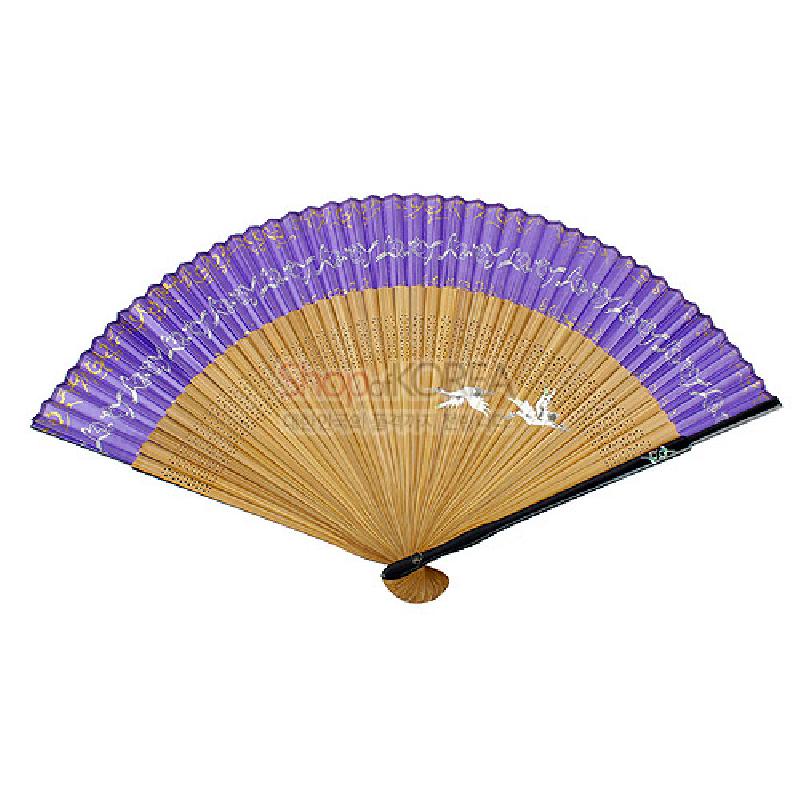
Accessories with a visible Korean material quality—such as a jagae (mother-of-pearl) fan or a cheongja sanggam (celadon inlay) patterned business card holder—can be straightforwardly considered as appreciation gifts following an official visit. As reflected in reviews from customers who chose this type specifically to give a Korean gift during an overseas schedule and noted that the finish was clean, many buyers of this type pay attention to both quality of finish and whether the item is made in Korea. However, items with a strong seasonal character may have limited periods of use, so it is worth also checking whether they are suitable as decorative pieces.
The related products at the end are not simply a list repeating items mentioned in the body text; they are candidates to compare alongside those items in the same appreciation-gift situation. When choosing a gift to replace a formal plaque, if you first clarify the recipient's position, the level of formality of the presentation scene, and the space where the gift will eventually be placed, your selection will be far more assured.