Shopofkorea guides
How to Choose Korean Traditional Pattern Gifts for a Desk
Official product names are shown in Korean. Product pages are in Korean; prices are in South Korean won (KRW).
When choosing a Korean traditional pattern gift to place on a desk, it is better to first consider where the recipient will actually put it and how they will use it, rather than simply thinking "anything Korean will do." Whether the item is for a personal desk or for a shared space such as a conference room or reception area will affect how much presence the size and pattern should have.
- If a small practical accessory is preferred: types used frequently, such as a pen holder, business card case, or ballpoint pen set
- If a traditional atmosphere is acceptable: desk accessories featuring painted imagery or patterns such as cranes-and-clouds (unhak), plum blossoms (maehwa), or dancheong (traditional decorative coloring)
- If formality is needed but you want to reduce the burden: business accessories that are compact and neatly packaged
- If the gift must be transported or delivered overseas: check first for breakage risk, weight, and how much desk space it will occupy
Traditional Accents That Fit Naturally into a Tidy Desk
For foreign colleagues or long-term collaboration partners, accessories whose purpose is immediately visible on the desk are more comfortable than purely decorative objects. Items with a clear place of their own—such as a pen holder, stationery organizer, or business card case—mean the recipient does not have to think separately about how to use them. In this context, a pattern that is not too large or bold, but conveys a Korean character when viewed up close, tends to be the safest choice. If the recipient's desk already has a monitor, laptop, and documents taking up space, it is also worth checking that the height and width of the item are not excessive.
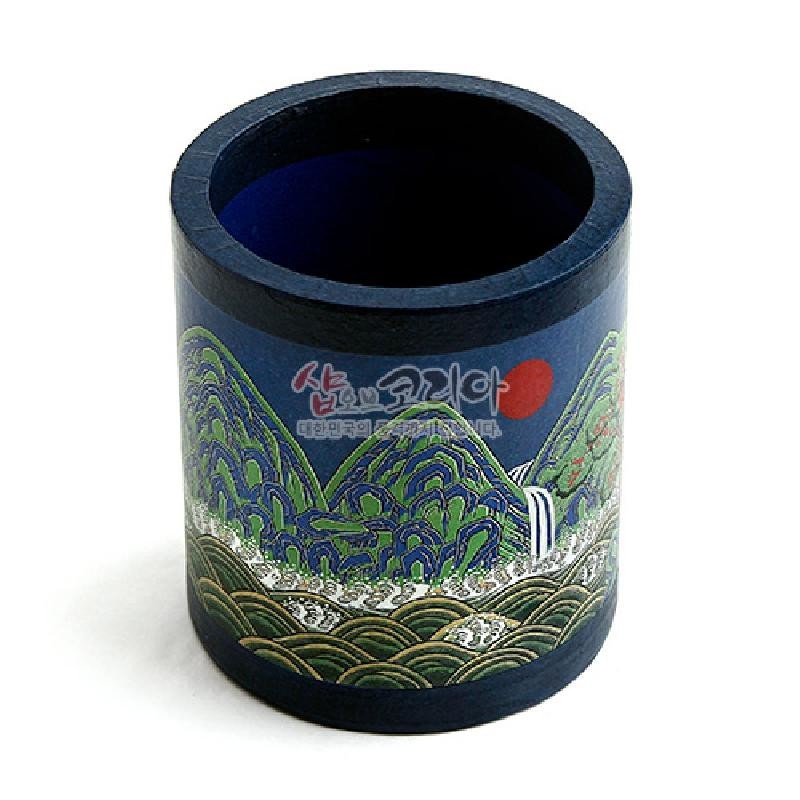
For example, a type that interprets a traditional Korean painting image in the form of a pen holder is easy to explain as an office gift. An item such as the 한국의멋 펜꽂이-연소답청 (Hangukeui Meot pen holder – Yeonso Dapcheon, "Korean Beauty" pen holder with a scene of swallows and spring outing) is closer to the kind of piece that simultaneously serves the purpose of organizing writing instruments on a desk and conveys a Korean atmosphere.

However, even this type of item can feel burdensome if the recipient's desk is very minimalist or if they use a hot-desking arrangement. In that case, a type that can be placed in a bag and carried around—such as a business card case or ballpoint pen—is better than an accessory that is permanently stood upright. The key point is not to give a "Korean decorative object," but to consider whether there is a natural place for it within the recipient's work routine.
A Choice That Leaves a Dignified Impression Without Feeling Burdensome
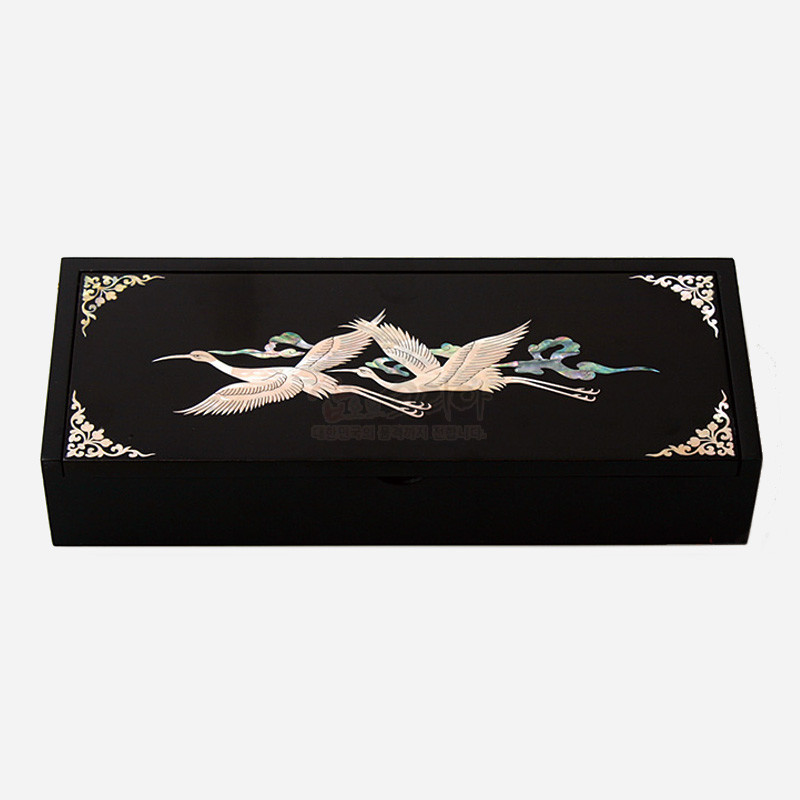
For business counterparts, executives, or official visitors, patterns that give a calm and composed impression suit the occasion better than overly casual colors. Compositions that carry a clear Korean identity—such as crane-and-cloud (unhak), celadon inlay (cheongja sanggam), or blue-and-white porcelain (cheonghwa baekja) styles—while not standing out excessively in a business environment, are a good fit. Pen cases (pilham) and business card–related accessories are easy to keep on a desk or store in a drawer, which also lowers the sense of obligation that can accompany a gift. Particularly for a first meeting or as a token of appreciation at an event, it is advisable to consider not only how frequently the item will be used, but also its neatness after wrapping, its volume, and whether it is easy to carry by hand.
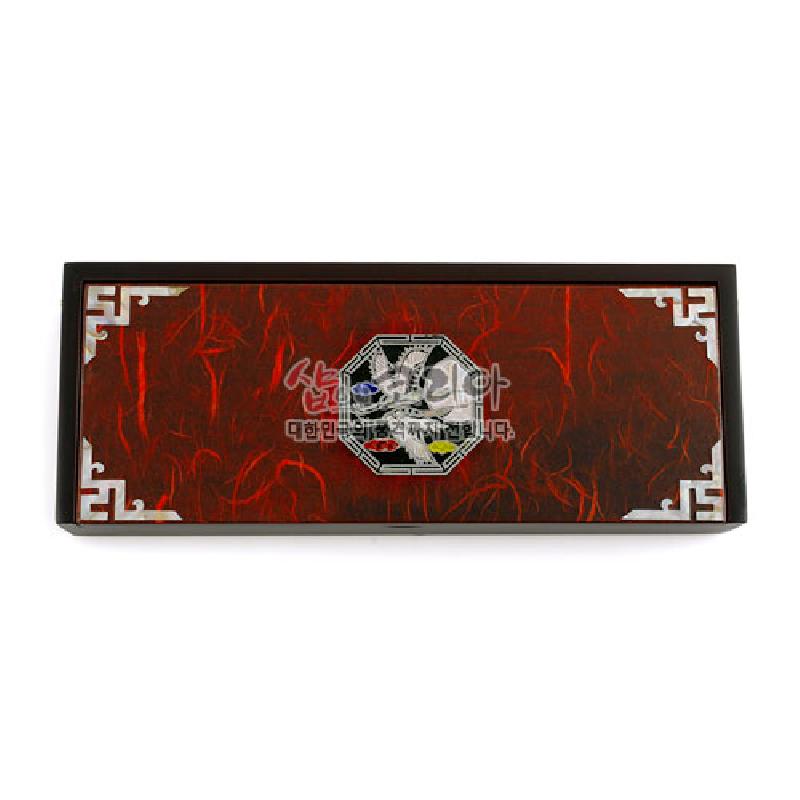
A writing instrument storage type such as the 상감자동필함-운학 (Sanggam Jadong Pilham – Unhak, inlaid lacquer pen case with crane-and-cloud pattern) is an example that combines the presence of a traditional pattern with practicality. Because a pen case can be placed directly on a desk or understood as a storage accessory to be taken out only when needed, it does not require excessive explanation in a formal relationship.
One point to be aware of is that an item whose value can only be conveyed through a lengthy explanation of its pattern's meaning may feel burdensome to someone receiving it for the first time. A design that makes an impression even with a brief introduction such as "a desk accessory featuring Korean traditional patterns" is preferable. If the recipient's office environment is conservative, it is worth comparing subdued tones, metallic finishes, mother-of-pearl effects, or restrained ceramic-style pieces before settling on a strongly colored decorative item.
Work Gifts That Travel Light on Business Trips
In situations where gifts must be carried—such as overseas business trips, seminars, or visit events—portability and packaging stability are important even for items intended to sit on a desk. A large decorative object may look impressive when presented, but it can become a burden during a busy itinerary with a lot of luggage. In such cases, items connected to work—such as a business card case and ballpoint pen, or a small stationery set—are appropriate. There are reviews to the effect that pens featuring Korean patterns were suitable as light gifts for foreign recipients, and small practical items are especially convenient in situations where gifts must be distributed to multiple people.
A set type combining a business card case and two ballpoint pens carries a clear meaning in a business relationship. An example using a calm pattern such as the 청화백자운학문 (cheonghwa baekja unhak mun, blue-and-white porcelain crane-and-cloud pattern) incorporates a Korean image while connecting naturally to work settings such as a desk, a meeting, or the exchange of business cards.

An advantage of this type of set gift is that the recipient does not necessarily have to display it on their desk for a long time. It can be taken out and used when needed, and otherwise stored in a bag or drawer, which means it carries little sense of obligation even in relationships that are not particularly close. When preparing gifts for multiple people, it is more reliable to choose colors and compositions that are less likely to divide opinion, rather than patterns with a very strong individual character.
Patterns That Look Good in a Space Over Time
In spaces where visitors come and go—such as reception rooms, executive offices, or conference rooms—traditional pattern accessories with a somewhat stronger presence can also be appropriate. In this case, "does it detract from the atmosphere of the space" matters more than how frequently the item is actually used. Desk clocks, pen holders with symbolic significance, and desk accessories featuring traditional Korean painting imagery are likely to be placed where the eye naturally falls. However, patterns with strong symbolic weight—such as dragons or the Irworobongdo (sun, moon, and five peaks painting)—may feel heavy depending on the recipient's taste or the nature of the space, so it is important to consider the balance between formality and approachability.
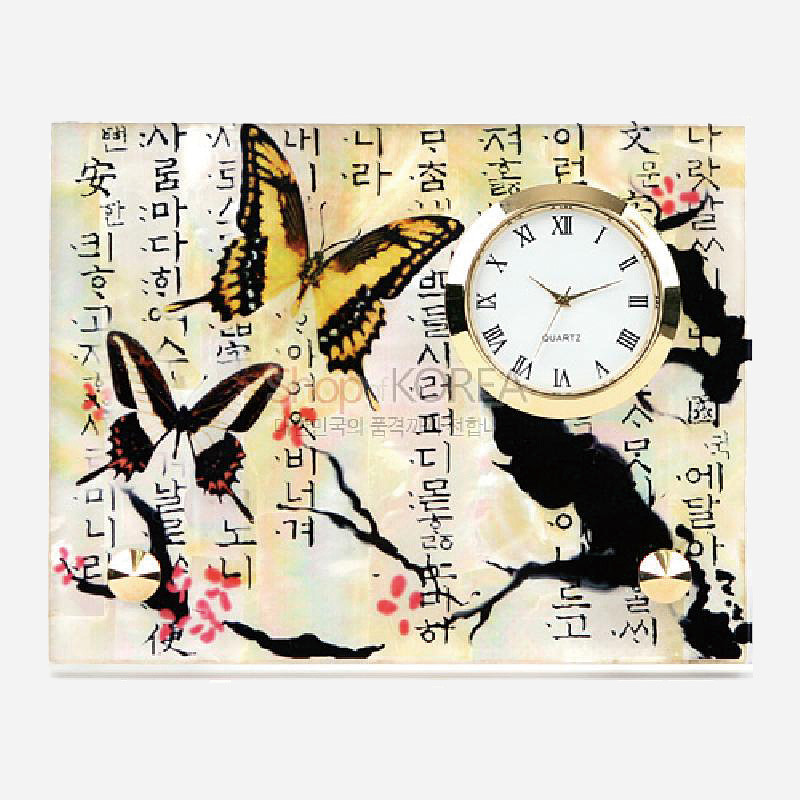
If a softer impression is desired, patterns in brighter styles—such as plum blossoms, butterflies, jogakbo (patchwork), or dancheong flowers—are worth exploring. Conversely, if greater formality is called for, calm styles evoking crane-and-cloud, celadon, or blue-and-white porcelain are a good choice. What matters most is not the pattern itself, but the density of the desk and surrounding objects where that pattern will be placed. If a space already has many decorative items, a small practical accessory may actually look more refined.
The related products at the end are not simply a re-listing of items mentioned in the body text, but candidates to compare alongside one another for the same desk-gift situation. Deciding first whether the recipient will use the item frequently at a personal desk, display it in a formal space, or receive it without burden while on the move will make the selection criteria clearer than the product names alone.