Shopofkorea guides
How to Choose Korean Gifts for Your Host Family as an International Student
Official product names are shown in Korean. Product pages are in Korean; prices are in South Korean won (KRW).
When choosing a gift for your host family before studying abroad, the trickiest part is striking a balance between "something distinctly Korean" and "something the recipient can comfortably receive." At a first meeting, gifts that carry too heavy a meaning or reflect a very particular taste can create pressure; gifts that can be explained briefly and used naturally around the home are easier for everyone.
Breaking things down by family composition and the moment of giving makes the choice simpler.
- If giving to the whole family: everyday household items used together at the dining table or in the living room
- If expressing courtesy to the host parents: practical items with a short story, such as those featuring Hangeul or traditional patterns
- If there are children in the home: stationery or hands-on items they can share or try out themselves
- If you have a lot of luggage or a long journey: a lightweight set with a low risk of breakage
Gifts That Open the First Dinner-Table Conversation
The first gift you hand to a host family works better as something the whole family can look at or use together, rather than something intended for just one person. Items used in shared spaces — the dining table, living room, or kitchen — naturally leave behind the message that "the guest from Korea prepared this as a token of thanks." At this stage, objects that are too decorative can be awkward to store depending on the recipient's taste, so it is worth checking first whether the item has a practical use. Types with a clear place in daily life — coasters, small kitchen accessories, memo items that can be stuck to a refrigerator or notice board — tend to work well.
For example, a traditional coaster featuring hanbok (Korean traditional clothing) characters is easy to bring out when sharing tea or a drink, and provides a natural opening to say a few words about Korean clothing culture. Just as some reviewers have noted preparing coasters as a first-greeting gift for the home they would be staying in during their exchange, the moment of giving matters more than the size of the gift at that first meeting.
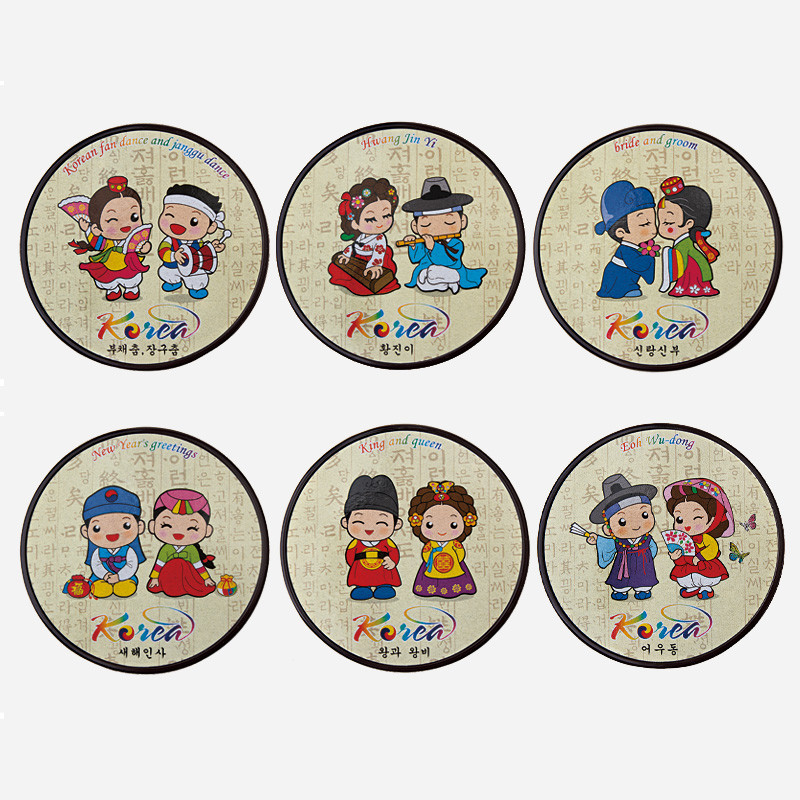
With this type of gift, no single design is the definitive answer; the guiding principle is simply "a small everyday household item the whole family can use together." If the pattern is clear but requires no lengthy explanation, and the item is something several people can pick up without hesitation, it helps ease the awkwardness of a first encounter. That said, when you have no idea what the other household's atmosphere is like, choosing a small, easy-to-store set is safer than a large, eye-catching decorative piece.
A Gesture of Thanks That Does Not Burden the Host Parents

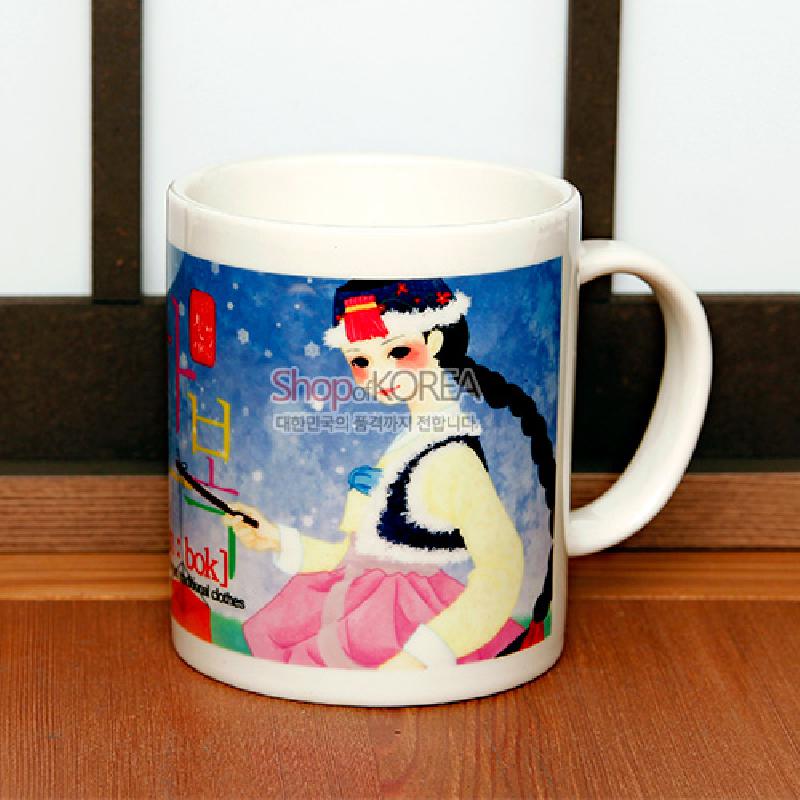
If you want to express separate thanks to the host parents, practical items that do not demand a very specific personal taste are most appropriate. Objects with an obvious moment of use — a mug, a teaspoon, small tableware — are easy to explain in terms of intent. When a gift is meant to introduce Korean culture, it is best if the symbolism is clear but does not require a long explanation at a first meeting, so materials that lead to a short story — Hangeul, traditional lighting motifs, traditional patterns — are a good fit. Conversely, items with strong religious significance or those that depend heavily on the recipient's interior-decorating preferences are best avoided.
A mug based on the Hunminjeongeum (훈민정음, the royal proclamation introducing the Korean alphabet) motif allows you to give a brief introduction to the Korean language and Hangeul while also being something the recipient can use every day. It lends itself well to the context of "a student from Korea prepared this as a heartfelt thank-you," yet places relatively little pressure on the recipient to display it or store it somewhere special.
Rather than over-wrapping this kind of gift, writing a note of thanks on a small card or postcard to include with it feels more natural. Because mugs can break in transit, whether you can pack them so they will not shift around in your luggage should also be part of your selection criteria. Even among mugs, choosing a color and shape that the user will find easy to reach for every day — rather than one with an overly elaborate motif — makes for a safe first gift.
Gifts That Get Children Talking as They Share Them
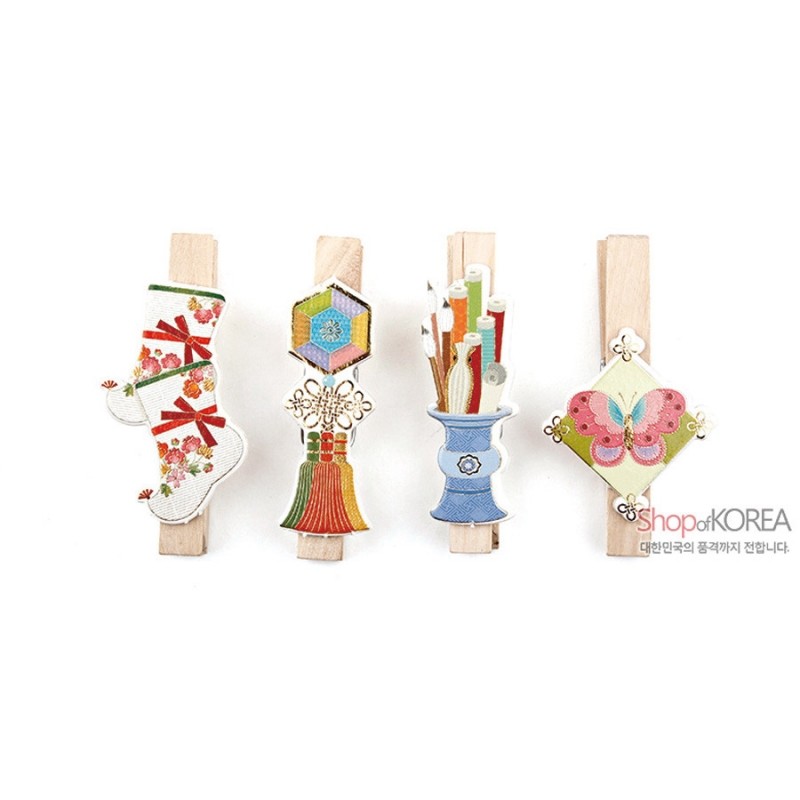
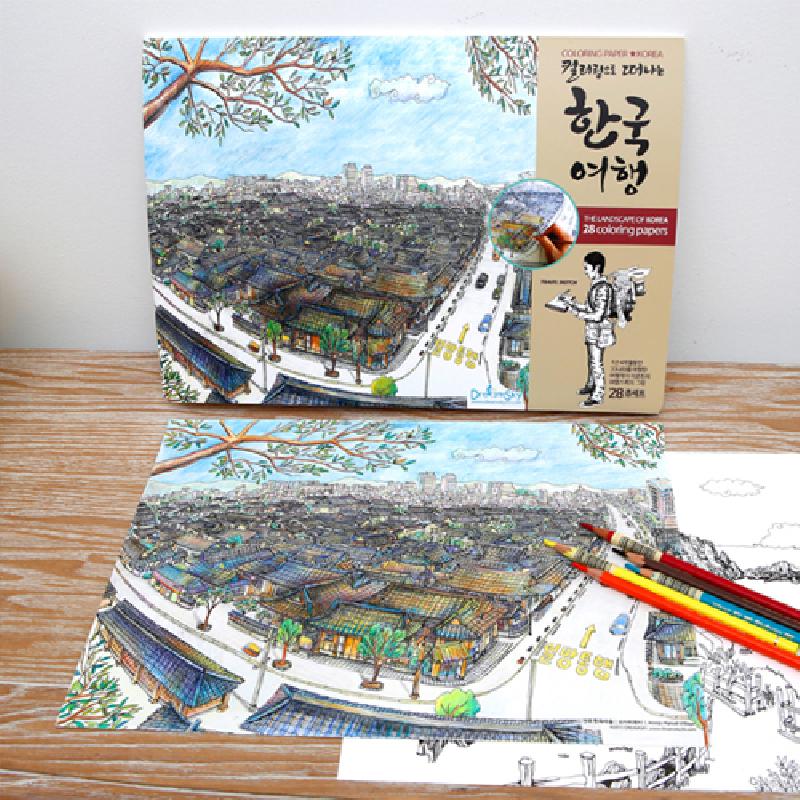
If the host family includes children or teenagers, small stationery items that are easy to share can be a good choice alongside a gift for the whole family. Items that can be used or chosen directly — bookmarks, ballpoint pens, postcards, coloring sheets — tend to spark conversation the moment they are received. In particular, sets made up of several pieces do not focus attention on just one person, which reduces the pressure in households with multiple family members. That said, designs that are too juvenile or suited only to a specific age group are best avoided when you do not know the ages of the children in the family.
A set combining Korean-culture bookmarks and ballpoint pens is the kind of thing that can be brought out naturally in a home where children read or go to school. Even if it features Hangeul, traditional imagery, or colors characteristic of Korea, the items are familiar to use, so no lengthy explanation is needed.

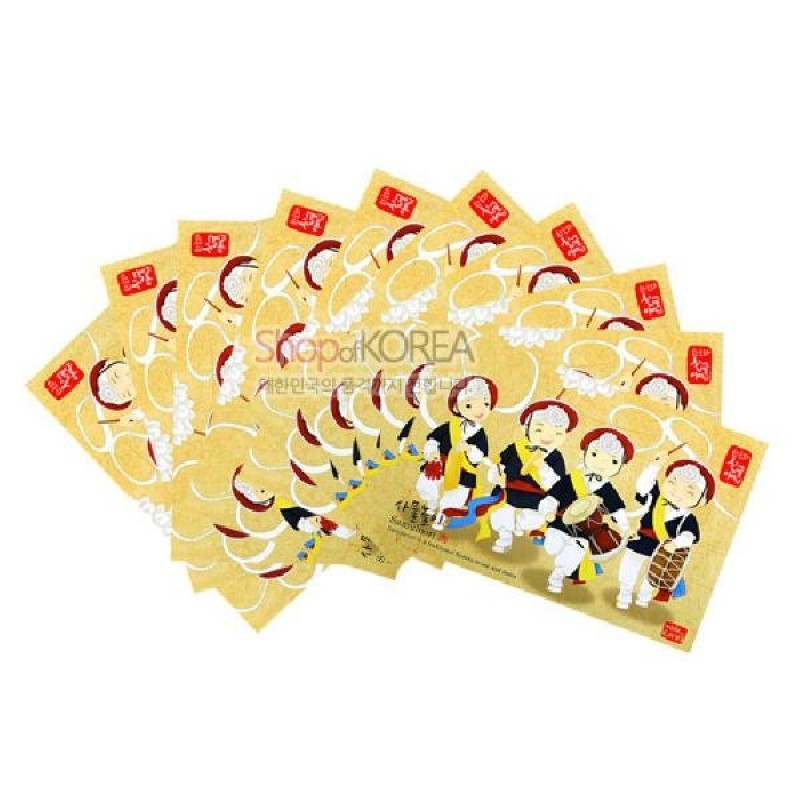
This kind of stationery works well as "a small souvenir introducing Korea," but it is more stable to offer it as an accompaniment to a gift for the whole family rather than centering the gift on the children alone. It is worth comparing candidates side by side — pretty Korean ballpoint pens, a bundle of postcards, coloring paper — things that can be shared or tried out directly. In a home with children, whether the gift sparks a conversation the moment it is brought out matters more than how eye-catching it is.
Choices That Lighten the Luggage Load While Leaving a Lasting Impression
When selecting gifts as an international student, you need to think not only about the moment of choosing but also about actually carrying them. If your departure luggage is heavy and your journey is long, items that are bulky or fragile can become a burden even if you love them. In that case, it is better to look first at low-volume options: flat postcards, bookmarks, lightweight stationery, small household items. A gift does not become more heartfelt simply because it is larger; what makes it feel most natural is that the recipient can receive it comfortably at a first meeting and understand it right away.
A homestay gift also serves to gently warm the atmosphere right after you arrive. Rather than a decorative piece that needs to be stored for a long time, a postcard on which you can write a note of thanks to hand over together, or a small item the family can use in daily life, is more practical. Just as some reviewers have noted that an item was easy to give to acquaintances abroad and had practical value too, a manageable size and clear use are important advantages in a first-greeting gift. That said, liquids, strongly scented items, and snacks whose allergen information is difficult to verify are best chosen with care when you do not know much about the recipient's family.
The related products at the end are not simply a repeat list of items mentioned in the main text; they are candidates to compare alongside one another for the same host-family gift situation. Using the criteria of whether the whole family uses it together, whether it conveys respect to the host parents, whether it is easy to share with children, and whether it is manageable to carry — it becomes easier to strike a balance between Korean meaning and practicality.