Shopofkorea guides
A Guide to Korean Craft Business Gifts for Overseas VIP Clients
Official product names are shown in Korean. Product pages are in Korean; prices are in South Korean won (KRW).
When choosing a gift for an overseas VIP client, the decision becomes easier if you first ask "In what setting, and for whom, is this being given?" rather than "What is most quintessentially Korean?" The appropriate size, material, and manner of explanation will differ depending on whether the gift is for a key decision-maker, a commemorative keepsake for a long-term partner, or an item to be presented at a formal visit or contract-signing ceremony.
- For a VIP decision-maker: prioritize craft items that have display value and a sense of formality
- For a long-term partner: prioritize a balance between practicality and Korean symbolic elements
- For a formal event: prioritize packaging, durability in storage, and a composition that is easy to explain briefly
- If overseas travel is involved: prioritize risk of breakage, volume, and compatibility with the recipient's local space
Korean Craft That Endures in the Office
For recipients at the level of a chief executive or senior executive, craft items that can be placed in a reception room, private office, or display shelf are often received with greater respect than objects used frequently on a desk. The key criteria here are whether the piece has a clear presence without being excessive in size, and whether the Korean material or pattern can be explained briefly. Types that convey the impression of Korean craft visually—such as mother-of-pearl inlay (jagae), najeon (lacquerware with mother-of-pearl), sanggam (inlay work), and metal ornamentation—are well suited to this purpose. That said, it is advisable to be cautious about iconography that could be misread as having religious significance, or decoration so elaborate that it would be difficult to display in a foreign office environment.
For example, a storage box set featuring a sanggam (inlay) pattern is well suited as a gift to present after a formal meeting. A set comprising multiple components conveys a stronger sense of a "commemorative gift" than a single decorative object, and leaves room for the recipient to store or display it even if they do not use it personally.

When selecting this type of item, it is better to assess whether the overall impression is neat and composed rather than focusing on any single pattern. Even if traditional motifs are incorporated, an overly strong color or sheen may feel burdensome in a business setting. Conversely, items that are too small or purely utilitarian may come across as insufficiently weighty for VIP treatment, so it is advisable to strike a balance by considering both the formality of the occasion and the recipient's standing.
Gifts That Fit Naturally into Personal Spaces
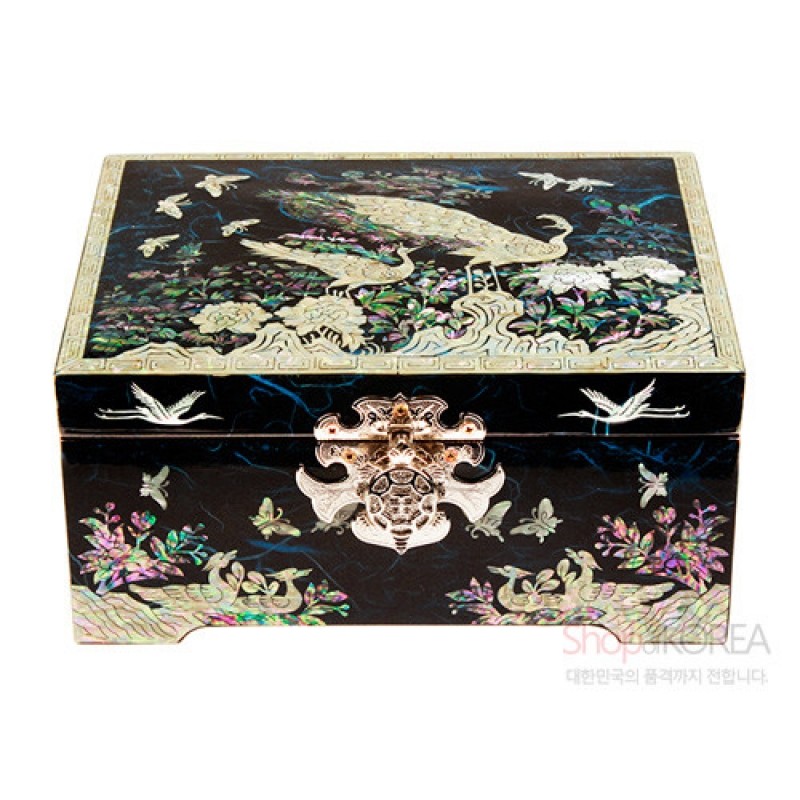
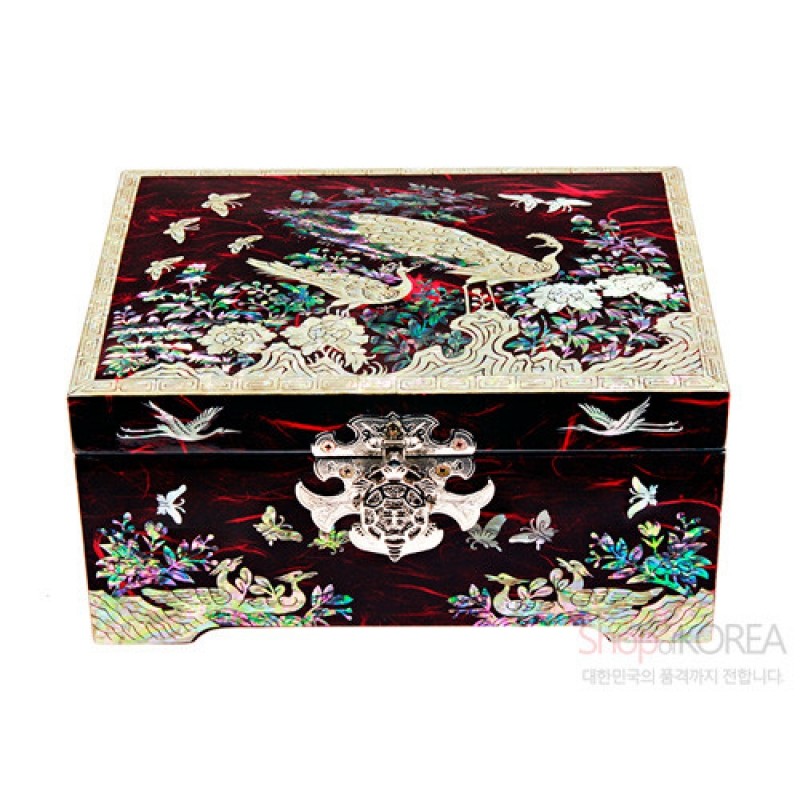
For a partner with whom several rounds of business have already been conducted, a gift that carries a Korean impression while sitting naturally in a personal space is more fitting than something overly ceremonial. Craft items with a clear purpose—such as a jewelry box, a small accessory case, or a desk storage box—can add a slightly warmer tone to the relationship. In this case, rather than making assumptions about the recipient's gender or personal taste, it is important to check that the colors and patterns do not convey an overly personal or strongly assertive message. As reflected in reviews noting that items with both a Korean feel and an air of refinement were well received as respectful gifts for overseas superiors and partners, options that visibly combine formality with usability make for a reliable choice.
Jewelry box styles that incorporate both hanji (Korean traditional paper) and mother-of-pearl (jagae) are easy to explain in terms of their Korean materials, and the recipient can also use them to store small items at the office or at home. Mother-of-pearl in particular changes its impression depending on the light, giving it decorative appeal, but if the box itself has a neat form it will not appear excessive.
However, there are situations where the name "jewelry box" may make the gift feel too personal. For a first-time client or someone with whom the relationship is not yet deep, a decorative craft piece or a stationery set may be a safer choice. For a long-term partner with whom a degree of trust has been established, a storage box type is worth considering as a way to combine "commemorative value and practicality" in a single gift.
Gifts Whose Meaning Comes Through Even in a Photograph
At occasions where photographs are taken or multiple people are watching—such as a contract-signing ceremony, a headquarters visit, or an invitation event—it must be possible to convey the meaning of the gift in a few words. In these situations, a good choice is an item whose pattern, material, and form can be explained simply, going one step beyond "This is a traditional Korean craft." Frame-style craft pieces or commemorative items featuring metal ornamentation are visually easy to understand immediately upon presentation, and are also suitable for hanging or standing in an office afterward. However, very large frames or heavy decorative pieces can be burdensome to transport overseas and to install, so the size and stability of the packaging must also be verified.

A frame-style gift featuring the image of a geumje gwansik (金製冠飾, a gold crown ornament) serves as an example of a piece that conveys Korean symbolism in an immediately intuitive way. Because this type of item has a stronger character as a display piece and keepsake than as a functional object, it is better to first judge whether the recipient can place it in a formal space, rather than whether they prefer objects for personal use.
For event gifts, the condition of the packaging and the logistics of presentation must also be considered. If the item needs to be taken out and explained on the spot at a meeting, it is best to choose a piece that is stable in size and does not lose its form inside the packaging. Given that ease of transport and packaging stability are important for gifts intended for overseas buyers, it is realistic to lower the priority of even visually outstanding items if they carry a high risk of damage in transit.
Small Items That Multiple Staff Members Can Use Without Hesitation
Separately from the main gift presented to a single VIP, there are cases where small gifts must also be prepared for accompanying executives or operational leads who are present. In these situations, rather than trying to match a decorative craft piece to everyone, small items that are naturally used in a business context—such as business card cases, ballpoint pens, or key rings—are more appropriate. A stationery set featuring Korean traditional patterns conveys the character of a visit gift clearly without feeling overly personal. However, because gifts that must be matched in quantity place greater importance on consistent individual quality and uniformity of packaging, they should not be selected by the same criteria as the main gift.
For example, business card cases or ballpoint pen sets featuring jogakbo (조각보, patchwork pojagi), songhak (송학, pine-and-crane motif), hyungbae (흉배, rank badge embroidery), or Taegukgi (태극기, Korean national flag) patterns are well suited to distributing among multiple people at business trips, trade shows, or visit meetings. There is a possibility that the recipient will use them daily, and even if they do not, the items can be stored without any sense of burden. That said, patterns with a strong national symbol carry a pronounced feel of an official commemorative gift, so in the context of a long-standing cooperative relationship between private companies, choosing a somewhat more understated pattern may feel more natural.
The related products listed at the end are not simply a re-collection of the examples mentioned in the main text; they are candidates to compare alongside one another in the same overseas business gift context. The higher the recipient's position, the more you should look first at display value and formality; the closer the relationship, the more you should look at practicality and storability; and the more event-oriented the occasion, the more you should look at clarity of packaging and explanation—keeping these priorities in mind will make your selection considerably more reliable.