
Shopofkorea guides
How Did the Hahoe Mask Become a Traditional Souvenir?
Official product names are shown in Korean. Product pages are in Korean; prices are in South Korean won (KRW).
Hahoe masks were originally not decorations for walls but masks used in talnori (mask dance) during byeolsingut (a village ritual for communal well-being) in Hahoe Village, Gyeongsang Province. Byeolsingut was held to pray for the village’s prosperity, a good harvest, and individual well-being, while the talnori performed as part of it also had the character of an independent theatrical work. To understand today’s Hahoe mask souvenirs, it is first necessary to consider how these masks embodied both the community’s hopes and its voice for commenting on the world.
Masks That Reflected the World Through Faces of Different Social Classes
Hahoe masks are said to have first been made around the 12th century, during the middle of the Goryeo period, and originally consisted of 12 masks. Each mask represented a different status or class, such as the yangban, scholar, Bune, butcher, or old woman. In talnori, these faces came together to satirize and ridicule the ruling classes, including the yangban, and an unjust world.
The performance did more than simply create laughter. Common people released the hardships of life and their dissatisfaction with the world, while members of the ruling class listened to those voices and used them as an opportunity for self-reflection. The Shop of Korea editorial team views the smiling faces of Hahoe masks not merely as cheerful expressions but as a way in which a community spoke about reality through laughter and satire.
The Story Behind the Moving Jaws and the Unfinished Imae Mask
Some Hahoe masks were made with movable jaws, allowing performers to create comical, lively expressions during talnori. This feature is also connected to the legend that Heo Doryeong made 12 masks at the command of a mountain spirit. According to the story, Heo Doryeong died after someone discovered him at work before the masks were finished, leaving the jaw of the final Imae mask incomplete.
Tradition identifies 12 types of masks, but only nine survive today: Gaksi, Yangban, Bune, Jung, Choraengi, Seonbi, Imae, Baekjeong, and Halmi. Hahoe masks therefore refer less to a single fixed face than to the various roles and their symbols within byeolsingut talnori. Looking at which character is depicted in a decorative piece is also one way to understand Hahoe masks.
From Masks Worn on the Face to Crafts Hung on the Wall
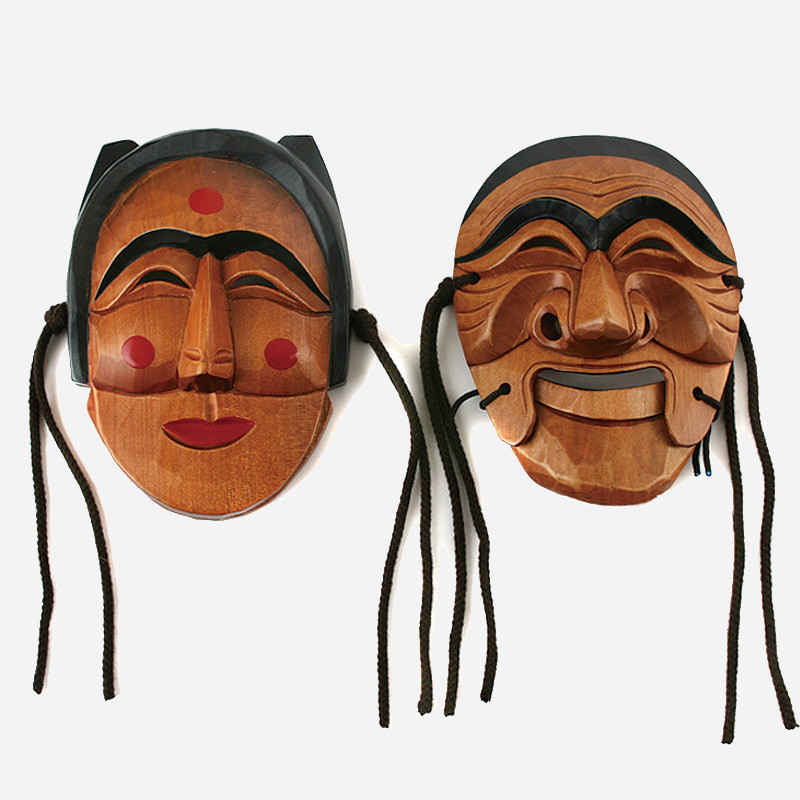
Among the Hahoe mask crafts available today are products made for decoration rather than masks intended to be worn on the face. The decorative Hahoe masks sold by Shop of Korea are completed by shaping a wooden base, carving the nose and mouth by hand, and then sanding and painting them. Although their form has changed for decorative use, the masks’ faces and the handcrafting process continue.
「하회탈 大-양반/부네탈 세트」 (Large Hahoe Mask Set: Yangban and Bune Masks) illustrates the masks’ representation of different statuses and classes through its pairing of Yangban and Bune masks. Placing the two faces together makes it easier to explain that the Hahoe mask is not a single smiling face but originated in a talnori culture featuring multiple characters.
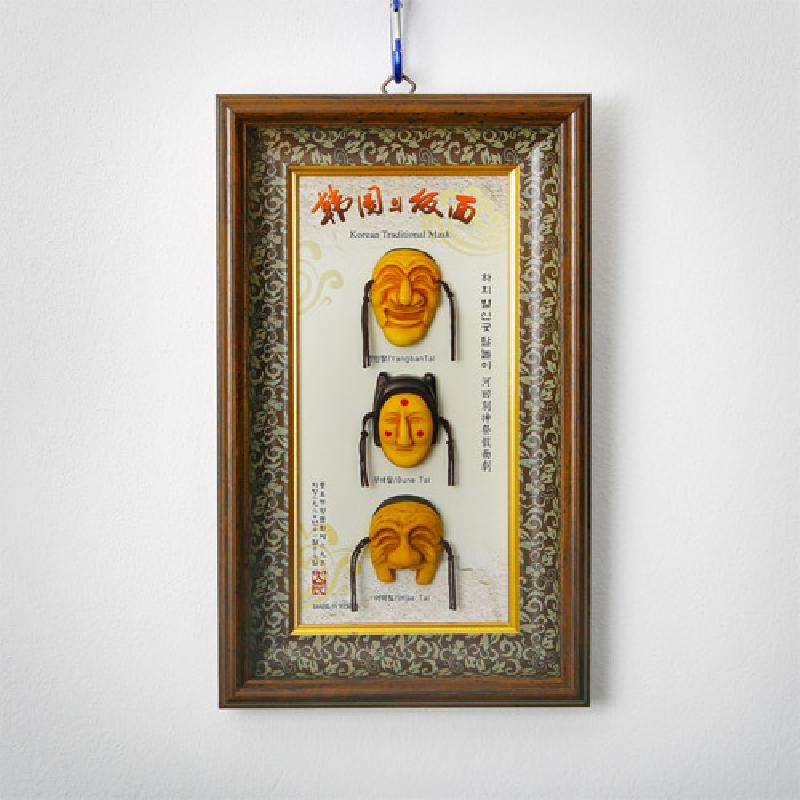
「하회탈 3형 세로 액자」 (Three-Figure Hahoe Mask Vertical Frame) is an example of how images of masks once worn onstage have been transformed into wall decorations. Because it is designed to remain in a space and be viewed over time, its cultural context becomes clearer when presented together with the origins of Hahoe masks and their role in byeolsingut.
A Small Cultural Story to Share with People from Abroad
Hahoe masks appear not only as framed pieces and decorative masks but also as accessible everyday souvenirs such as postcards, mugs, and bookmarks. 「한국의 아침 엽서 시리즈 - 하회탈」 (Morning of Korea Postcard Series – Hahoe Mask) can convey an image of the mask together with a short message, making it a way to share its story with someone met while traveling or encountering Korean culture for the first time.
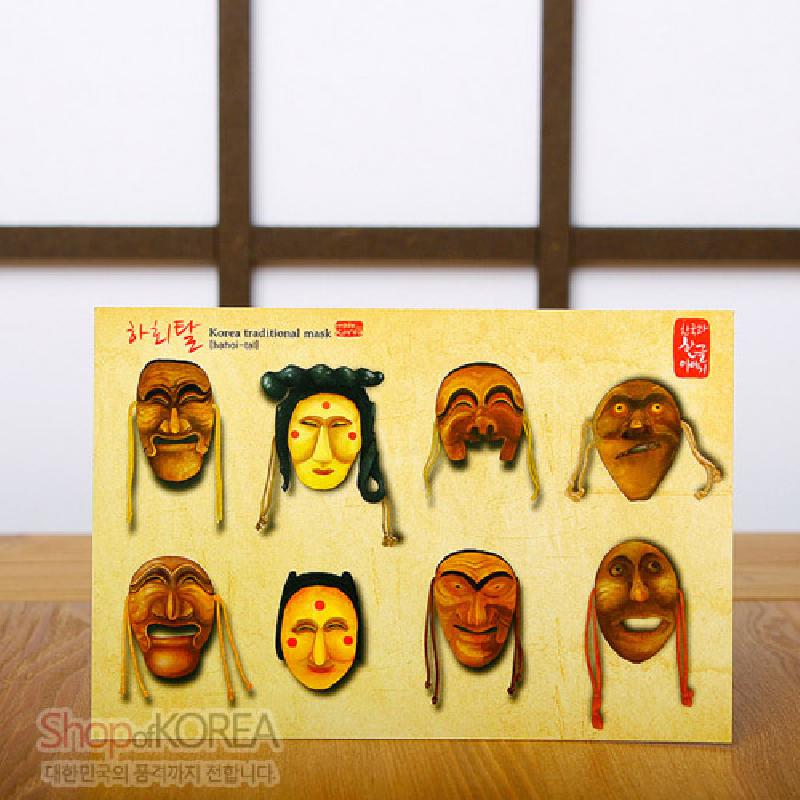
One review describes this intention directly: “I think it will be a good opportunity to introduce Korean culture through traditional images, so I want to give them to foreign friends I meet while traveling.” Another customer said the Hahoe mask felt like “the face of our country.” These are individual customers’ impressions, but they show why people choose Hahoe masks as symbols for explaining Korea rather than merely as decorations.
When introducing Hahoe mask souvenirs, it is possible to discuss not only their smiling expressions but also the byeolsingut held to pray for the village’s well-being and the talnori that satirized the world through characters from different social classes. Decorative masks, frames, postcards, and household goods are forms that bring this culture into contemporary spaces and daily life. Ultimately, the Hahoe mask is a face that has moved from byeolsingut to walls and desks, becoming a small medium through which Korea’s culture of communal rituals and humor can be shared with people from abroad.
For a Broader Comparison of Product Categories
The pages below have been selected to include only product categories directly related to the criteria used in this article.
- Hahoe Masks — This page brings together products directly connected to the Hahoe mask keyword, making it suitable for exploring souvenirs after learning about their cultural background.
- Dolls/Masks/Frames — This page presents masks and framed decorations together, broadening the view of how masks from byeolsingut have developed into modern decorative objects.